Video and narration by Transpolitica consultant Alberto Rizzoli
Video and narration by Transpolitica consultant Alberto Rizzoli
Which of the following cover(s) do you prefer, for the forthcoming Transpolitica book Anticipating tomorrow’s politics?

Use this link to cast your votes, before 6pm UK time on Sunday 8th March.
Update 8th March: the poll is now closed. The top selection was “Clear Summit”.
Click on the following images to see higher resolution versions.
 – “Clear summit”
 – “Colourful summit”
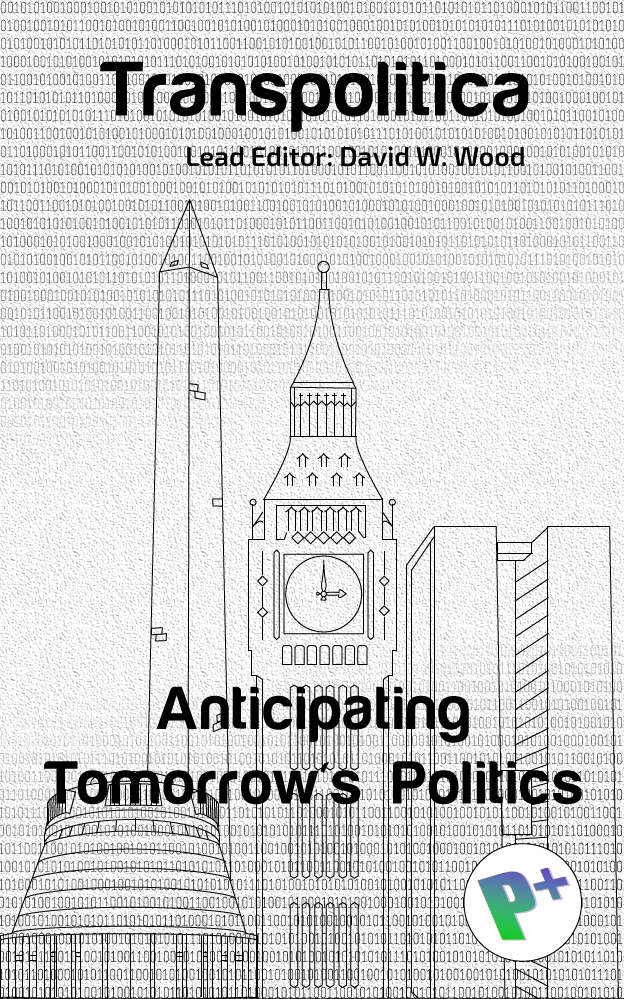 – “Parliaments digital”
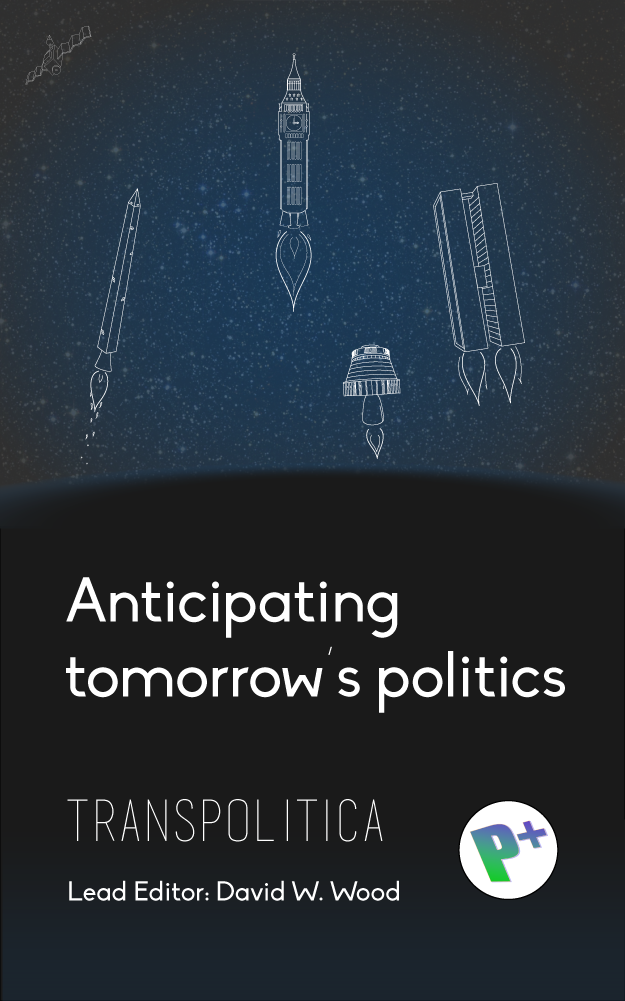 – “Parliaments rockets”
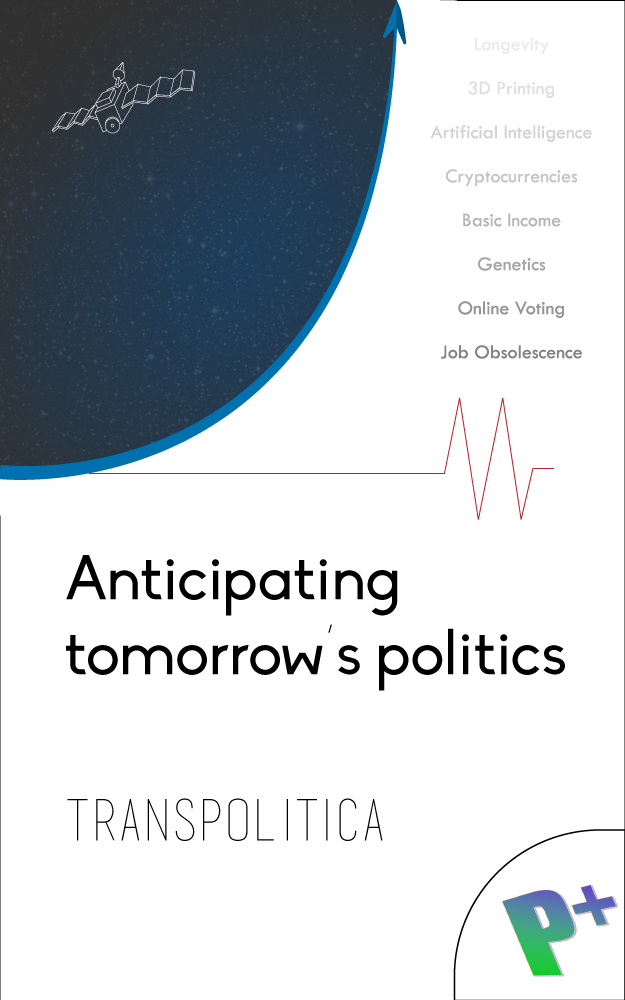 – “Politics topics”
 – “Westminster perspective”
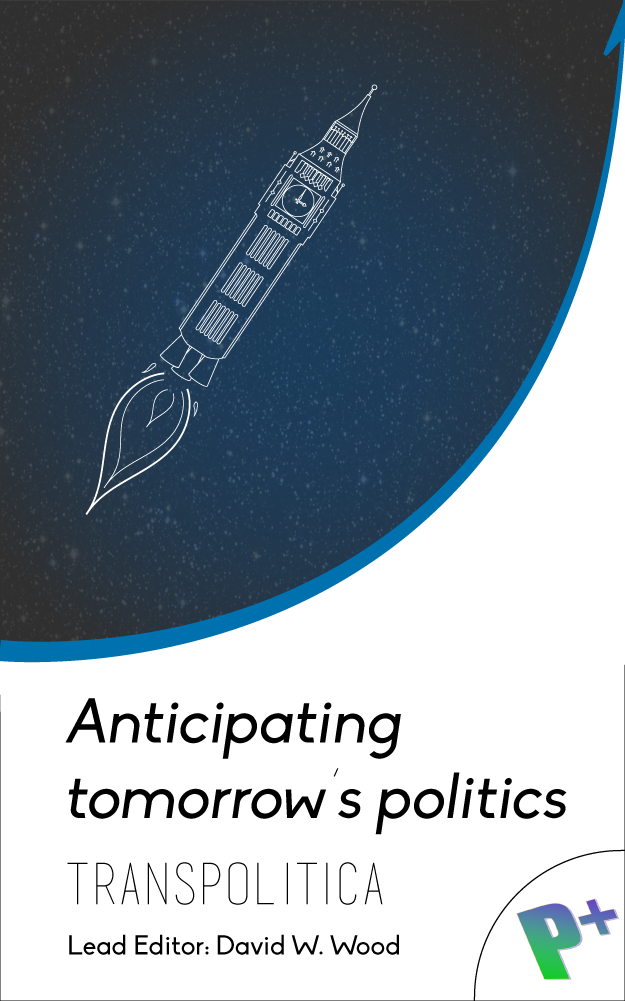 – “Westminster rocket”
Many thanks to Transpolitica consultant Alberto Rizzoli for designing these candidate covers.
Note: Transpolitica is using CIVS (Condorcet Internet Voting Service) for this poll. CIVS takes into account relative voter preferences. In this case, the poll is open – anyone with the link can take part. (CIVS also supports private polls, restricted to a given set of email addresses. In both public and private polls, the individual votes are all anonymous.)
This video was recorded in connection with Future Day, which is held each year on 1st March. To quote from http://futureday.org/:
Holidays provide a fantastic way of channeling peoples’ attention and energy.
Most of our holidays are focused on past events or individuals, or on the rhythms of nature. History and nature are wonderful and should be honored — but the amazing future we are building together should be honored as well.
Future Day is a way of focusing and celebrating the energy that more and more people around the world are directing toward creating a radically better future.
This is a brand new holiday — the first Future Day was in 2012. This year on March 1st Future Day will be even better! Let us all work together to continue to make Future Day a great success.
The video is the first in a series addressing aspects of the Transpolitica Manifesto. To be notified whenever a new video is available, click the “Follow” button that appears at the bottom right hand corner of this WordPress page.
Ahead of a Transpolitica coordination hangout that’s taking place tomorrow, Monday 16th Feb (7pm-8pm UK time), here’s a brief update on recent P+ developments.
Note: to receive these news updates directly into your email inbox, visit this page online at https://transpolitica.org/news/ and click the “Follow” button that appears at the bottom right hand corner of the screen.
Since the first Transpolitica News post, on 28th Jan, Transpolitica has hosted two Hangout-On-Air video discussions, and our sister organisation London Futurists has hosted an IRL (In Real Life) event on a topic of strong interest to Transpolitica:
In all three cases, the discussion made it clearer that these are areas which are:
In short, they’re all areas where Transpolitica researchers could usefully carry out some potential ground-breaking analysis that could, in turn, give transhumanist politicians some distinctive policy initiatives.
In the meantime, there are more questions than answers – but perhaps the chapters in the forthcoming Transpolitica book will start to provide good answers…
There’s been little news over the last two weeks of progress with chapters for “Anticipating tomorrow’s politics”. The status of various chapters, to the best of our knowledge, is as follows:
According to the published schedule, completed chapters should be in the hands of the editors by the end of February – which is in two week’s time. This is, deliberately, a bold schedule, since that’s more likely to trigger a productive state of flow in the minds of authors – and, as a result, some truly great output.
(Yes, this attitude is in line with the content of the book “Bold: How to Go Big, Create Wealth and Impact the World” by Peter Diamandis and Steven Kotler. That book is about 80% inspiration, along with 20% – say it quietly – of over-hype. Given the value of the 80% that is deeply inspiring, the book can be forgiven for the 20% where the authors’ enthusiasm produces a reality-distortion zone.)
In the meantime, there’s now a suggested book cover for the Transpolitica book:
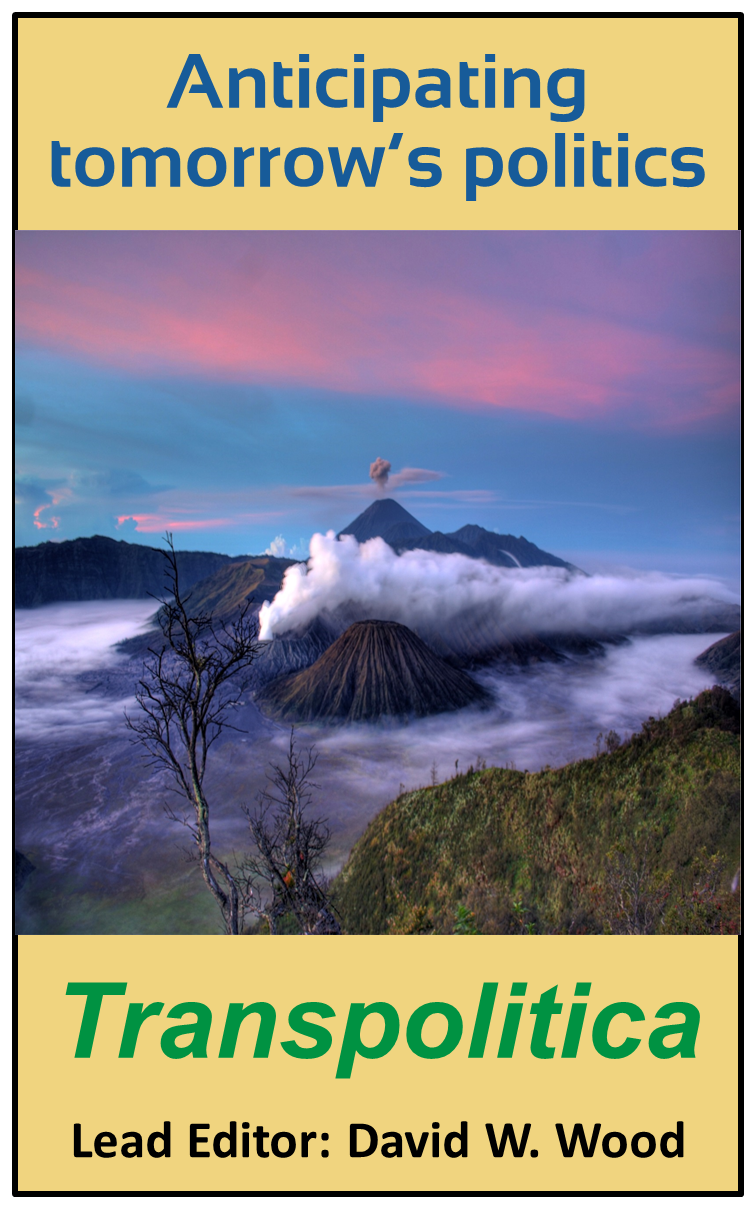
See the end of https://transpolitica.org/projects/book-project/ for more details about this cover design.
The two sets of politicians where Transpolitica is ready to help specific election campaigns are
Darren is creating a brochure which will be distributed through letter boxes within his constituency. Current thinking is that this will contain short articles on the future of transport and the future of healthcare. Transpolitica researchers should be able to help in both cases.
A broader question arises of the extent to which “online activism” can usefully replace or supersede the traditional sort of doorstep and letter box activism:
Unless a clear argument can be made to the contrary, the intention is that Transpolitica will become expert in practical online activism, via understanding how to use accelerating technology for the most effective impact on election outcomes.
One of the core ideas behind the founding of Transpolitica is to provide a “mirror” that will allow politicians of all parties to realise where they fall short as regards being aware of the opportunities and threats posed by rapidly accelerating technology.
As stated in the Transpolitica manifesto:
Current policymakers rarely tackle the angle of convergent disruptive technologies. This means they react to each new disruption with surprise, after it appears, rather than anticipating it with informed policy and strategy.
Politicians of all parties urgently need to:
- Think through the consequences of these changes in advance
- Take part in a wide public discussion and exploration of these forthcoming changes
- Adjust public policy in order to favour positive outcomes
- Support bold regenerative projects to take full advantage of accelerating technology – projects with the uplifting vision and scale of the 1960s Apollo moonshot program.
The “mirror” mentioned above is envisaged to be a combination of:
Transpolitica Consultant Alex Karran has been continuing his very interesting research work into evaluating the viewpoints of politicians in the UK. What is needed next is some decisions about the best way to take this research forward:
Activity within Transpolitica’s Loomio project has slowed significantly. At the time of writing, it is 13 days since there was any activity there.
It’s not clear if this slowdown reflects shortcomings in the tool, or (instead) the fact that we don’t have anything sufficiently contentious to decide yet.
We are open to trialling another decision-making tool, if someone makes a case that a particular tool is more likely than Loomio to facilitate high-quality decision-making.
A possible IRL launch event, probably in London, could take place, that marks:
Previously, the date of 21st March has been suggested for a launch event. No firm decision has been taken yet.
Due to circumstances behind its formation, Transpolitica’s engagements with political parties are initially dominated by the run-up to the UK General Election of May 2015. However, Transpolitica is keen to expand its activities with other politicians in other countries – subject to:
Please let us know if you would like to receive invites to forthcoming coordination hangouts. These hangouts include:
The next coordination hangout is taking place on Monday 16th February. After that, the most likely date is Monday 23rd March.
A great deal has happened in the ten days since the soft launch of Transpolitica. Here’s the first of what will become a series of updates on Transpolitica progress.
Note: to receive these news updates directly into your email inbox, visit this page online at https://transpolitica.org/news/ and click the “Follow” button that appears at the bottom right hand corner of the screen.
After an initial flurry of changes, the Transpolitica Manifesto has now been relatively stable for about a week. This manifesto sets out core ideas for policy changes:
Transpolitica calls upon politicians of all parties to define and support:
- Regenerative projects to take full advantage of accelerating technology.
More specifically, we call for:
- Economic and personal liberation via the longevity dividend
- An inclusive new social contract in the light of technological disruption
- A proactionary regulatory system to fast-track innovative breakthroughs
- Reform of democratic processes with new digital tools
- Education transformed in readiness for a radically different future
- A progressive transhumanist rights agenda
- An affirmative new perspective on existential risks.
These Headlines are preceded in the manifesto by a Preamble, and all eight Headlines are backed up by the provision of further Details.
The Transpolitica Manifesto drew inspiration from the Technoprogressive Declaration that was published in November 2014 following the TransVision 2014 conference in Paris. In turn, our Manifesto has helped to inspire a number of other political statements, including:
In parallel, the Transhumanist Party (UK) is working on its own set of Transhumanist Party Principles.
There’s an opportunity to improve the contents of the Transpolitica Manifesto in the light of the good examples provided as these other documents develop.
Another important step forward will be when the Transpolitica Manifesto is turned into one or more videos, in order to reach a wider audience.
The Transpolitica Manifesto is backed up by a FAQ. The FAQ remains a work-in-progress. If anyone would like to propose changes or additions to the FAQ, please get in touch.
The Transpolitica Projects page lists:
The project which currently has the most activity is to publish our first book of essays:
Transpolitica invites political thinkers, futurists, and transhumanists from around the world to become involved in a project to publish a book entitled “Anticipating tomorrow’s politics”.
This project is looking for chapter authors, reviewers, editors, and graphic designers.
Since the call was issued for people to submit proposals for chapters:
The stated deadline for submitting chapter abstracts (just a few sentences will suffice) is the end of January. Some submissions may be accepted after that cut-off, though the later authors leave things, the harder the hurdle they will have to overcome.
In all cases, complete publication-ready material for the chapter needs to be in the hands of the Transpolitica team by the end of February.
If anyone would like to join the team that reviews submissions, proposes edits (if needed), suggests changes to layout and graphics, etc, please make contact. (And see below for suggestions for the book cover.)
Reflections about Transpolitica – especially in the light of ideas for book chapters – show that we’re not yet in a position to advocate detailed policy recommendations. We don’t have all the answers, so far.
Over time, detailed policy recommendations will emerge. But for now, what we can – and should – do, is the following:
It is our insight as transhumanists and radical futurists that gives us the collective ability to do both of these things. In this way, we can make a cosmic dent in the political process.
What’s your favourite social media? Transpolitica online presence is growing:
On LinkedIn, there’s already been a small discussion about Transpolitica in response to a blogpost there. Transpolitica also exists as a company on LinkedIn – it’s listed as a “think tank”. See https://www.linkedin.com/company/9267587. If you’re one of the people listed on the (forthcoming) Transpolitica website page “Consultants, writers, and researchers”, feel free to add an item to your LinkedIn entry for your affiliation with Transpolitica.
The co-founding team for Transpolitica will be announced shortly.
If you are interested in becoming involved, introduce yourself on the Transpolitica mailing group, stating what you would like to contribute to Transpolitica.
Alternatively, send an email to the Transpolitica programme management team.
Note: in the start-up phase, Transpolitica is operating with zero cash-flow, and all positions are voluntary.
The following list gathers some criteria for people to be considered as a named consultant, writer, or researcher for Transpolitica:
Note: people can use aliases for their Transpolitica persona, if they have good reasons to avoid using their official names.
Applications are welcomed from people with all political allegiances (or none), all religious backgrounds (or none), all employment and education backgrounds (or none), all parts of the world, and all ages and genders, etc.
How should decisions be made inside Transpolitica? How can we “be the change we want to see”, taking advantage of the latest technology to practise better collaborative decision-making?
We’re currently experimenting with the online tool Loomio. To quote from https://www.loomio.org/about:
Loomio emerged when activists from the Occupy movement teamed up with the social enterprise network Enspiral, realising that they were using different approaches to work towards the same aim.
Loomio is being built by a core team in Wellington, New Zealand, and a wider network of friends and supporters all over the world.
Loomio organises decisions into “Discussions”. These discussions start off with context and a loose brainstorming give-and-take. Once someone has a firm proposal in mind, they click the “Create a proposal” button, and give the group a fixed amount of time to vote on it. (48 hours seems sufficient.) By design, each discussion can only have one live proposal at any one time. That can seem counter-intuitive, but it turns out to have its own merits.
It’s too early to tell whether Transpolitica will keep on using Loomio. Our experiences with it, so far, have not been decisive, one way or the other. There are many other tools we could trial, as alternatives – each with their own apparent pluses and minuses.
In the meantime, there’s a new Discussion on the Loomio board – “Book cover”. To view that discussion, and to contribute to it, you’ll need to:
(If you click on the above link, “Book cover”, Loomio should walk you through the process automatically.)
Another Transpolitica initiative is to host online video discussions relevant to the future of politics. People can view these discussions live (and ask questions to the panelists), or can catch up with the recordings afterwards. Two forthcoming events are as follows:
If you visit the corresponding Google+ event pages and RSVP ‘Yes’, Google will send you a reminder to join it.
Let us know which topics (and which participants) it would be good to feature in future Transpolitica Hangouts-on-Air.
 Transpolitica