Of Mind and Money: Post-Scarcity Economics and Human Nature

By Stuart Mason Dambrot, Synthesist | Futurist, Critical Thought

Man acquires at birth, through heredity, a biological constitution which we must consider fixed and unalterable, including the natural urges which are characteristic of the human species.

The economic anarchy of capitalist society as it exists today is, in my opinion, the real source of the evil.

Why Socialism? Albert Einstein, Monthly Review, 1949[i]

These two quotes from the same article written by Albert Einstein demonstrate that intelligence and imagination do not necessarily guard against nonconscious cognitive bias and unexamined beliefs. The question is whether either, both or neither are correct. This chapter, Of Mind and Money, provides a perspectival answer showing not only that, given advances in science and technology, the first quote is not necessarily factual, but also that as such it would support the design and implementation of a post-scarcity economic environment by modifying our fundamental, evolution-derived beliefs about scarcity, capitalism, class hierarchies, labor, and competition.

The Nature of Human Nature Redux

In the myriad discussions focused on future scenarios envisioned and articulated in science, technology, humanities, business, politics, or military, and other fields, there is one fundamental factor that is invariably undefined yet implicitly or explicitly assumed to be an unchanging and unchangeable constant.

Human nature

This is curious, in that the creators of said scenarios appear to be all about change, be they Singularitarians, Transhumanists, scientists, technologists, philosophers, or any other of the countless labels with which we describe ourselves to both ourselves and the world-at-large. Moreover, this cognitive bias is perhaps most pronounced in those scenarios concerned with post-scarcity economies, in which goods, services and information are universally accessible without the need for capital or its exchange in order to produce and acquire said goods, services and information.

This chapter will examine the evolutionary neurobiology of what we experience and perceive as human nature[ii] – the thesis being that as we learn more about the human brain and learn how to modify ourselves using a range of methods and techniques, human nature will take its rightful place amongst all other aspects of physical reality that we have studied, understood and modified.

This shift in perspective will then form the cognitive foundation of a new approach to constructing a post-scarcity/post-capital scenario that is no longer bound to attitudes and behavior long and erroneously held to be inviolate.

Human Nature: Fixed or Flexible?

In general, we appear to understand what is meant by human nature, accepting the term as if it refers to well-defined and permanent aspect of our existence. As the above quote demonstrates, this unquestioned assumption is independent of intellect, education and imagination, being more akin to religious belief in its unquestioned adherence to the axiom that human nature is, in Einstein’s words, “fixed and unalterable.” While the concept that human nature is constant is understandable when viewed as an inference based on observing historically recurrent patterns in human behavior (which are amplified versions of behaviors found in our closest hominid relatives2), only recently have science and technology given us discoveries and tools with the potential to change our evolutionary heritage and architect a very different possible future.

To this end, neuroscience, synthetic biology (a branch of biology integrating evolutionary, molecular, and computational biology with biophysics and nanobiotechnology – the melding of nanotech and biology) and other fields of established and emerging science are beginning to provide us with an understanding of our neurobiology at neural, molecular and genetic levels. These advances will then be instantiated in technologies that enable us to physiologically modify our dysfunctional attitudes and behaviors. The resulting shift in perspective will form the cognitive foundation of designing and implementing a technology-enabled post-scarcity economy by abandoning the belief that our human nature has not allowed, and therefore never could allow, such an environment to emerge and thrive on a large – much less global or exoplanetary – scale.

In addition to neuroscience and synthetic biology, the other areas key to designing and effecting human neuroaugmentation include synthetic genomics (a field within synthetic biology); optogenetics (a neuromodulation technique using light to control neurons genetically light-sensitized); neural prostheses; artificially accelerated evolution (already achieved in laboratories with fruit flies); and biorecalibration (biophysical optimization and health/life extension).

One of the main focal points in this effort might be to fine-tune the effects of the human-specific gene ARHGAP11B[iii], which appeared when the ancestral gene ARHGAP11A made an incomplete copy of itself and subsequently may have contributed to evolutionary expansion of human neocortex. (When ARHGAP11B was introduced into developing mice, the number of cortex stem cells nearly doubled and their brains sometimes developed folds – are found in primates but not mice.) The goal could be to use synthetic genomics to selectively modify phenotypic expression in the developing human brain of neural tissue and connectivity between the neocortex and the more primitive brain areas where emotion, motivation, habituation, and other functions occur.

One salient example can be seen in recent neuroscience research[iv] showing strong evidence that interpersonal differences in a specific area of the human brain are associated with different prosocial behavior. In another relevant study[v], neuroscientists at MIT identified the brain circuit in laboratory mice that controls how memories become linked with positive or negative emotions, and as a result were able to modify the emotional associations of specific memories using optogenetics – a method for controlling brain cells with light. More recently the technique has been used[vi] in mice to dramatically reduce stress-related depression-like behavior by activating positive memories.

The question might well be raised of why we cannot rely on widely-promoted sociocultural measures as a way to create a different conception of human nature, and thereby to change, abandon or transcend our biologically-determined behaviors by which we practice various degrees of inhumanity. While science, technology, medicine, knowledge, and other endeavors continue to advance at an accelerating rate, our basic behavioral patterns (in Einstein’s words, “biological constitution” and “natural urges”) have not. In fact, despite protests and legislation, other factors such as air and water quality have globally declined due to capitalism-motivated processes, with air itself now being carcinogenic[vii](causing lung cancer and contributing to bladder cancer) and water becoming increasingly both polluted[viii] and scarce[ix].

For these reasons, the assertion that sociocultural programs and legislation (given the role of corporate and individual wealth in politics) will address our species’ destructive behaviors seems somewhat naïve. Rather, a solution based on a medical model in which dysfunctional individual and group behaviors are seen not as causative but as symptoms of a deeper cause – our evolutionary neurobiology. The transformation of human society via optimizing human nature thus becomes a crisis to be scientifically analyzed and corrected rather than an anthropological project to be observed and discussed.

The Ethics of Enlightenment

Would this approach raise concerns? By all means: Does genetically resetting human neurobiology cross medical and/or ethical lines? Might this approach be considered Eugenics? Should any group or societal class have the authority to proceed with such a project? And so on. How might these issues be addressed – and are they, even in principle, addressable? On the other hand, are they in principle very different from other medical-model-based interventions?

Consider bioaugmentation applied to a serious disease: Imagine the development of a completely safe genetic treatment for cancer using – the same protocol hypothesized for resetting human nature. Despite the technology, delivery vector and safety of this cancer eradication protocol being equivalent to those of the universal transformation of human nature, it is likely that the former would encounter far less resistance than the latter. Why might this be the case? Several possible explanations come to mind:

  • While eliminating cancer is clearly perceived as a medical protocol focused on a range of terrible diseases, human nature is decidedly not seen as a disease state despite the parallels in symptomology (that is, where the problems and crises endemic in human society are seen as symptoms of many of our evolutionarily-determined behaviors)
  • A nonspecific fear of medical or genetic technology that operates at a scale or in a manner that people do not understand
  • There may be a religious factor at play, as evidenced by the belief by a remarkable number of people (despite the tremendous advances in evolution and genetics) that human beings did not evolve from earlier hominids, but rather were created by a divinity in that divinity’s image

In the above situations, education and social programs may be very helpful in laying the groundwork for accepting a medical model as a way of stopping and reversing the destructive path capitalism, as well as those who blindly accept its principles despite suffering as a result, seem committed to pursuing.

The Consequences of Capitalism

Capitalism has clearly demonstrated its profoundly negative impacts on individuals, groups, nations, the planet, and the space surrounding Earth. In terms of individuals, there is profoundly unequal access to many critical foundation areas, including food, clean water, electricity, healthcare, income, housing, transportation, education, security, governance, voting, freedom from, and freedom to. Two real-world examples illustrate the immensity of the problem:

Extreme Wealth Disparity

  • The 85 wealthiest individuals on Earth have assets roughly equivalent to 3.6 billion others
  • In 2011 Deloitte & Touche reported that the wealthiest 400 American families had assets of approximately $11 trillion, with the 2020 estimate being $19 trillion
  • Social Security, Food Assistance, Medicaid and other social safety nets are under defunding attacks from legislators whose salaries are by the citizens who voted them into office

Income and Mortality

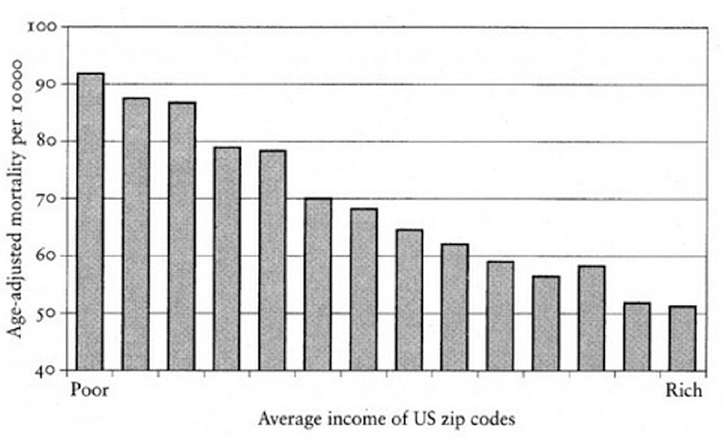
The following chart[x] shows a nearly linear relationship between income level and age-related mortality: Those with lower incomes die at an earlier age.

Mortality and incomeIncome level and age-related mortality. Source: The Zeitgeist Movement Defined: Realizing a New Train of Thought, The Zeitgeist Group. Creative Commons CC BY-NC-SA 4.0 license.

These large-scale expressions and implementations of capitalism and other problematic behaviors based on our evolutionary neurobiology are not entities in and of themselves: They appear that way because large-scale events are agglomerations of more-or-less coordinated individual behaviors. However, even single events – especially when identified as part of a widespread practice or trend – deserve our attention. A case in point: a few representative reports from a single daily issue published on the progressive Daily Kos[xi] website are representative of a range of dysfunctional trends – some far more disturbing than others:

The typical approach to addressing these problems, articulated by Einstein and many others – whether sincerely or cynically – invokes ethics, culture, education, communication, social programs, legislation and other indirect measures. Unfortunately, given the increasingly elitist and militaristic activities trending on a global basis, this solution appears to be (except on a limited and temporary basis) less than effective.

Human-induced Mass Extinction

Much as global warming is only one factor in climate change, climate change may be part of a much more severe event caused by capitalism-fueled human activity. A paper recently published[xvi] by scientists at the universities of Stanford, Princeton and Berkeley found, even using highly conservative criteria, that current extinction rates far exceed those known to exist in our planet’s five previous mass extinction events[xvii]as determined by fossil records. The researchers found that their estimates reveal an exceptionally rapid biodiversity decline over the previous few centuries, concluding that a sixth mass extinction – one that would take millions of years, with Homo sapiens disappearing sooner rather than later – is already taking place.

Cumulative extinctions

Cumulative vertebrate species recorded as extinct or extinct in the wild by the International Union for Conservation of Nature (2012). Source: Accelerated modern human–induced species losses: Entering the sixth mass extinction. Science Advances (2015) 1:5 e1400253. Copyright © G. Ceballos, P. R. Ehrlich, A. D. Barnosky, A. García, R. M. Pringle, T. M. Palmer. Creative Commons CC BY-NC 4.0 license. Courtesy: American Association for the Advancement of Science and Gerardo Ceballos.[xviii]

Specifically, they found that over the last century vertebrate species (that is, those having backbones) have gone extinct at an average rate as high as to 114 times than the background, or non-mass extinction, rate – a rate that would normally take place over as long as 10,000 years – and, critically, that this trend is caused by human activities including climate change, pollution, deforestation, habitat loss, and overexploitation for economic gain – all of which, the scientists note, are related to human population size and growth, which in turn increases consumption (predominantly by the wealthy) and economic inequity. They caution that “averting a dramatic decay of biodiversity and the subsequent loss of ecosystem services is still possible through intensified conservation efforts, but that window of opportunity is rapidly closing.”

Post-Scarcity Economics: Beyond Capital

It should be noted that the term post-scarcity economics is sometimes described as being self-contradictory, since most – but not all – definitions of economics are based the dynamic between scarce resources and demand for goods, services and information based on or incorporating these scarce resources, with capital as the foundation for all economic transactions. On the other hand, a post-scarcity economy can operate without the need for capital while still responding to supply-and-demand forces in determining the resources needed to fulfill demand.

This post-scarcity vs. post-capital question can be resolved by reconceptualizing and redefining economics – as has occurred repeatedly over the centuries – as the transformation of resources into goods, services and information that are provided to individuals or groups who demand and then acquire them. Given the technology-based labor-free structure of a post-scarcity environment, the definition of post-scarcity economics then becomes the post-capital, technology-enabled, demand-responsive transformation of resources into goods, services and information that are provided to individuals or groups who acquire them.

That being said, post-scarcity embodiments have been conceptualized for many years. The efforts most salient to the thesis herein include Technocracy Movement[xix], which proposed replacing politicians and businesspeople with scientists and engineers who had the technical expertise to manage the economy; Venus Project[xx], which calls for a culture redesign to make war, poverty, hunger, debt and unnecessary human suffering unacceptable and explores the determinants of behavior to dispel the myth of human nature, asserting that environment shapes behavior; Zeitgeist Movement[xxi], reminiscent of the Technocracy Movement and previously aligned with the Venus Project, is focused on technology, post-scarcity, post-capital, post-labor and direct (nonrepresentational) governance; and Transpolitica[xxii], a grassroots Transhumanist political organization focused on enabling society to transcend the limitations and constraints of today’s political models.

Post scarcity

How would a fully-realized post-scarcity environment be structured? First and foremost, despite having elements in common with some systems, it will not take the form of any existing sociopolitical economy, including the usual suspects: capitalism (private property and ownership of means of production, capital accumulation, wage labor, market competition, labor theory of value); socialism (social ownership of means of production and co-operative management of the economy); communism (common ownership of means of production; absence of social classes, money and the State); and anarchism (absolute individual freedom and absence of government).

While the closest post-scarcity analogue is communism, the essential differences are that in technology-enabled post-scarcity there is neither labor nor ownership of the means of production. Moreover, analogous to the assumptions about the term economics discussed earlier, it is often thought that there is only one form of anarchism[xxiii] (as per the standard definition above) – but this is decidedly not the case[xxiv]. Anarchism variants can support fundamentally different political systems that vary from extreme individualism to complete collectivism – and in addition, there is a well-established link[xxv] between specific anarchist schools and post-scarcity/post-capitalism, of which examples include:

A post-scarcity system will therefore have unique features and technologies. Firstly, it will be an technology-enabled post-capital, post-labor, Crowdsourced Peer-to-Peer Networked Anarchy characterized by an absence of wealth, class, and governance hierarchies; autonomous intelligent ownerless production; distributed egalitarian point-to-point self-governance in which each individual or group can self-define as an independent polity; and Nash equilibrium replacing zero-sum game theory. Secondly, a valuation system based on positive inclusive qualities and behaviors such as reputation, inventiveness, equanimity, enablement, and empathy will replace monetization and profit. Thirdly, a post-scarcity architecture will entail a number of current (but significantly advanced), emerging, and potential technologies in four primary areas: personal production (advanced 3D/4D printers, nanofabricators); security (reputation encoding, quantum encryption, blind quantum computing); Artificial General Intelligence and autonomous robotics; and emerging, exotic and theoretical energy sources (compact fusion[xxxiii] and Polywell fusion[xxxiv], quantum thermionic conversion[xxxv], antimatter[xxxvi], and zero-point energy[xxxvii]).

Coincident with the science and technology trends outlined above, researchers studying spatial models of complex systems found that genetically-programmed mortality, while not benefitting individuals, in certain cases results in long-term benefit to the local population by reducing local environmental resource depletion. While noting that intrinsic mortality is not favored for long-range spatial mixing or if resources are unlimited, the paper[xxxviii] does not actually suggest that post-scarcity results in immortality. However, the open question is whether post-scarcity might support a human-induced genetic adaptation that would modify the scarcity-based evolutionary default of aging and limited lifespan – potentially to the point of immortality.

Despite the utopian nature of a post-scarcity economy, however, the transition to a global post-scarcity environment without human nature being universally optimized not only virtually guarantees it being rejected and prevented by capitalist interests, but also carries with it the potential for a new generation of criminal activity corresponding to the technologies described above– that is, reputation spoofing, false demand process interruption, genome hacking, neural theft, robotic telepresence hijacking, blind quantum communication capture, induced entanglement decoherence, and Artificial General Intelligence cracking. These, of course, will necessitate a corrective response, which will simply replicate our current environment in a more advanced technological context.

For these reasons, it would be wise to stage the transition such that elevating human nature is accomplished prior to attempting to construct a post-scarcity economy.

Revolution through Evolution

Summary:

  • Einstein was correct about capitalism but missed the mark on human nature
  • In a medical model, our myriad problems can be seen as symptoms of a central underlying condition, rather than cultural problems that can be addressed by social policies
  • That causative condition is a direct and primary consequence of our hominid evolutionary neurobiological heritage
  • The path forward to an enlightened world is for each individual to physiologically evolve beyond that heritage
  • We can wait for thousands of generations (natural evolution is slow) or use the science and technology our brain has manifested to achieve that step in a matter of decades.

The decision is ours to make.

References

[i] Why Socialism? Albert Einstein, Monthly Review, 1949

https://monthlyreview.org/2009/05/01/why-socialism/

[ii] The Zeitgeist of Change

https://transpolitica.org/2015/04/06/the-zeitgeist-of-change/

[iii] Human-specific gene ARHGAP11B promotes basal progenitor amplification and neocortex expansion

http://www.sciencemag.org/content/347/6229/1465.abstract

[iv] Spatial gradient in value representation along the medial prefrontal cortex reflects individual differences in prosociality

http://www.pnas.org/content/112/25/7851.abstract

[v] Bidirectional switch of the valence associated with a hippocampal contextual memory engram

http://www.nature.com/nature/journal/v513/n7518/full/nature13725.html

[vi] Activating positive memory engrams suppresses depression-like behaviour

http://www.nature.com/nature/journal/v522/n7556/full/nature14514.html

[vii] IARC: Outdoor air pollution a leading environmental cause of cancer deaths

http://www.iarc.fr/en/media-centre/iarcnews/pdf/pr221_E.pdf

[viii] World Water Assessment Programme: Water pollution is on the rise globally

http://www.unesco.org/new/en/natural-sciences/environment/water/wwap/facts-and-figures/all-facts-wwdr3/fact-15-water-pollution/

[ix] Water Fact Sheet Looks at Threats, Trends, Solutions

http://pacinst.org/publication/facts-on-the-worlds-water/

[x] Based on data in G. D. Smith et al, Socioeconomic differentials in mortality risk among men screened for the Multiple Risk Factor Intervention Trial: I. White men, American Journal of Public Health (1996) 86(4): 486-496.

http://www.ncbi.nlm.nih.gov/pmc/articles/PMC1380548/ (PDF)

[xi] Daily Kos

http://www.dailykos.com/

[xii] Teen stripped of National Honor Society position because she dared wear a sundress—in Florida

http://www.dailykos.com/story/2015/06/02/1389865/-Teen-stripped-of-National-Honor-Society-position-because-she-dared-wear-a-sun-dress-in-Florida

[xiii] NC Pastor tells graduating seniors they’ll be going to hell if they’re gay

http://www.dailykos.com/story/2015/06/02/1389845/-NC-Pastor-tells-graduating-seniors-they-ll-be-going-to-hell-if-they-re-gay

[xiv] School lunch room manager fired for giving out food to children without lunch money

http://www.dailykos.com/story/2015/06/02/1389964/-School-lunch-room-manager-fired-for-giving-out-food-to-children-without-lunch-money

[xv] Florida police murder black computer engineer as he listens to music; attempted cover-up exposed

http://www.dailykos.com/story/2015/06/01/1389661/-Florida-police-murder-black-computer-engineer-as-he-listens-to-music-attempted-coverup-exposed

[xvi] Accelerated modern human–induced species losses: Entering the sixth mass extinction

http://advances.sciencemag.org/content/1/5/e1400253.full

[xvii] Mass Extinction Event

https://en.wikipedia.org/?title=Extinction_event

[xviii] Graphs show the percentage of the number of species evaluated among mammals (5513; 100% of those described), birds (10,425; 100%), reptiles (4414; 44%), amphibians (6414; 88%), fishes (12,457; 38%), and all vertebrates combined (39,223; 59%). Dashed black curve represents the number of extinctions expected under a constant standard background rate of 2 E/MSY. (A) Highly conservative estimate. (B) Conservative estimate.
For a larger version of the image, see http://d3a5ak6v9sb99l.cloudfront.net/content/advances/1/5/e1400253/F1.large.jpg

[xix] The Technocracy Movement

http://technocracy.wikia.com/wiki/Technocracy_movement

[xx] The Venus Project

https://www.thevenusproject.com/en/

[xxi] The Zeitgeist Movement

http://thezeitgeistmovement.com/

[xxii] Transpolitica

https://transpolitica.org/

[xxiii] Anarchism

https://en.wikipedia.org/wiki/Anarchism

[xxiv] Anarchist Schools of Thought

https://en.wikipedia.org/wiki/Anarchist_schools_of_thought

[xxv] Post-Capitalism Anarchism

https://en.wikipedia.org/wiki/Post-capitalism#Anarchism

[xxvi] Post-Scarcity Anarchism

https://en.wikipedia.org/wiki/Post-Scarcity_Anarchism

[xxvii] Social Ecology

https://en.wikipedia.org/wiki/Social_ecology

[xxviii] Libertarian Municipalism

https://en.wikipedia.org/wiki/Libertarian_municipalism

[xxix] Anarchist Communism

https://en.wikipedia.org/wiki/Anarchist_communism

[xxx] Direct Democracy

https://en.wikipedia.org/wiki/Direct_democracy

[xxxi] Common Ownership

https://en.wikipedia.org/wiki/Common_ownership

[xxxii] Anarcho-syndicalism

https://en.wikipedia.org/wiki/Anarcho-syndicalism

[xxxiii] Compact Toroid

https://en.wikipedia.org/wiki/Compact_toroid

[xxxiv] Polywell Fusion

https://en.wikipedia.org/wiki/Polywell

[xxxv] Thermionic Energy Conversion (PDF)

https://nems.stanford.edu/thermionic-energy-conversion

(http://gcep.stanford.edu/pdfs/UVaodfDrAb3BdgeRCpoy-w/07-Chen-GCEP-Workshop.pdf)

http://phys.org/news/2011-08-tiny-tech-big-results-quantum.html

[xxxvi] Antimatter Fuel

https://en.wikipedia.org/wiki/Antimatter#Fuel

[xxxvii] Zero-point Energy

https://en.wikipedia.org/wiki/Zero-point_energy

[xxxviii] Programed Death is Favored by Natural Selection in Spatial Systems

http://journals.aps.org/prl/abstract/10.1103/PhysRevLett.114.238103

Footnote

The article above features as Chapter 6 of the Transpolitica book “Envisioning Politics 2.0”.

Specifications: An engineer’s approach to upgrading politics

By René Milan, Thelemic Transhumanist [see editor’s note[i]]

Terminator Salvation 2.0

Introduction

When i first heard about the prospective title of this book i was baffled.  Politics 2.0 – what might that mean?  Like most people probably would, i immediately associated it with the numbering system commonly used in software releases, but having worked as a programmer for 30 years i could not see how this could be applied to something as complex and diffuse as politics.  However if taken as something like a cognitive metaphor i still could not clearly grasp its meaning, beyond the vague implication of improvement over Politics 1.x, presumably what humanity is struggling with today.

As is my habit in such cases i forgot about this for the time being, and three days later as hoped a possible solution occurred to me.  What if i simply maintained the software approach and regarded the task as coming up with an improved kind of politics according to user requirements?

And already i run up against a fundamental problem in business software development, which constitutes the bulk of my experience: user desires are taken into consideration, but mostly within the strategic framework of increasing productivity, which can under smarter management even, and at best, include user contentment.  But the real driver is always some kind of business case for increasing profitability.  “Who pays the piper calls the tune.”

However in this case only the user pays (the very minimal cost of this book), so i am free to assume the user’s perspective in presenting, not a completely deliverable solution, which would be way beyond any single person’s capacity, but at best a draft of specifications for an upgrade to current politics with the aim of providing an improved user experience.  Unfortunately i can not query all seven billion users, but as i am one myself, and as the major shortcomings of current politics can be seen so clearly, i believe to have enough to go on.

Thus in the following i shall attempt to identify the drivers and mechanics of current politics, determine what effect they have on the people subjected to them (users, willy or nilly) and offer conclusions on how they could and should be improved for a Politics 2.0 release.

The current state of affairs

Sampling the currently prevailing conditions, unscientifically, simply from the common anecdotal user experiences gained by following international news, one can easily identify the main factors determining the ideas, the interests and the effects shaping the reality of current politics worldwide.

I Nation

The ultimate determinant of politics within a certain geographical area is, at least theoretically, the nation controlling this area, regarding the area and the idea of the nation as inextricably intertwined, as different aspects of the same national identity, which is claimed to be sacrosanct and tends to take on mystical proportions by associating itself with concepts of destiny, providence and even divinity.  Two good examples of how the myth of the nation was, and keeps getting to be, reinforced over the decades are the films “Birth of a Nation[ii] by Griffith from 1915, and “Triumph des Willens[iii] by Riefenstahl from 1935.  The current state of affairs is rather surprising considering that as recently as 500 years ago the idea played virtually no role in politics; the basic units then were empires, kingdoms and lower level fiefdoms.  While even only 200 years ago, and in reality even now, fixed borders were not effective in large parts of Africa, the middle east and elsewhere, today everybody claims ‘national sovereignty’ to be the highest good, in practice only one’s own.  The days of internationalism being part of anyone’s political agenda are long gone (early 20th century communism).  And even though there are international treaties and organisations, they are by design subservient to the interests of (the strongest) nations.  A possible exception to this was initially the EU, conceived out of the fresh experience of what nationalism ultimately results in, but as time passed even that unique experiment seems to have become secondary to the interest of the nations who were supposed to be absorbed and dissolved into this new structure.

The effects of this common paradigm are obvious.  In the name of ‘national security’ large proportions of the people’s wealth are endlessly spent on weaponry, subventions and trade preferences in order to make the nation ‘stronger’, but as this happens everywhere simultaneously in proportion to national wealth and moderated only slightly by variations in national ideologies, the effects of these efforts are largely cancelling each other out.  But what are the effects on the objects of our deliberations, the users of politics 1.x?

It appears that among the users three distinct groups can be identified.

  1. Those who directly or indirectly benefit from the expenditures generated under these conditions
  2. Those who get some emotional satisfaction merely from abstract ideas like that of a ‘strong nation’
  3. The rest

It also appears that ‘the rest’ constitute an overwhelming majority, and that they are therefore disproportionally exposed to the negative effects generated under current conditions, namely

  1. an increase of influence of the small groups identified under 1. and 2. above, and the resulting decrease of influence of the majority, meaning that most users are deprived of their voice in these matters
  2. the loss of resources wasted on this global zero sum game, which could otherwise be spent on truly beneficial endeavours such as improvements of health, educational, infrastructural and environmental conditions even in times of those destructive tools not being used
  3. direct (death and wounding, loss of habitat) and indirect (loss of resources, property, income, health and home) effects in times and places when and where these tools are used

To stay within the metaphor this importance of the nation could be seen as a current operating system feature, and as a consequence of the above it seems obvious to this engineer that for an upgrade to Politics 2.0 with the aim of an improved user experience the first prerequisite would be an OS upgrade that completely eliminates the role of the nation from the operating environment.

II Religion

Increasingly we can observe over the last few decades the effects of religious influence on politics and beyond.  This influence has been with humans at least since the agricultural revolution 10,000 years ago and the resulting congregation in large settlements (cities) and division of labour.  Even before that time this influence was obvious and actually potentially useful, for instance in the chieftain asking the shaman for advice in matters of hunting, planting, moving or fighting.  But in those days there was not yet a clear separation of religion and science.  After that time it took the form of identification of political leaders as divine entities (egypt etc), which was, for reasons which to explore would be beyond the scope of this brief analogy, common in the three early human large cultural evolutionary centres based in Mesopotamia and along the Nile and the Indus.  In the more off centre and smaller kingdoms it was less common.  Through the Greeks and then the Romans Europe inherited many values and institutions of the earlier civilisations, but the Greeks establishing philosophy and science outside of the domain of religion constituted an early break of the religious monopoly on politics which was only reestablished, partially, when Theodosius I decreed, of all the choices, xtianity to be the new state religion of Rome, which then survived the collapse of the western empire and positioned itself to sanction, or not, subsequent european monarchies.  This lasted throughout the middle ages and ended through the reformation, but was not ideologically questioned until the emergence of the enlightenment over a century later.  Nonetheless, religious influence and privileges are still common in Europe, and more so in the u.s.  Islam, being 500 years younger, is still at the beginning of its own reformation, and most countries in which it is dominant are explicitly defined as ‘islamic nations’.

Again let us examine the effects of this state of affairs on the users of politics 1.x.

The users are divided along similar lines and in similar numbers as under I.  In simple and direct terms there are the beneficiaries (who gain material advantages), the ideologues (who gain ideological, mental advantages), and the victims (who gain nothing).  And again we see a disproportional allocation of desirable and undesirable effects: too much political power for the first two smaller groups to the detriment of the third and largest group, a waste of resources on the privileges enjoyable by the first two groups largely paid for by the contributions of the third, and a host of policies restricting freedoms of users, most of whom are part of the latter group, as in marriage, abortion, political and sexual privileges.

Thus it becomes clear that a second OS upgrade is required in order to completely eliminate the influence of organised religion on the political domain, before implementation of Politics 2.0 with the aim of improving user experience can be undertaken.

III Greed

I had briefly considered giving this section the heading ´Money’, however money is merely a quantification of material value, created to have something approximating an objective measuring device for this value.  Clearly ‘objective’ is meant in a very relative manner, only in the sense that many would, or are simply forced to, agree that certain material and even immaterial objects have a particular value that can indeed be expressed by using this device.  In reality monetary value is defined by desirability, a very subjective concept, which in turn derives from real (biological) or artificially created (psychological) need.  Another option could have been ‘capitalism’, but that is just the currently fashionable term for the underlying force, which is truly greed, and which has been a driver of economic activity for much longer (in fact since the concepts and activities of hoarding and raiding proved to be conducive to survival) than the term ‘capitalism’ existed.

Again the effects on the experiences of the vast majority of the users are dismal to say the least.  As before, and more so than above, we have a subgroup of users who benefit materially, giving in to the genetic imperative of hoarding more than is reasonable, needless to say at the cost of the majority, many of whom do not have enough to even ensure material survival.  In between we have what used to be called the silent majority, which is not so silent anymore, and on a global scale certainly not a majority, who get by materially, but get nothing more out of a bad deal than some sort of intellectual satisfaction for which they were psychologically conditioned by the media controlled by the material beneficiaries in the first place.

This then is the third, actually the most important, operating system upgrade that is a prerequisite of even being able to implement a set of policies that could qualify as Politics 2.0.  I say the most important, because all the problems caused by ideologies such as nationalism and exoteric religion ultimately are maintained in the service of this same force, namely greed.  I am well aware that to resolve this problem requires a deep intervention in what is generally perceived as ‘human nature’, in reality merely the current manifestation of a genetic configuration resulting from arbitrary biological and historical conditions, which humans are becoming finally able to change, if only agreements on these issues can be arrived at.  But this subject is again beyond the scope of this piece.  Nonetheless i must point out that this must and will be addressed in the appropriate context.

The Needs

Once these operating system changes are in place, meaning that we can work on a basis of not meeting fundamental resistance to changes in software, or in policies, we can try to determine what is actually needed in order to arrive at maximal user satisfaction.

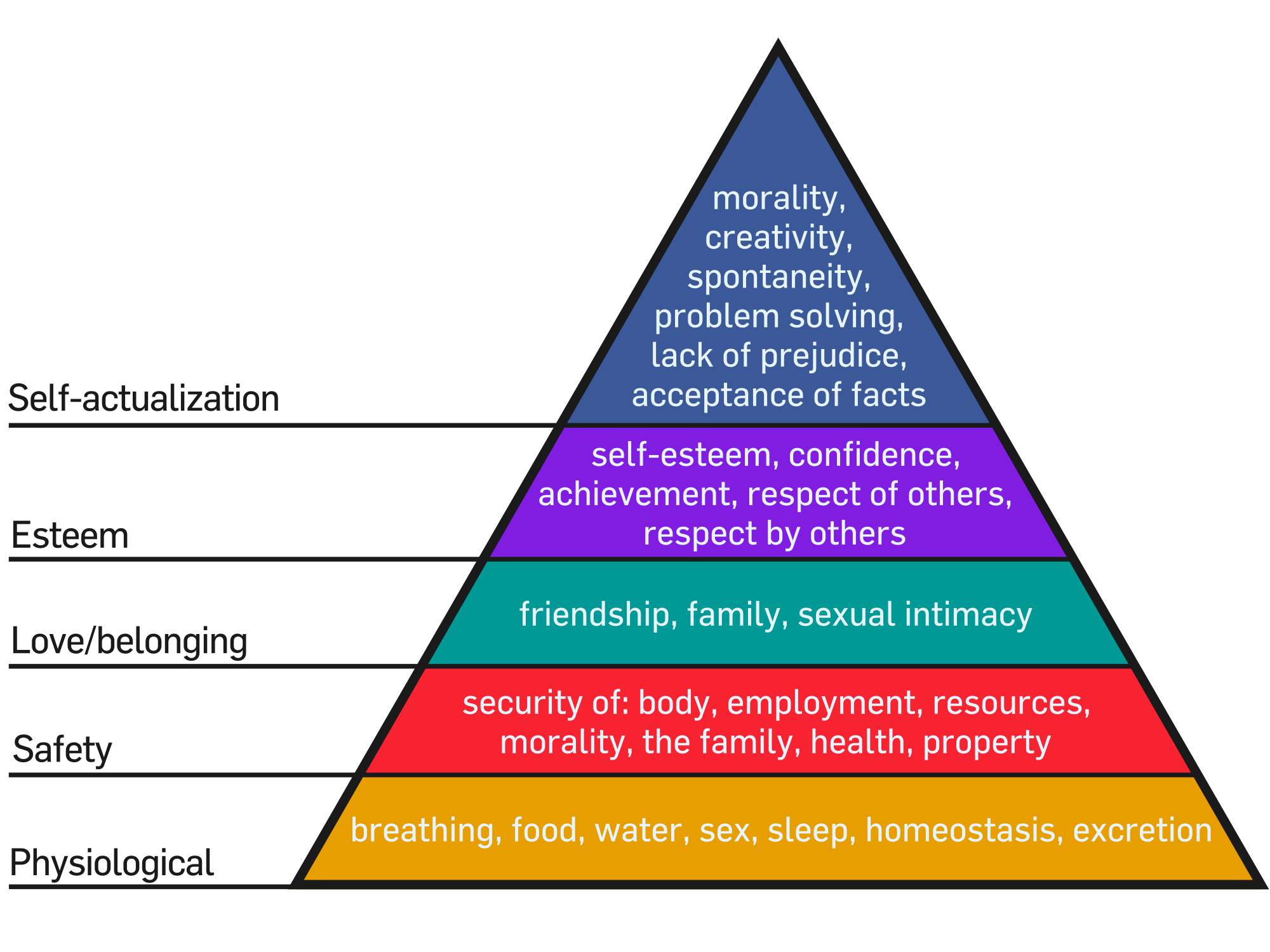
What do users want?  It might be helpful to take a fresh look at Maslow’s Hierarchy of Needs[iv], as users want most what they need most:

Maslow's_Hierarchy_of_Needs

The hierarchical nature of this concept seems to be quite obvious.  Nobody will be too concerned with self esteem or even family if they can not fulfil their needs for food and drink.  So it must be, contrary to currently prevailing conditions where certainly safety requirements are not guaranteed to be met for millions of users, paramount for policies meeting the specifications of Politics 2.0 to ensure that these needs are met.  Then the question of priorities arises.  As politics will consist largely in the art of applying still, even after eliminating the parasitical forces described above under III, limited resources equitably on a global scale, before the needs above the basic two lower levels can be addressed all users must be elevated to that level, explicitly the first global priority must be to create conditions within which all users can elevate themselves to level three, or in other words, everyone’s physiological and safety needs must be met.

On this basis let us examine how Politics 2.0 can and should impact the safeguarding of meeting these needs.

1. Physiological

On the physiological level it is clearly the first three items that are vulnerable to adverse political conditions.  Even a partly commercial, partly scientific and purely adventurous project like MarsOne must include provisions to guarantee the users’ access to air, water and food, and to do so is a political decision.  On this planet environmental conditions vary so widely that pressures are quite different between various places.  Nonetheless given current population distribution it is the function of politics, and 2.0 in particular, to safeguard supply of these resources within the powers of current technologies, whose limits are increasingly tested as by rising sea levels and desertification.

  1. Air is one of the oldest problems. In recent decades air pollution caused problems in the 20th century, famously in L.A., Tokyo, Mexico etc, but these problems have been solved there long ago and the knowhow and technologies are easily available.  Nonetheless we have seen recent recurrences, especially persistent in Beijing, and surprisingly in Paris.  Other recent incidents were caused by burning of rainforest in Borneo and even volcanic eruption in Iceland.  With the exception of the latter these occurrences can be more or less easily controlled, especially after elimination of the greed factor, and the will and means to do so must be part of Politics 2.0.
  2. Food is a much more complex issue than the problems with air. It has environmental, technological, cultural and social components.  Since its establishment 10,000 years ago agriculture has undergone, and caused, some profound changes.  Its industrialisation throughout the 20th century is perhaps the most important, and its results are mixed.  Efficiency has increased, but its social effects (transfer of ownership to corporations), the impact on health and environment (large scale use of industrial chemicals, large monocultures and subsequent environmental degradation), and cultural consequences (establishment of an unprecedentedly large meat eating habit) are mostly negative.  Even the potentially so positive impact of genetic modification technologies has under the current capitalist paradigm often had negative social consequences (but these should be eliminated by the measures recommended under III).  To rectify these problems will constitute a major chunk of work writing low level requirements and coding for a release as part of Politics 2.0.
  3. Water availability is strongly intertwined with the issues hinted at under b) as 70% of the water utilised in the context of human activity is used in the service of food production. Therefore some of the current problems with water shortage deriving from overuse of current resources, as practiced in the course of industrial meat production, will be alleviated by measures designed to improve global food supply.  Nonetheless global aquifer depletion[v], which is currently gaining attention in California, besides the many places where it has long been an urgent issue, will remain a problem alongside political issues such as conflicts around water rights, such as in the middle east and along the Nile, and will have to be addressed when developing Politics 2.0.  One hope i have in this context is large scale cheap implementation of new desalination technologies.
  4. A resource not explicitly mentioned in the above hierarchy triangle but certainly closely intertwined with the three mentioned above is energy. Energy is needed in providing the other three, in transportation and communication, and even to provide creature comforts (making it warm where it is too cold and vice versa).  But energy has been the subject of global discussions for quite some time, largely in a context of power politics (in the name of obsolete nationalism), but increasingly also as an environmental issue.  Even after the recommended OS upgrades, which will eliminate the profit motive and the attendant manipulation of energy prices, a lot of creativity and effort will have to be applied to better provisions in Politics 2.0.
  5. Health is listed on level two of the pyramid, but it really affects all the levels throughout. What is referred to as level two health, is probably something like the minimal health required to allow the individual to function reasonably well in its survival activities within nature and society.  But if health is negatively affected by crippling or disabling, chronically painful, or fast progressing mortal disease, functionality even on the physiological level is denied.  Of course there are cultural practices prevailing in some human and other mammalian societies designed to mitigate the effects, but they amount to palliative interventions at best.  Therefore it must be addressed here.   Like the four previously mentioned issues it is out of the control of individuals, and even the most advanced efforts by organised health institutions are still far from understanding aetiologies of, or developing therapies for, many diseases including death.  Clearly political efforts in this area are also of the highest priority and must be a fundamental consideration in the process of upgrading politics.
  6. The other listed items, sex, sleep, homeostasis and excretion, are, in a healthy individual (and society), pretty much self regulating physiological processes. One other issue relevant in this context and connected with health, education, infrastructure and last not least direct individual control is hygiene, but its centre of gravity lies probably on the next level.

2. Safety

Beginning on the level called safety things get somewhat more complicated.  It becomes obvious that two factors, relevant throughout, that are not explicitly listed, assume increasing importance: education and infrastructure.  Listed however are several items that are quite culture specific and do therefore not belong into this pyramid of needs at all.

  1. Education beyond the level of basic survival skill is clearly a prerequisite for maintaining control of access to resources, specifically those pertaining to economic activity, caring for offspring, health and hygiene, and perhaps issues of morality. And its need goes way beyond this level, after all how can one currently fulfil one’s needs for esteem and self actualisation if one can not read or write or has not developed one’s capacity for logical and critical thinking?  It is a prerequisite best met by society, not private enterprise with its overriding profit motive, which is also not exactly interested in maintaining and growing a customer base with capacity for independent thought as history has shown and does to this day, but we will have eliminated its influence already with the measures undertaken as recommended in III.  But education itself is undergoing profound paradigm shifts.  While in many places primary and secondary education still takes the form of assembling the youth of the village in (or at) one place for communal teaching, investigation, experimentation and conversation, or that of not yet technologically replaceable traditional individual teaching by experts or masters, in places with access to advanced technology education is becoming increasingly nonlocal and free of cost.  This is very welcome in principle, but the difference in possibilities of access to the enabling technologies between these places raises another issue: infrastructure.
  2. Infrastructure is even more important in the provision of health services than in education. Advanced knowledge and technologies are of no value to the users unless they can be delivered to where they are.  Thus a complete network of operators (hospitals with physicians, equipment and personnel) within reasonable proximity to users, which is still widely lacking, must be established.  This in turn is dependent on solid transportation facilities.  If health and education services are provided online, as is becoming more and more common, requirements include a reliable and secure communications network.  Needless to say, both types of infrastructure require availability of the energy to operate and maintain them.
  3. Security of body is a concept subject to various influences. The most direct and often irresistible one is force majeure, as executed by natural disasters.  Human technology may never be able to completely shield users against its impacts as long as life is based on physical substrates within this universe.  But given that terra is a normally slowly changing environment compared to current user life spans, much progress has been made for example in adjusting construction technologies in earthquake prone japan or fending off the sea in the low lying netherlands.  Much more must be done especially in the light of climate change and rising sea levels.  Security threats caused by humans must be considered as criminal after military conflicts have been eliminated by overcoming the nation concept, and are being handled in two major ways: law and therapy.  It is clear that both approaches are still in their infancy; therefore much research in these areas must be undertaken under the provisions of Politics 2.0.
  4. Employment and property are both economic concepts and can be discussed together. The original function of both is to secure the user’s economic basis, in other words they are tools toward guaranteeing the fulfilment of the user’s needs, on all levels of the hierarchy, within the current system characterised by scarcity and the exchange of privately (lit.: stolen) owned property without which the user is totally dependent solely on the commodity of his physical productive capacity.  A huge number of users are currently subject to this latter condition: without employment and without property.  This of course is largely caused by the force described under III, which we assume to have eliminated before implementing Politics 2.0.  Thus alternative ways to secure users’ material needs must be found.  Many alternatives such as cooperative production and more recently universal basic income have been developed, tested and discussed for a long time.  Building on this work developing requirements for an upgrade is one of the major issues in improving user satisfaction, as it affects billions, indeed the vast majority of current users.
  5. I will be generous and interpret ‘family’ as code for ‘securing the survival of offspring’ since it is clearly not a biological but a cultural concept. Throughout history, in different human cultures and more so among other species, family is just one of the many social forms in which this function is being executed, and it is itself undergoing constant change.  The last century saw a transition in developed regions from ‘Großfamilie’ (apparently there is no english term describing the typical 19th century configuration with three or more generations and sidelines living together) to the currently common core family, and recently we are seeing the introduction of legally sanctioned non gender based models.  Throughout history we have seen different social constructs that among others all have proven capable of executing this function, while none is guaranteed to do it well, such as single parents, institutions, communes, polygamous and polyandrous groups.  Nonetheless i submit that groups operating on liberal principles tend to do a better job than those based on authoritarian ones.  Complexities of this issue are defined by the gradual change of children’s capacities throughout development, which requires finely grained understanding of the development processes while avoiding the traditional, and current, underestimation of these capacities.  The issues of child rearing are also closely related to those of education (addressed above under a), and to privilege (to be addressed below).  In conclusion Politics 2.0 must include provisions to secure childrearing with the goal of enabling the highest physical and mental potential of children while abstaining from interfering in the social constructs providing this function for any other reasons than goal oriented ones.
  6. Morality is an interesting issue for several reasons. An obvious one is that it occurs twice in this hierarchy, once here and again on the highest (self actualisation) level.  This can be interpreted to mean that here we are discussing morality as something learned, in whatever framework and by whatever authority (do good, don’t do bad), while under the self-actualisation paradigm it is understood as something coming from a combination of character and experience, from ‘within’.  But this interpretation implies a simplification that will not suffice to do the issue justice.  First let us examine the meaning of the term ‘morality’.  Derived from the latin ‘mores’, roughly equivalent to ‘custom’, meaning the way things are done, the term does not include any obvious legitimacy, other than perhaps that of evolutionary success.  But evolution is equivalent to change, so the conservative notion of morality is already questionable.  Then there is the question of the distinction of morality and ethics.  A brief but plausible treatment i have come across in my perfunctory investigation is presented here[vi].  According to this morality would be the appropriate term here while under ‘self-actualisation’ it should read ‘ethics’.  Consequently morality, being conditioned by culture, of which humans and other animals have many, should not be listed under ‘needs’.  More precisely what is meant here is playing by the rules that prevent ostracisation of the user from the cultural context in which he happens to find himself.  The value of this ‘in the wild’ is obvious, but it must be a point of importance in Politics 2.0 to liberate users from this constraint.

3. Love/belonging

Fortunately upwards from level three (love/belonging) the influence of politics diminishes.  Policies can create or obstruct conditions conducive to meeting the needs of this level and beyond, but a lot of the required effort is dependent on the individual user.

  1. Family here, as opposed to ‘the family’ (this brings up, perhaps not without reason, mafia associations, a social construct which indeed attempts to guarantee survival in exchange for playing by its rules) under 2.e, seems to indicate a sense of belonging and protection, and a construct that can respond to this need. Again, the traditional family is not the only social unit ensuring the desired outcome, and certainly not one to guarantee this outcome.  My generation (i was a young man in the ‘60s) had to and did find, or build, other social entities to provide for this kind of need, and i do think this holds true today, but i do not know how successfully, or even if, this is undertaken these days.  There is not much an upgrade can do beyond removing all systemic obstacles, which do currently still exist, toward letting individuals build these entities, fleeting and transitory as they often turn out to be.
  2. Friendship and sexual intimacy can be addressed together. Friendship is equivalent to intimacy; if it takes on sexual qualities, and to what degree, is dependent on psychological configurations and definitely must not be subject to policy.  In fact friendship is the overriding quality needed to ensure users’ needs are met on all levels of this hierarchy.  There is not much point in having a ‘family’ if none of its members can offer friendship to the user, and the same applies to alternative social constructs mentioned above.  Apparently sexual expression and conduct has been more or less subject to cultural conventions and pressures for a long time, and clearly since religion assumed its position of control of individual behaviour during the agricultural revolution.  Currently we are seeing two contradictory trends.  In more enlightened societies there is a steady retreat of powers attempting to regulate sexual behaviour of its citizens with one notable exception being the area of ‘underage’ regulation.  Children are widely and falsely seen as asexual beings, and arbitrary age limitations are set by law.  This is an important issue to be addressed within Politics 2.0 along the lines described under 2.e.  Simultaneously there is a strong reactionary backlash against this increasing liberalisation observable even within, and stronger outside these societies.  An upgrade of politics must include complete decriminalisation of these, and other, victimless activities.

4. Esteem and self actualisation

The needs described on the remaining two levels, esteem and self actualisation can be addressed together.  Those listed under esteem (self esteem, confidence, achievement, respect of and by others), are all more or less dependent on the realisation of the quality of friendship, which was mentioned in the previous paragraph.  Friendship appears to emerge from fulfilling the needs mentioned on this level and in turn to facilitate this fulfilment, as in a virtuous cycle.  Friendship must include a well developed capacity for empathy resulting in knowing when and how to step in and when to keep out, and again it plays a beneficial role in this development.  However empathy can, and should, apply beyond established friendship in relation to strangers, who after all are potential friends.

Of the six items listed under self actualisation, the latter three, problem solving, lack of prejudice and acceptance of facts, are all results of basic education, and should have been addressed and resolved long before this level is discussed.  Thus they are the only ones mentioned in these two highest levels that are actually subject to politics.

Of the other three, morality, creativity, spontaneity the first one has already been mentioned under 2.f “as something coming from a combination of character and experience, from ‘within’”, and labelled as ethics rather than morality.  Like ethics, creativity and spontaneity are properties of ‘character’ or ‘personality’, but how much they are also subject to a learning process is to be researched and discussed.  Another open question is whether any or all of these three can be rightfully described as needs.  One can lead a perfectly fulfilled life without being spontaneous, creative or having a finely developed sense of ethics.  However much i share Maslow’s ideas about what it takes, for me personally, to become a fulfilled human, or transhuman, being, these ideas can not be automatically presumed to be true for others.  What we are discussing here is politics, an activity with the potential to facilitate, and on the lower levels to guarantee, or as is widely the case today to obstruct, the possibility of living a fulfilled life.  How that opportunity is used if attained must remain subject to individual choice.

5. Further discussion

There are two issues which are rightfully, as they do not constitute needs, not discussed within the preceding, but which are intimately connected with its content and with each other.

  1. Taxes – this is here just meant as code for any number of ways in which societies take responsibility for issues that can reasonably and successfully only be addressed through a communal approach. All of the policies required by these specifications take resources, expressed in monetary value (money), and this money is usually raised through collecting taxes.  Even after recovering the money currently drained into private holes by greed as well as that wasted on the nationalistic zero sum military game, and by sheer incompetence, there may be additional funds required to be raised as taxes, unless government, or better society, is set up as a wealth generator itself.  This is a wide open issue which will however have to be discussed, agreed upon and included in the new version of politics.
  2. Privilege (lit.: private law) is another huge factor currently draining resources from the community into the hands and pockets of the minority that benefits from these transactions, the privileged. These are mostly corporate, political and religious structures as well as wealthy individuals, which have managed to manipulate legislative processes in order to maintain or establish these privileges.   Code within Politics 2.0 must ensure the elimination of all privileges.  Law can only apply to all.

Conclusion

The list of specifications arrived at here through one of many models describing users’ needs is far from complete, and it is merely that: a list of high level specs.  This must be discussed, revised and fleshed out in low level requirements, then coded and tested before being put in production.  At least that is how it would work in a well designed and executed project which itself is a rarity in the real world.

And now it is time to give up the conveniently assumed illusion of Politics 2.0.  The basic changes to ‘human nature’, that i nonchalantly presented above as prerequisite operating system upgrades, in reality will be, and already are being, hard fought over, mentally, politically, economically and militarily, and the outcome is far from clear.  Those who think that their greed has served them well are not willing to give up the benefits it has allowed them to accumulate, and may not even be willing to give up the trait of greed itself, if and when genetic reconfiguration tools which can do this become available.

On the other hand many desirable policies described in these specifications are already, and have been, subject to attempts at introducing them, with mixed success, despite and against the unfavourable conditions of this faulty operating system that is human, but hopefully not posthuman, nature.  If there has been progress or not over the last 100,000 years, when discussed from various utilitarian viewpoints, remains an open question.  However we have no other starting point than the present, and in this sense the best i can hope for is that this list of specifications may contribute to the debate on where to go from here.

References

[i] Editor’s Note:

The author of this chapter has chosen to abide by his personal style which includes customised spelling, neologisms, minimal capitalisation, and other peculiarities, which may appear to the reader to be mistakes

[ii] https://youtu.be/PTDDcJaJz64

[iii] https://youtu.be/b0kwnLzFMls

[iv] https://commons.wikimedia.org/wiki/File:Maslow’s_Hierarchy_of_Needs.svg

[v] http://www.washingtonpost.com/blogs/wonkblog/wp/2015/06/16/new-nasa-studies-show-how-the-world-is-running-out-of-water/

[vi] http://www.ethicsdefined.org/what-is-ethics/morals-vs-ethics/

Footnote

The article above features as Chapter 8 of the Transpolitica book “Envisioning Politics 2.0”.

Images via Wired and Wikipedia.

Prolegomena to any future transhumanist politics

Can transhumanism avoid becoming the Marxism of the 21st century?

By Steve Fuller,
Auguste Comte Professor in Social Epistemology at the University of Warwick

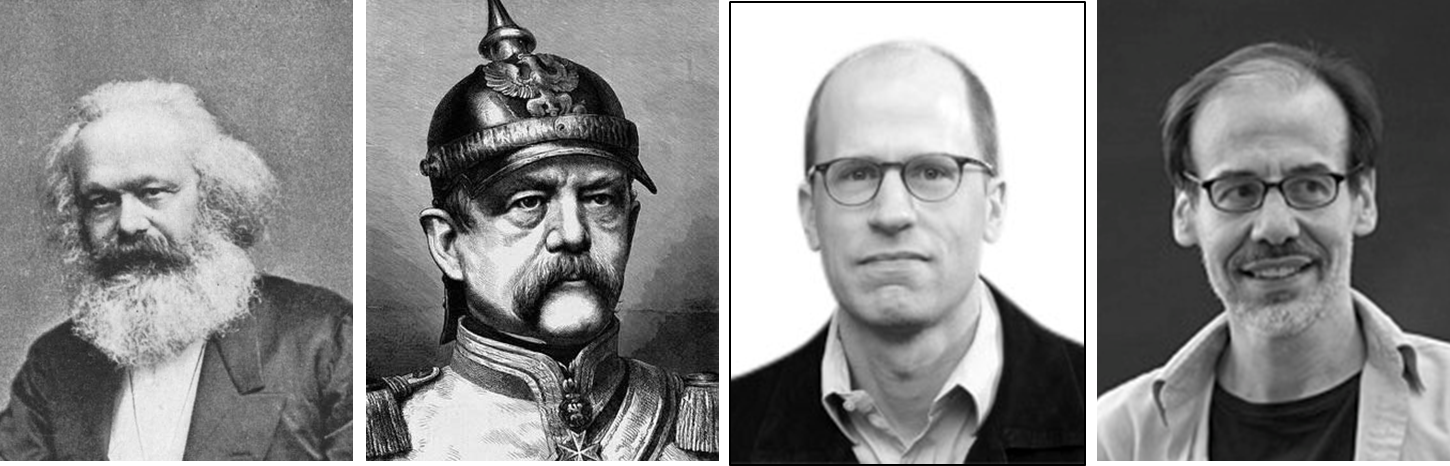
Marx Bismarck Bostrom Fuller

Revisiting Marx and Bismarck

In ancient Greek tragedy, the term hamartia referred to a distinctive feature of the protagonist’s character that is the source of both his success and his failure, typically because the protagonist lacks sufficient judgement to keep this feature of his character in check. (Original Sin is the comparable Biblical conception, if Adam is seen as having overreached his divine entitlement.) The propensity for projecting the future, often with specific dates attached (as in the arrival of the Kurzweillian ‘singularity’), is transhumanism’s hamartia. But transhumanism is only the latest self-avowed ‘progressive’ movement to suffer from this potentially fatal flaw.

Karl Marx notoriously predicted that the proletarian revolution would occur in Germany because its rapid industrialisation made it the most dynamic economy in Europe in the second half of the 19th century, housing the continent’s largest and most organized labour movement. However, the widespread publicity of this quite plausible prediction — starting with The Communist Manifesto — led Bismarck less than two generations later to establish the first welfare state, which exploited Marx’s assumption that the state would always support capital over labour, thereby increasing wealth disparities until society reached the breakpoint. Bismarck effectively refuted Marx by treating his prediction as a vaccine that enabled the political establishment to regroup itself – effectively developing immunity — through a tolerable tax-based redistribution of income from rich to poor that provided a modest but palpable sense of social security from cradle to grave. On the side of the poor, Bismarck capitalized on the tendency for people to discount risky future prospects (i.e. a Communist utopia) when given a sure thing upfront (i.e. social security provision).

Thus, the Marxist revolution was averted – at least in Germany. Of course, like foreign bio-agents (viruses, bacteria, etc.) that over time generate more virulent strains capable of overcoming the target organism’s immunity, Marxism developed a more militantly revolutionary strain, which refused to work with the ‘social democrats’, as the Bismarck-appeased leftists came to called. It triumphed in Russia, courtesy of Lenin. To be sure, it involved various Realpolitik compromises (e.g. the Brest-Litovsk Treaty with Germany) that established a zone free of external interference to enable the desired regime to acquire some traction in a turbulent Russia. But once the Soviet Union was in place, Marxism developed a still more virulent strain, courtesy of Trotsky, which presumed that Marxism would not completely succeed until the whole world was re-made in the image and likeness of Marx, even if that means making sacrifices at home and exporting the revolution abroad.

Now, when faced with a choice between the sort of Communist utopia that Marx envisaged and Bismarck’s welfare state, many – if not most – people still feel that the latter was indeed the better path for history to have chosen. Of course, this judgement is based on a greater familiarity with actual welfare states than actual Communist societies. Or, more to the point, it is easier to assess an unrealized Communism in relation to the realized welfare state than vice versa – despite the vivid imaginations of the most fervent Marxists. Bismarck’s revenge on Marx’s much-hyped prediction amounted to controlling the spin made of the subsequent history – not least by Bismarck’s English-speaking followers on the left, the British Fabians and American Progressives of the early 20th century.

I believe that something similar is bound to happen to transhumanism. To put my thesis in a nutshell: Transhumanism is the Marxism of the 21st century: Like its 19th century precursor, it comes burdened with hype – it sets the direction of political travel, while remaining an easy target for opponents. So let’s think through the political implications.

The first point is to recall Bismarck’s maxim that politics is the art of the possible. The very idea that one can make an art of the possible presupposes a sense of constraints – if not necessity – within which possibilities can be played out. These constraints are provided by what is presumed to be law-like in operation, such as Marx’s historical materialism. However, as Leibniz famously noted, even the laws of nature are hypothetical imperatives from God’s standpoint. In other words, certain consequences necessarily follow – but only if the initial conditions are met. If politics exists in Heaven, then there is everything to play for in terms of trying to persuade God which possibilities should be fixed and which should remain fluid. When Henri Poincaré spoke of the axioms of mathematics and physics as ‘conventional’, he was trying to secularize just this point of view. Applied to the present case: By suspending one of Marx’s axioms – that the state will always remain weak and compliant in the face of expanding capital – Bismarck opened up an entirely different political universe: What Marxists had presumed to be a foregone conclusion yielded a realm of new possibilities. The result is the political universe broadly defined as ‘social democracy’, originally the name of the manageable left-leaning parliamentary opponents of Bismarck’s own conservative party.

Contemporary transhumanism

Now shift the focus to contemporary transhumanism. Two tendencies are noticeable. On the one hand, there are bold, even millenarian predictions that within a generation our computational and/or biotechnological capacities will radically transform the material conditions of being human. These are analogous to Marx’s prediction that the German labour movement would launch the first Communist Revolution. On the other, there is a steady stream of mainly dystopic science fiction novels and films that generate an equally hyperbolic level of fear. The Bismarckian move in the face of this dialectical tension is the precedent set by the US National Science Foundation’s 2002 ‘Converging Technologies’ agenda, which established a programme of anticipatory governance, whereby social researchers would attempt to gauge the likely public response to the realization of these predictions. The tools of anticipatory governance are drawn from market research but raised to a new level, since the products in question remain speculative – albeit vividly conceived and frequently articulated. However, the effect of such research is to create a demand for broadly ‘transhumanist’ products while neutralizing the worst fears surrounding them.

So, even if the current transhumanist projects do not turn out as planned, a culture is being nurtured that wants them to be true and hence is willing to support their continued funding. In this respect, the founder of self-actualization psychology, Abraham Maslow, counts as an intellectual godfather of transhumanist politics with his conception of ‘Theory Z’ as a marketing strategy for the emerging group of consumers he called ‘transcenders’. These people, first identified in the late 1960s, had sufficiently large disposable incomes to easily satisfy their material needs, but they were disinclined to make further material investments in, say, property or stocks. Rather, they were open to products that promised positive self-transformation even if their material composition was not so different from the versions they had previously bought. Think ‘ecologically friendly’ or ‘socially responsible’ consumer goods.

A transhumanist descendant of this mentality may be found in the various shows and commercials fronted by Jason Silva, most notably his series ‘Shots of Awe’ and his exciting infomercial for Russian Standard Vodka, which manages in a little over three minutes to show how to get from Dimitri Mendeleyev, who formulated the periodic table of elements, to the transhumanist vistas that this particular mainstream brand of spirits opens your mind to. More to the point, Singularity University in California has become the mecca for cultivating this sense of ‘visioneering’, which, at least in the first instance, is a kind of Marketing 2.0 for Humanity 2.0. The unasked business plan question lurking in all this is how long are these ‘transcenders’ willing to wait before their symbolically driven purchases come to be redeemed by serious material improvements in, say, their quality of life and productivity. A Bismarckian move to short-circuit the transhumanist narrative might involve, say, channelling the modest advances made across the relevant sciences and technologies into mainstream healthcare, education, production systems, etc. – while cutting off funding for the more visionary projects. After all, even such modest advances amplified across the entire economy might result in a step change in the standard of living that might cause people to forget about the Singularity, especially if it does not involve a massive disruption of lifestyles already seen as desirable (e.g. the difference between extending lifespan 20 and 200 years).

Recommendations

So, is there any politically tractable strategy for transhumanism to avoid the Bismarckian move, which ultimately curtails the capacity of basic research to explore and challenge the fundamental limits of our being? My answer is as follows: Transhumanists need to take a more positive attitude towards the military.

A strong libertarian strain within transhumanism sees military spending as a waste of taxpayers’ money to fight wars over which they had little say, instead of spending it on, say, life-extending treatments that would directly benefit individuals. However, this is a myopic view of the military, which hints at an isolationist mentality that goes against transhumanism’s natural cosmopolitanism. (After all, aren’t transhumanists the ones interested in space colonization and searching for extraterrestrial life?) More to the point, such a myopic attitude neglects the very positive role that blue skies military-based research (e.g. DARPA in the US) has played in advancing much of what we now regard as a transhumanist agenda, not least the Silicon Valley revolution that took off with redeployment of military-funded research for civilian purposes as the Cold War drew to a close. This pattern of techno-commercial bonanza on the back of sustained military focus has been common at least since the Franco-Prussian War.

The reasons for the military’s potential centrality to the transhumanist agenda are easy to understand:  It is an institution that is by definition focussed on liminal possibilities – matters of life and death — at the largest scale and over the longest time periods. Its organization is fit for purpose: well-trained, risk-oriented yet subject to clear channels of communication and control – and, not least, subject to considerable trust from those on the outside to be able handle its own messes when they arise. The military suffers neither from the short-term ‘quick win’ mentality of most businesses nor the tendency of more democratic institutions to compromise their own values to appease powerful interests.

One way to make the connection between the military and transhumanism tighter would be by casting the transhumanist biomedical agenda as a matter of national security – a kind of long-term insurance against foreign rivals who might outproduce us, outflourish us, etc. Many mass medical innovations – from public hygiene reform to vaccinations – were introduced with this sense of ‘civilian preparedness’, with the likes of Louis Pasteur and Robert Koch emerging as ‘national heroes’ of their respective countries in the Franco-Prussian War. In more general historical terms, major public funding for adventurous research has typically been done against the backdrop of a sustained external threat or ‘permanent state of emergency’ (think of the US v. USSR in the Cold War). A political party that says living 200 years is an inherently nice idea is not as persuasive as one arguing that living 200 years is necessary to maintain our position in the world. The activities of China’s Beijing Genomics Institute can help focus the mind on this issue. This public-private partnership aims to sequence the genomes of thousands of high-IQ people to find interesting transferable molecular patterns. Whether or not it succeeds in its ambitions, it is certainly assuming that the goal posts for ‘normal’ and ‘successful’ human existence are changing, which in turn requires substantial investment in basic research that aims at long-term human capital development.

Moreover, the focus on the military would help shift tenor of transhumanist political discourse from one of personal freedom to one of geopolitical necessity – but, at the same time, a discourse with a much more positive spin from that of Nick Bostrom at Oxford and Cambridge’s Centre for the Study of Existential Risk. Whereas they are largely in the business of preventing worst possible outcomes (e.g. our unwitting destruction at the hands of superintelligent machines of our own creation), I am suggesting a spirit more in line with ‘necessity is the mother of invention’, namely, that each potential threat is an opportunity in disguise, a moment for further distinguishing the chaff of our evolutionary heritage from the wheat that we wish to take forward, be it in terms that are purely carbon-based, silicon-based or some combination of the two. Even highly probable long term changes to the Earth’s climate can be seen in this fashion: namely, as invitations for us to undertake now — prior to any actual global catastrophe – a systematic revaluation of our existential priorities, especially in terms of energy provision. In this respect, transhumanists can ally with a proactionary ‘ecomodernism’, which specifically targets energy as a locus for innovation, encouraging a general shift away from fossil fuels to more sustainable forms of energy and a more generally planned global environment, with a door open to more substantial space exploration, not only as an escape route in case of ecological meltdown but also as a means of enhancing life on Earth.

Further reading

Fuller, S. (2011). Humanity 2.0: What It Means To Be Human Past, Present and Future[i]. London: Palgrave.

Fuller, S. (2012). Preparing for Life in Humanity 2.0[ii]. London: Palgrave.

Fuller, S. and Lipinska, V. (2014). The Proactionary Imperative: A Foundation for Transhumanism[iii]. London: Palgrave.

References

[i] http://www.amazon.com/Humanity-2-0-Means-Present-Future/dp/0230233430/

[ii] http://www.amazon.com/Preparing-Life-Humanity-Palgrave-Pivot/dp/1137277068/

[iii] http://www.amazon.com/Proactionary-Imperative-Foundation-Transhumanism/dp/1137433094/

Footnote

The article above features as Chapter 11 of the Transpolitica book “Envisioning Politics 2.0”.

Cyborgization: A Possible Solution to Errors in Human Decision Making?

By Dana Edwards and Alexander J. Karran

Cyborg brain

Abstract

Accelerating social complexity in combination with outstanding problems like attention scarcity and information asymmetry contribute to human error in decision making. Democratic institutions and markets both operate under the assumption that human beings are informed rational decision makers working with perfect information, situation awareness, and unlimited neurological capacity. We argue that, although these assumptions are incorrect, they could to a large extent be mediated by a process of cyborgization, up to and including electing cyborgs into positions of authority.

Introduction

In the modern information age governing bodies, business organisations and adaptive systems are faced with ever increasing complexity in decision-making situations. Accelerating rates of technological and social change further compound this systemic complexity. In this complex environment the effects of human cognitive bias and bounded rationality become issues of great importance, impacting upon such domains as political policy, legislature, business practice, competitiveness and information intelligence.

In this text we shall use regulatory capture as an illustration of how human cognitive bias and conflicts of interest interact in the politico-economic space to create disproportionate advantage. We shall also hypothesize a novel potential solution to human cognitive bias in the form of human-machine hybrid decision support.

In broad terms regulation encompasses all forms of state intervention in economic function, and more specifically intervention with regard to the control of natural monopolies. The term “regulatory capture” is used to explain a corruption of the regulatory process. Regulatory capture has both narrow and broad interpretations. The broad interpretation is that it is a process through which special interest groups can affect state intervention ranging from the levying of taxes to legislation affecting the direction of research and development [i].The narrow interpretation places the focus specifically on the process through which regulated monopolies exert pressure to manipulate state agencies to operate in their favour[ii].

What these interpretations express is that regulatory capture generally involves two parties: the regulated monopoly and the state regulatory agency. The process of regulatory capture can be two way: just as corporations can capture government regulation agencies, the possibility exists for government agencies to capture corporations. As a result of this process, government regulatory agencies can fail to exert financial and ethical boundaries if they are captured, while corporations can fail strategically and financially if they are captured.

Regulatory capture takes two forms, materialist and non-materialist capture. In materialist capture, which is primarily financially motivated, the mechanism of capture is to appeal to the self-interest of the regulators. Materialist capture alters the motives of regulators based on economic self-interest, so that they become aligned with the commercial or special interest groups which are supposed to be regulated. This form of capture can be the result of bribes, political donations, or a desire to maintain government funding. Non-materialist capture also called cognitive or cultural capture happens when the regulator adopts the thinking of the industry being regulated. Status and group identification both play a role in the phenomena of regulators identifying with those in the industry they are assigned to regulate[iii].

Given the current socio-political climate of accelerating technological and social change, consideration should be given to how organizations are formed. Organizations should be structured to resist or otherwise minimize any service disruption caused by regulatory capture, so that if the process of normative regulation fails i.e. in situations where the balance of the relationship between the two entities has become corrupted, the service which required regulation in the first place can remain available after the failure.

One example of potential government regulatory failure due to a captured agency is the Environmental Protection Agency (EPA) hydraulic fracking scandal of 2004. The EPA released a report[iv] in which they stated that hydraulic fracturing posed “little or no threat” to drinking water supplies. Whistle-blower Weston Wilson disputed[v] this conclusion of the EPA publicly and exposed five of the seven members of the peer review panel as having conflicts of interest. These conflicts of interest allowed elements within the administration to apply pressure, and become involved in discussions about how fracking would eventually be portrayed in the report. Due to this pressure the EPA may have unable to publish a genuine conclusion about the safety of fracking. This reveals a potential failure of the EPA to protect the public interest due to regulatory capture.

Another example of regulatory capture concerns a dramatic failure of regulatory oversight for the British National Foundation (BNF), which is one the UK’s most influential institutes on diet and health. The BNF, established more than 40 years ago, advises government, schools, industry, health professionals and the public, and exists solely to provide “authoritative, evidence-based information on food and nutrition”[vi]. Its ability to provide independent evidence-based advice however has been called into question given its apparent bias towards promoting the views of the food industry and the organization’s lack of transparency when reporting funding sources.

This comes as no surprise when 39 members of its funding membership come from the food industry[vii]. For example, In October 2009, when a television commercial for a member company’s probiotic yoghurt product was banned, the BNF spoke out in support of the product (and thus the company) by claiming that there is “growing evidence that a regular intake of probiotics may positively influence our health”. As a result while appearing to take a stance on the grounds of public health, it would appear as though the BNF were protecting its own interests and those of a member company under the guise of regulatory oversight.

Factors that affect human decision making within complex adaptive systems

The examples of regulatory capture described above highlight some of the issues associated with human cognitive bias, specifically within a complex adaptive system (such as a government or corporation) where rational choice is bounded by self-interest combined with overarching organizational goals. In information saturated environments such as these, human cognitive limitations can become a factor that leads to poor rational decision making, requiring the individual or organisation to rely on shortcuts which may lead to human error. A number of psychological and social factors such as “attention scarcity”, “information asymmetry”, and “accelerating societal complexity” contribute to poor rational decision making within complex organisational structures. Awareness has been rising that human attention has become a scarce resource in the information age, and attention scarcity ultimately relates to the economics of attention.

Attention scarcity relates to a human cognitive limitation which determines the amount of information a human can digest and attend to in a given period of time (also referred to as an information economy). Simply put, “attention is a resource-a person only has so much of it”[viii]. Thus, in a low information economy any item brought to the attention of decision makers is perceived by its economic properties which are deemed decisive for its profitability. In contrast, in a high information economy, the diversity of items mean perception is limited and only choices that expose decision makers to sufficiently strong signals are viable.

Attention scarcity is a weakness of human cognition which can be purposefully exploited. For example, consider the U.S. Affordable Care Act, which has over 9000 pages of rules. It is likely that most voters lacked sufficient “attention” to read through and digest each page at the time when the act was being debated. Due to the complexity of legislative law, even if a team of “netizens” formed to crowd source the reading and analysis of a new law, it is unlikely that they would be able to interpret and understand it within the available timeframe to object if needed.

The effects of attention scarcity are observed in the poor public understanding not only of legal documents, but also of complex open source software. We see in open source software situations where the developers allow anyone to read the source code but in which the source code has so many lines of opaque obfuscated code that very few users or even other software developers understand how it works. We can see how attention scarcity produces information asymmetry between the open source developers who can decipher the source code and everyone else who may or may not choose to use the software.

Information asymmetry is a serious factor intrinsic to cognitive bias in human decision making, and concerns decisions in transactions where one party has the perception of, or is in possession of, more or better quality information than the other. This potentially creates an imbalance in the transaction power dynamic which may lead to future failure and a collapse of trust, causing a kind of market failure in a worst case scenario.

Accelerating societal complexity refers to the structural and cultural aspects of our institutions whose practices are identified by the “shrinking of the present”, a decreasing time period during which expectations based on past experience reliably match the future[ix]. When combined with accelerating technological progress this “shrinking” appears to flow ever faster, making decisions based on belief or the perception of better information problematic.

All of these individual factors can influence the human decision making process; in combination they potentially create a decision space that becomes more fluid, with a self-reinforcing feedback loop which requires better decisions to be made in shorter spaces of time with incomplete or asymmetric information. Indeed, by all accounts humans make errors all of the time, but as society gets ever more complex, these errors have lasting and increasingly dangerous consequences (such as in the example of hydraulic fracking discussed above). In order to get a clearer picture of a possible basis for this error effect, some discussion of human cognitive limitations is warranted.

The impact of human cognitive limitation

As we have discussed previously, information asymmetry in complex adaptive systems allows for decision error to appear within the system, as the better informed parties possess a marked information advantage which allows them to exploit the ignorance of other parties. This can occur in any field of human endeavour, such as law, science, commerce or governance, where new knowledge will be easier to grasp by those with previous knowledge, given that knowledge is self-referential and compounds on itself[x]. As organizations grow larger and the decision requirements become ever more complex, attention scarcity and information asymmetry can form a feedback loop that – at scale – slows the rate of innovation/knowledge diffusion, as individuals and organisations vie for supremacy in transactions.

Research in the area of cognitive neuroscience suggests that the cognitive abilities of an individual are limited to five core systems (objects, agents, number, geometry and social) [xi], each with its own set of limitations. An example of limitation within the social system is “Dunbar’s number”, first proposed by British anthropologist Robin Dunbar[xii], who posited that the number of social group members a primate can track is limited to the volume of the neocortex, and while this theory is hotly disputed[xiii], it has yet to be disproven with any certainty. This limitation, if taken to its logical conclusion and scaled to match an average complex adaptive system (such as regulatory or corporate bodies) highlights that the decision making abilities of an average individual could be impaired significantly, when not augmented by technology or genetic engineering.

This impairment of decision making ability was remarked upon in Herbet A. Simon’s theories of bounded rationality[xiv]. These theories were concerned with rational behaviour in the context of individuals and organisations and individuals within organisations, which he stated were indistinguishable under the “theory of the firm”. In this theory the given goals and the given conditions (of the organization) drive “rational” decision making based on two functions: the demand function (the quantity demanded as a function of price) and the cost function (the cost of production as a function of the quantity produced). These two rules when applied to complex adaptive systems, such as regulatory or governing bodies, demonstrate the vast scope in which human cognitive bias can affect outcomes at the macro scale while appearing to be a series of micro decisions made by individuals.

Nowhere can this asymptotic synergy of information, human cognitive ability and bounded rationality be seen more clearly, than in the case of law. A truism often used in this context is that Ignorance of the law excuses no one, but the complexity of law confuses everyone. In a world where few if anyone in society knows the law it may well become necessary for people to supplement their own cognitive capacities with “apps” to protect themselves from the complexity of the law. “Lawfare” is said to describe a form of asymmetric warfare which allows for the exploitation of the esoteric and complex nature of the law to damage political opponents. Just as complex words on an ingredient list can be used to hide undesirable ingredients from customers, the law and its potential use as a weapon also remain hidden from most citizens.

The current analogue forms of government have their basis in a complicated combative bureaucracy (necessary to support representative forms of democracy). Accelerating technological progress, however, shows that this approach may not scale particularly well as society becomes orders of magnitude more complex in the coming decades. It is our analysis, that unless a Transhumanist approach is adopted to enhance the existing human decision processes by merging with technological decision support, catastrophic failures may occur.

In this socially complex future, it is likely that our politicians may have to rely increasingly on information technologies, to the point that they essentially become cyborgs, merging fact checking and recommendation engines – based on rational rulesets – to keep pace with accelerating societal change and allow them to fully encompass monolithic social structures. In addition, citizens may also out of necessity need to adopt similar technologies, in order to understand the decisions made by these new “enhanced” politicians and to adapt to and effectively participate in an increasingly complex and fast changing society. In addition the institutions of the future will likely have to adopt human error tolerant designs which use the latest decision support technology to help mitigate and dampen the consequences of human error.

The Cyborg Citizen: A transcendent solution?

In order to avoid confusion we first have to properly define what we mean by a cyborg citizen. Andy Clark[xv] in his book Natural-Born Cyborgs: Minds, Technologies, and the future of Human Intelligence, argues that human beings are by nature cyborgs, claiming that human neural plasticity and a propensity to build and utilise tools in everyday life (from handwriting to mobiles phones), produces a species that thinks and feels most effectively only through the use of its technologies. Ray Kurzweil[xvi] goes one step further to predict that, by 2030, most humans will choose to be cyborgs:

Our thinking then will be a hybrid of biological and non-biological thinking. We’re going to gradually merge and enhance ourselves. In my view, that’s the nature of being human – we transcend our limitations.

In order to understand what a “cyborg citizen” means in today’s information and technology driven society, we must expand upon this definition to include current technological and social developments. Indeed, we will have to recognize that each individual today, and more so in the future, will have a digital, virtual, and physical self[xvii]. Thus, a cyborg is a person who is (singly or in combination) enhanced by or dependent upon, robotic, electronic, or mechanical devices such as artificial hearts, pacemakers, portable dialysis machines or even mobile / cloud computing which employs storage, search, retrieval and analysis (SSRA) capabilities such as Google, Amazon etc.

Corporations also appear to be taking advantage of technologies to enhance human decision making as a way to adapt to increasing business and market complexity. Venture capitalist firm Deep Knowledge Ventures named to their board of directors[xviii] an algorithm called VITAL, which they intend to someday evolve into a full-fledged artificial intelligence. This move may represent one of the initial forays in what may become a trend toward human-machine run corporations. Indeed, some are going much further, to call for complete replacement of humans within complex organisations (such as government) with artificial intelligence[xix]. However, arguments about the inevitable rise of artificial general intelligence aside, we push for a “human-in-the-loop” approach through the merger or bonding of human ethical and moral “instinct” with a bounded rational decision support engine, existing in either digital space or embedded into the human central nervous system via implants.

So what would such a citizen cyborg look like? Below is a list of a number of hypothetical decision support systems which are presently borderline (in that they exist, but are not as yet fit for purpose), which could exist in digital space and employ SSRA capabilities to allow for enhanced human-machine hybrid decision making.

  • Intent casting: Intent casting, originally described by Doc Searls, allows consumers to directly express their wants and needs to the market. This could allow for the digitization of intent and for agent-based AI to shop on behalf of customers.
  • Algorithmic democracy: Algorithmic democracy in theory, would allow voters to delegate their voting decisions (and thus agency) to an algorithm, which could be referred to as a digital voting agent (DA). Examples of digital agents today include Siri, Amazon Echo, and Cortana. As these DA’s become more capable, it is possible that voters could rely on their DA to inform them as to how they should vote in accordance to their specific interests and preferences.
  • Digital decision support consultants: These are intelligent decision support systems that would help professionals make better decisions. It is likely that there will be apps for different professions such as IBM’s WellPoint for doctors, legal assistant apps, and real-time fact checkers[xx] These apps may be decentralized collaborative applications with human and robot participation or they may be software agent based AI. This category would also include algorithms such as Deep Knowledge Ventures VITAL and agents to track relationships and the flow of information between groups within a complex organization or brokers between two transaction parties.

Examples of algorithms that hypothetically speaking, could run on physiologically embedded technology, directly accessible by the human brain to provide decision support:

  • Generate and test search: a reinforcement learning, trial and error algorithm which can search through a limited solution space in a systematic manner to find the best solution[xxi]. In operation this algorithm would generate possible solutions to a set problem and test each until it finds the solution which passes a positive threshold, whereupon the solution is relayed to the human cognitive process for a potential decision and reinforcement. This kind of technique can be used to take advantage of simulation testing and solve problems which have a limited solution space, such as those presented by the “free market” or those requiring a quick human decision in a “lesser of two evils” scenario.
  • Global optimization search: evolutionary algorithms which are inspired by the biological mechanisms of global optimization search, such as mutation, crossover, natural selection and survival of the fittest[xxii]. These algorithms can search a solution space and compare each solution to a desired fitness criteria. In the case where human input is necessary to evolve a solution then an interactive evolutionary algorithm could allow the human to be the solution selector, while the algorithm is the solution generator. The algorithms can go through a similar process and be generated and evolved for improved fitness.
  • Markov decision processes: an experimental framework for decision making and decision support. A Markov decision process automates finding the optimal decision for each state while taking into account each action’s value in comparison to the others, essentially an idealised decision output for a given problem state. With human decision selection driving the process, the ramifications of each decision selection at each stage of the problem analysis can be carefully considered and accepted or rejected based on rational choice.

This list is by no means exhaustive and there may be other borderline hypothetical decision support systems and algorithms which are not mentioned here. However, this list gives a general idea of how embedded or digital artificial decision support agents can improve decision quality in certain sectors of human society. By improving decision quality through technology and semi-autonomous agencies we may be able to reduce the frequency of poor decisions which result from nothing more than human error and or human ignorance.

Discussion: Checks and Balances

We do not propose that cyborgization makes for a perfect solution to the problem of human cognitive limitation and decision error in complex social systems. Indeed, decision support systems already exist in one form or another. However, they are still in an early stage of development and not ubiquitous, thus technology such as VITAL benefits only large corporations and perhaps the intelligence establishment. It is a situation similar to the early stages of computer development or the Internet, both of which existed, but the benefits were limited to certain domains, back in the 1960s during the Cold War.

We believe the widespread adoption of decision support technology, be it embedded or digital, could provide the tools necessary for individuals to comprehend the entirety of complex organizations, model the decision-consequence space and select ethical decisions. These tools would essentially enable decision makers to take into account individual need and motivation, and provide ethical solutions which afford the greatest good for the greatest number, without creating asymmetric information economies.

An example of a beneficial application of cyborg technology would be the doctor who utilises WellPoint[xxiii] to make diagnoses based on a combination of learned skillset and a digital health agent with a broad specialist evidence based knowledge base. Alternatively, in a quantified-self context an individual could upload health data gathered from wearable sensor technology, and receive information of potential health issues which could be treated with alacrity in their early stages by doctors able to access this information and review treatment options.

However, such technology and its application would not come without limitation or risk. The widespread use of these technologies could lead to a form of information “cold war”, in which human and machine agents (singly or in combination) attempt to create a state of “perfect information” to gain a competitive advantage. They may seek a form of perfect regulatory capture where one party seeks always to have an advantageous position in any transaction, be it in the free market or in the policy, legislative or intelligence domains. Arguably, such an information cold war already exists between various governments, intelligence services and corporate entities and while the “battle ground” as it were, is in so called cyberspace, it is primarily an analogue concern where agency is biological i.e. human as opposed to A.I.

It is a sad reflection upon humanity that one “positive” aspect of this cold war scenario, is that competition (war) leads to innovation, as opposing sides race to gain the information advantage. This impetus this would accelerate the development of the technologies required to create a “true” cybernetic individual or generally intelligent artificial agent. It is a matter for debate whether this would result in a situation that would be to the benefit of humanity in general or lead to a totalitarian dystopia; in which one entity or organisation exists in a near perfect state of “knowing”, stifling the development of both technology and society.

It is our opinion that the potential benefits of cyborgization outweigh the potential risks. As our technological systems and culture grow ever more complex, we must consider the risk of human error, of bad decisions, of ignorance combined with advanced technologies, in the light of a technology so pregnant with possibility.

We realize cyborgization is a controversial subject, however we see it an unavoidable and unstoppable trend. Indeed, Ginni Rometty (Chairman and CEO of IBM) stated recently that:

In the future, every decision that mankind makes is going to be informed by a cognitive system like Watson, and our lives will be better for it[xxiv]

This is a statement is very much in accordance with our notion of keeping the human-in-the-loop during decision making. Furthermore, an argument could be made that given the current reliance by vast numbers of the world population on mobile phones and internet search engines, rather than becoming cyborgs at some specific point in time (as in the prediction of Kurzweil), we have always been cyborgs (as per Clarke’s argument) and it is merely a matter of time and technology, until the line between what is human and what is our technology becomes non-existent.

Conclusion

Just as search engines allow for human beings to find the relevant information meeting their “criteria”, the adoption of decision support engines could allow autonomous digital agents and human-machine hybrids alike to find the most ethical decision within a given consequence-decision space. This approach would allow for “what if” hypothesis testing[xxv] of many decision types such as policy determination, legislative impact, market transactions and global consequence. The dawn of ethical computing is fast approaching and it is in this area requiring our fullest attention. Transhumanism provides a socially progressive framework that if adopted can allow us to transcend our human cognitive limitations, so that we can become more effective and ethical decision makers. We believe that developing the technology which can facilitate our arrival at the cyborg stage of human leadership should be a top priority, especially in this time of accelerating developments in Artificial Intelligence, which if left unsupervised could surpass us to become the apex decision maker for our entire species.

Footnotes

[i] Stigler, G. (1971), “The Theory of Economic Regulation.”, Bell Journal of Economics and Management Science, 2, 3–21

[ii] Peltzman, S. (1976), “Toward a More General Theory of Regulation.”, Journal of Law and Economics, 19 , 211–48.

[iii] Carpenter, D., & Moss, D. A. (Eds.). (2013). “Preventing regulatory capture: special interest influence and how to limit it.” Cambridge University Press.

[iv] Environmental Protection Agency, “Study of Potential Impacts of Hydraulic Fracturing of Coalbed Methane Wells on Underground Sources of Drinking Water.” Office of Groundwater and Drinking Water report, June 2004 – accessed May 2015.

[v]http://www.ucsusa.org/our-work/center-science-and-democracy/promoting-scientific-integrity/oil-extraction.html#.VX7TjkbFdlx

[vi] Chamberlain & Laurance (2010). “Is the British Nutrition Foundation having its cake and eating it too?” http://www.independent.co.uk/life-style/food-and-drink/news/is-the-british-nutrition-foundation-having-its-cake-and-eating-it-too-1925034.html – accessed May 2015.

[vii] Chamberlain & Laurance (2010). “Is the British Nutrition Foundation having its cake and eating it too?” http://www.independent.co.uk/life-style/food-and-drink/news/is-the-british-nutrition-foundation-having-its-cake-and-eating-it-too-1925034.html – accessed May 2015.

[viii]Crawford, Matthew B. (March 31, 2015). “Introduction, Attention as a Cultural Problem”. The World Beyond Your Head: On Becoming an Individual in an Age of Distraction (hardcover) (1st ed.). Farrar, Straus and Giroux. p. 11.

[ix] Rosa, H.: “Social Acceleration: A New Theory of Modernity.” Columbia University Press, New York (2013)

[x] Klein, S. B., & Kihlstrom, J. F. (1986). “Elaboration, organization, and the self-reference effect in memory.” Journal of Experimental Psychology: General, 115(1), 26-38. doi:10.1037/0096-3445.115.1.26

[xi] Kinzler KD, Spelke ES. Core systems in human cognition. Progress in Brain Research. 2007;164:257–264

[xii] Dunbar, R. I. M. (1992). “Neocortex size as a constraint on group size in primates”. Journal of Human Evolution 22 (6): 469–493. doi:10.1016/0047-2484(92)90081-J

[xiii] Wellman, B. (2012). “Is Dunbar’s number up?” British Journal of Psychology 103 (2): 174–176; discussion 176–2. doi:10.1111/j.2044-8295.2011.02075.x

[xiv] Simon, H.A. (1972). Theories of bounded rationality. In C.B. McGuire and R. Radner (Eds.), Decision and organization: A volume in honor of Jacob Marschak (Chap. 8). Amsterdam: North-Holland

[xv] Andy, Clark. (2004) “Natural-Born Cyborgs: Minds, Technologies, and the Future of Human Intelligence.”, Oxford; Oxford University Press.

[xvi] Guia Del Prado “Google Futurist Ray Kurweil thinks we’ll all be cyborgs by 2030” http://uk.businessinsider.com/ray-kurzweil-thinks-well-all-be-cyborgs-by-2030-2015-6?r=US – accessed june-2015

[xvii] The digital and virtual while similar are distinct in their differences. To make clear the distinction, something is virtual if it will only exist contained within a virtual world while if something is digital it is known to exist in the physical world just in digitized form. The distinction is between digital and virtual space in which digital space is a subset of what people consider to be part of the physical world while virtual space isn’t directly referring to a part of the physical world

[xviii]Wile, R. (2014, May 13). “A Venture Capital Firm Just Named An Algorithm To Its Board Of Directors – Here’s What It Actually Does.” Retrieved June 5, 2015, from http://www.businessinsider.com/vital-named-to-board-2014-5#ixzz31dVwrSEo

[xix] http://ieet.org/index.php/IEET/more/pellissier20150612

[xx] Ciampaglia GL, Shiralkar P, Rocha LM, Bollen J, Menczer F, Flammini A (2015) Computational Fact Checking from Knowledge Networks. PLoS ONE 10(6): e0128193. doi:10.1371/journal.pone.0128193

[xxi] Kaelbling, L. P., Littman, M. L.,.and Moore, A. W., (1996) “Reinforcement Learning: A Survey.”, Journal of Artificial Intelligence Research, Volume 4, pages 237-285

[xxii] Weise, T. “Global Optimization Algorithms – Theory and Application.” Germany: it-weise.de (self-published), 2009. [Online]. Available: http://www.it-weise.de/ -accessed 06-2015

[xxiii] http://www.ibm.com/smarterplanet/us/en/ibmwatson/assets/pdfs/WellPoint_Case_Study_IMC14792.pdf

[xxiv] http://www.businessinsider.in/The-CEO-of-IBM-just-made-a-jaw-dropping-prediction-about-the-future-of-artificial-intelligence/articleshow/47289655.cms

[xxv] Winfield, A. F., Blum, C., & Liu, W. (2014). “Towards an ethical robot: internal models, consequences and ethical action selection.” In Advances in Autonomous Robotics Systems (pp. 85-96). Springer International Publishing

Footnote

The article above features as Chapter 5 of the Transpolitica book “Envisioning Politics 2.0”.

The image is an original design by Alexander Karran.

Why Politics 2.0?

By David W Wood, Executive Director, Transpolitica

web1vsweb2

Introduction

The single most important task of the next ten years is to find better ways of cooperating. In an age of unprecedented crowds – both online and offline – the global human community urgently needs social mechanisms that will encourage the wisdom of crowds rather than the folly of crowds.

Our existing methods of mutual coordination seem to produce more strife than harmony these days. We’re struggling to cope with ever larger tensions and disruptions on the shrinking world stage. The nation state, the multinational business firm, the free market, the non-governmental organisation, the various international bodies of global coordination set up after the Second World War – all find themselves deeply challenged by the myriad fast-evolving overlapping waves of stress of the early twenty-first century.

We’re facing tragedies of the commons writ larger than ever before. The actions that make good sense to smaller groups often add up, perversely, to disastrous outcomes for the larger community. But attempts to coordinate actions to avoid such tragedies are falling foul of numerous deep-seated conflicts of interest. These conflicts are made more intractable by the sweeping pace of change and by the burgeoning multiplicity of interconnections. For the way forward, we’re going to need more than “politics as usual”. We’ll need to move beyond Politics 1.0.

Politics 1.0 has worked wonders over the centuries, enabling productive human cooperation on impressive scales. We can look back in heartfelt admiration at the Magna Carta, Habeas Corpus, the separation of powers, declarations of rights, emancipation bills, market liberalisation, protection of minority interests, new deals, introductions of welfare states, and the gradual (although fitful) reduction of inter-state violence. In each case, the effort required people to set aside their narrow, personal interests, for the sake of an encompassing higher vision. Politics 1.0 has taken us a long way. But the multidimensional, intersecting nature of present-day issues and opportunities requires a new calibre of politics. For reasons I’ll explain shortly, I call that “Politics 2.0”.

The chapters ahead provide visions of what Politics 2.0 might look like. They express the thoughts, hopes, and fears from a diverse mix of futurists, political thinkers, academics, and think-tank members. They continue the discussion started in “Anticipating Tomorrow’s Politics”[i], the first Transpolitica book. It’s by no means the end of the discussion, but there’s lots of food for thought.

The future, if we can grasp it

In principle, we ought to be able to look ahead to a rosy future. In principle, sustainable abundance is just around the corner. Provided we collectively get our act together, we have within our grasp a profound cornucopia of renewable energy, material goods, health, longevity, intelligence, creativity, freedom, and positive experience – plenty for everyone. This sustainable abundance can be attained within one human generation, by wisely accelerating the green technology revolution – including stem cell therapies, 3D printing, prosthetics, robotics, nanotechnology, genetic engineering, synthetic biology, neuro-enhancement, artificial intelligence, and supercomputing.

In principle, the rich fruits of technology – sustainable abundance – can be provided for all, not just for those who manage to rise to the top of the present-day social struggle. In principle, a bold reorganisation of society can take place in parallel with the green technology revolution – so that everyone can freely access the education, healthcare, and everything else needed to flourish as a full member of society.

But these steps will involve a measure of coordination that seems to lie outside our present capability. What has brought us here, so far, isn’t going to get us there.

Politics opposing innovation

In principle, human innovation can create the solutions to provide a sustainable abundance for everyone. These solutions will take advantage of new technology to create new products and services – better food, better healthcare, better education, better sources of energy, better transport, better care for the environment, better waste-management, better leisure, better entertainment, and so on.

But new products often provoke disquiet. They don’t always work as expected. They can often have nasty unintended side-effects. They may fail to live up to the promises made for them, sometimes even ruining people’s lives or despoiling the environment. For these reasons, society needs to keep its collective eye on new products. Even when new products function as intended, they typically result in marketplace losers as well as winners. In other words, new products can threaten vested interests. These vested interests, therefore, also keep a collective eye on new products. The two sets of watchfulness – the legitimate concern for the well-being of users of the product, and the more contentious concern for the well-being of competitors to the product – often overlap. Handling this murky overlap, with discernment and objectivity, is a key task in society’s self-governance.

Society can, with justification, take two different stances towards a specific innovation:

  • The innovation is desirable, and should therefore be supported, perhaps by pricing subsidies, tax breaks, and provision of central funding
  • The innovation (as it stands) has undesirable aspects, and should be restricted or penalised until such time as it conforms to various standards.

Again, in each case, motivations to protect users of the innovation can overlap with motivations to protect the well-being of competitors of the innovation.

Consider some examples from recent news stories:

  • Unmanned aerial vehicles (“drones”) represent many booming business opportunities, with their capabilities for surveillance and transport. But in December last year, a drone almost collided[ii] with a commercial airliner near Heathrow. There are clearly safety implications if unregulated drones are able to fly without restriction. The same as there are rules to ensure motor vehicles are roadworthy, there’s a need for systems to prevent aberrant drones from causing havoc
  • Innovative car hire firm Uber is running into legal controversy all over the world[iii], as existing taxi drivers highlight cases of potential concern. For example, in Dec 2014, the Seoul Central District Prosecutors’ Office issued a legal indictment against Uber (and against CEO Travis Kalanick) for violating a Korean law prohibiting individuals or firms without appropriate licenses from providing or facilitating transportation services
  • The Californian company 23andMe provide genetic testing services direct to the public, taking advantage of breakthroughs in technologies for DNA sequencing and analysis. However, the FDA have issued a warning letter to 23andMe, instructing the company to “immediately discontinue marketing”[iv] selected products and services. The FDA is concerned about “the potential health consequences that could result from false positive or false negative assessments for high-risk indications such as these”. It asserts: “a false positive could lead a patient to undergo prophylactic surgery, chemoprevention, intensive screening, or other morbidity-inducing actions, while a false negative could result in a failure to recognize an actual risk that may exist”
  • Growth in the usage of innovative “legal high” drugs has resulted in more than a doubling of the number of deaths[v] from these drugs in the UK over the last four years. As a result, the new UK government has tabled a blanket ban on the creation or distribution of “any substance intended for human consumption that is capable of producing a psychoactive effect”, with a prison sentence of up to seven years[vi] for people who contravene the ban. The legislation has generated lots of opposition, for its heavy-handedness, and also for its potential to obstruct innovative neuro-enhancement products
  • In response to popular concern about the negative visual appearance of wind turbines “covering the beautiful countryside”[vii], the new UK government is axing financial subsidies that were previously benefiting the wind energy industry
  • As an example of where government subsidies remain in place, supporting an energy industry, fossil fuels subsidies totalling $5.3 trillion will apply in 2015[viii], according to a report released by the IMF (International Monetary Firm). For comparison, this figure is greater than the total annual health spending of all the world’s governments.

Other examples could be mentioned from the fields of banking, telecommunications, security, defence, and agriculture. I summarise the issues as follows:

  • Subsidies and regulations, applicable to innovative products, are a core and necessary part of how society governs itself
  • It is frequently a hard task to determine which subsidies and regulations ought to apply – and when previous subsidies and regulations ought to be changed
  • Legislation is often out-dated, being more concerned with avoiding repetitions of past problems, rather than enabling future development
  • Regulatory bodies are often “captured” by vested interests who have a strong desire to preserve the status quo
  • Politicians are frequently deeply out-of-depth in their understanding of the relevant technologies; like regulatory bodies, they can fall victim to over-influence from existing industries rather than enabling the emergence of new industries
  • The increased pace of change of technological innovation makes the above issues worse.

None of this is an argument to dismantle politics, regulations, or the system of subsidies. Instead, it’s an argument to improve these systems. It’s an argument for Politics 2.0.

Rather than technological innovation simply being the recipient of influence (both good and bad) from politics, the direction of cause-and-effect can be reversed. Technological innovation can transform politics, the same as it is transforming so many other areas of life.

Web 1.0 and Web 2.0

As a comparison, consider the transformation that took place[ix] in usage of the World Wide Web between around 1996 (“Web 1.0”) and 2006 (“Web 2.0”).

This transformation wasn’t just in terms of numbers of users of web browsers – moving from around 45 million to over one billion users over that period of time. Nor was it just that the web grew in size from around 250,000 sites to more than 80 million. Instead, it was a change in the character of the web, from a “mostly read-only web” to a “wildly read-write web”. (This analysis is due to pioneering Web 2.0 analyst Dion Hinchcliffe[x].) The result is that the web increasingly displayed collective intelligence. Users submitted their own content to sites such as Wikipedia, Amazon (book reviews), EBay, Facebook, YouTube, and so on. In turn, systems of collective evaluation highlighted the content that was worthy of greater attention.

In more details, the transformation between 1.0 and 2.0 can be described as follows:

  • Instead of the distribution of static intelligence through the network to its edges, P2P (peer-to-peer) connections enabled multiplication of intelligence within the network
  • Instead of a library (the readable web), there was a conversation (the writable web)
  • Instead of there being a small number of fixed authority figures (“oracles”), there were dynamic user-reputation systems, which enabled new figures to emerge quickly, with strong reputations as judged by the community as a whole
  • The model of “publishing and retrieval” was replaced by “collaboration and interaction”
  • Instead of innovation coming primarily from companies, it increasingly came from feedback and suggestions from users.

As for the improvement of the web, so also for the improvement of politics.

I’ve left probably the most important aspect of this analysis to the last. That is the critical role of technology in enabling this social transformation. Whereas Web 1.0 was enabled by the technologies of HTTP (hypertext transport) and HTML (hypertext layout), Web 2.0 was enabled by technologies known as AJAX[xi] – asynchronous JavaScript and XML. The details don’t matter, but what does matter is that powerful hardware and software were able to work together in combination to enable smoother user experience with “web applications” than had ever happened before. (Google Maps was one of the trailblazing examples. It’s hard to appreciate it nowadays, but the swift response to user interaction on the Google Maps webpage was a delightful surprise when first experienced.)

Innovation improving politics

The chapters in this volume explore various ways in which new technology might, analogously, enable improved politics:

  • With relevant expert knowledge being quickly brought to questions of subsidies, regulations, standards, and so on – rather than politicians being out of their depths
  • With a real “wisdom of crowds” supporting the decisions made by elected leaders, rather than leaders having to deal with the “folly of crowds” often displayed by present-day democracies
  • With automated fact-checking taking place in real-time, rather than mistakes and errant claims being allowed to influence political discussion for too long
  • With humans improving their own cognitive skills, as part of a process we can call cyborgization
  • With external artificial intelligence augmenting the decision-making capabilities of humans
  • With a competitive community of online educators creating ever-better communications systems that highlight more clearly the key decisions that need to be taken, shorn of their surrounding distractions.

To an extent, all political parties pay lip service to the idea that decision-making processes can be improved by wise adoption of smart new technology. However, it is the transhumanist contingent in politics that puts most focus on this possibility. Transhumanists vividly perceive the possibility of profound transformation. As stated in the Transhumanist FAQ[xii], quoting philosopher Max More[xiii]

Transhumanism is a way of thinking about the future that is based on the premise that the human species in its current form does not represent the end of our development but rather a comparatively early phase…

“Transhumanism is a class of philosophies of life that seek the continuation and acceleration of the evolution of intelligent life beyond its currently human form and human limitations by means of science and technology, guided by life-promoting principles and values.”

Pioneering Swedish transhumanist Anders Sandberg expressed it like this[xiv] (emphasis added):

Transhumanism is the philosophy that we can and should develop to higher levels, both physically, mentally and socially using rational methods.

I’ll end these introductory remarks by referring to an endorsement[xv] that was recently given by Robert Kennedy III – the grandson of the Robert Kennedy[xvi] who served as Attorney General in the administration of JFK. The endorsement was in favour of Zoltan Istvan[xvii], the candidate of the Transhumanist Party for the US presidency in 2016. It reads in part:

Why are we shackled to a system of government designed before there were telephones? … Zoltan Istvan is offering creative and innovative solutions to the urgent problems we face. We can choose to live in a technological nightmare, or to harness the power of science for the betterment of humanity.

As the energetic visible trailblazer for a new kind of politics, Istvan generates considerable feedback, including both positive and negative. As you’ll see, some of the chapters in this book cover and extend that feedback; other chapters explore different aspects of Politics 2.0.

The chapters ahead

Zoltan Istvan’s “Teleological Egocentric Functionalism”: a libertarian philosophical basis for “Transhumanist” politics

Roland Benedikter, Katja Siepmann, and Annabella McIntosh have collaborated to create a chapter with the following introduction:

The current foundation phase of “Transhumanist” politics deserves a critical discussion of the philosophical principles that implicitly underlie its new political organization. As part of the effort towards a self-critical evaluation of political transhumanism, which is undoubtedly still in a very early phase of development, this chapter discusses the philosophy drafted by the founder of the “Transhumanist Party of the USA”, Zoltan Istvan, in his bestselling novel “The Transhumanist Wager” (2013) dedicated to develop the vision of a better society. Istvan called the philosophy underlying his meta-national, if not global, vision “Teleological Egocentric Functionalism”.

We discuss the achievements, contradictions and dialectics of and within this philosophy; its possible relation to realistic social policy programs; as well as the potential implications and consequences. The goal is to achieve a more considered overall discourse at the contested new ideological interface between humanism and transhumanism which could define an influential zeitgeist of our time.

Roland Benedikter is Research Scholar at the Orfalea Center for Global and International Studies[xviii] of the University of California at Santa Barbara, Senior Affiliate of the Edmund Pellegrino Center on Clinical Bioethics of Georgetown University, Trustee of the Toynbee Prize Foundation Boston, Senior Research Scholar of the Council on Hemispheric Affairs Washington DC, and Full member of the Club of Rome.

Katja Siepmann is a socio-political analyst, Senior Research Fellow of the Council on Hemispheric Affairs[xix] Washington D.C., Member of the German Council on Foreign Relations, and Lecturer at the Faculty of Interdisciplinary Cultural Sciences of the European University Frankfurt/Oder.

Annabella McIntosh is a freelance political writer based in Berlin, Germany.

Four political futures: which will you choose?

David Wood, Executive Director of Transpolitica, and chair of London Futurists[xx], introduces his chapter as follows:

Forget left wing versus right wing. The political debate in the medium-term future (10-20 years) will be dominated, instead, by a new set of arguments. These arguments debate the best set of responses to the challenges and opportunities posed by fast-changing technology.

In this essay, I’ll outline four positions: technosceptical, technoconservative, technolibertarian, and technoprogressive. I’ll argue that the first two are non-starters, and I’ll explain why I personally favour the technoprogressive stance over the technolibertarian one.

How do governments add value to society?

Bruce Lloyd is Emeritus Professor of Strategic Management, London South Bank University[xxi]. He argues in his chapter that, in the wake of current discussions about the future of politics, there is a fundamental question we all need to be asking. What are governments for? Alternatively expressed: How do governments add value to society?

He claims it is difficult, if not impossible, to find one simple answer to this question. In practice, there are two fundamentally different – potentially conflicting – pressures that need to be reconciled. The first pressure is the re-distribution dimension. The second is the need to effectively exploit potential and actual economies of scale.

There is also a third pressure, which needs to be integrated into policy initiatives: the need to develop structures that are the most favourable to effective positive innovation.

The chapter contends that, unless the interplay of these fundamental pressures is given greater attention at all levels of government decision-making, we are unlikely to be able to make progress on the other important challenges, mentioned elsewhere in this book, that we all face in the decades ahead. This will result in our future being much more precarious than it needs to be.

The benefits of digital democracy

Walter L.S. Burrough and Kay Firth-Butterfield introduce their chapter as follows:

This Chapter discusses the way in which U.S. citizens could be encouraged to re-engage with the electoral process and why such engagement will matter. In doing so consideration is given to the way in which such engagement can be facilitated by the development of an AI ‘trusted agent’, and the way in which true democracy reveals the uniqueness of the human characteristic to care about community.

The authors of this chapter note that the views they express in this chapter are their own and do not represent the views of any organizations for which they work, consult or teach.

Walter Burrough is a PhD candidate at the Serious Games Institute[xxii], University of Coventry. His research builds upon his Masters degree in Education, his work as a science teacher with “at risk” students in high needs schools, and his experience in database driven software development. He is interested in how to best design personalised interventions that enhance individuals’ behaviours and decision making using mobile technologies.

Kay Firth-Butterfield is the Chief Officer of the Ethics Advisory Panel of Lucid[xxiii]. Lucid is bringing to market Cyc which is, arguably, the world’s only strong artificial intelligence. Previously, she worked as a barrister, mediator, arbitrator, business owner, professor and judge in the United Kingdom. In the United States, she has taught at the undergraduate and law school levels and worked as a professional lecturer. She is a humanitarian with a strong sense of social justice and has advanced degrees in Law and International Relations.

Cyborgization: a possible solution to errors in human decision making

Dana Edwards and Alexander J Karran have collaborated to create a chapter with the following abstract:

Accelerating social complexity in combination with outstanding problems like attention scarcity and information asymmetry contribute to human error in decision making. Democratic institutions and markets both operate under the assumption that human beings are informed rational decision makers working with perfect information, situation awareness, and unlimited neurological capacity. We argue that, although these assumptions are incorrect, they could to a large extent be mediated by a process of cyborgization, up to and including electing cyborgs into positions of authority.

Dana Edwards is a Transpolitica Consultant.

Alexander J Karran is a Transpolitica Consultant and co-editor of this volume. Alex also has the distinction[xxiv] of being probably the first candidate for parliamentary election in Europe to stand under an openly transhumanist party banner – in the constituency of Liverpool Walton during the UK General Election of May 2015.

Of mind and money: post-scarcity economics and human nature

Stuart Mason Dambrot urges in his chapter for a “Revolution through evolution”. He summarises his chapter as follows:

  • In a medical model, our myriad problems can be seen as symptoms of a central underlying condition, rather than cultural problems that can be addressed by social policies
  • That causative condition is a direct and primary consequence of our hominid evolutionary neurobiological heritage
  • The path forward to an enlightened world is for each individual to physiologically evolve beyond that heritage
  • We can wait for thousands of generations (natural evolution is slow) or use the science and technology our brain has manifested to achieve that step in a matter of decades
  • The decision is ours to make.

Based in New York City, Stuart is an interdisciplinary synthesist, futurist and science communicator; the founder of Critical Thought[xxv]; and creator and host of Critical Thought | TV[xxvi], an online discussion channel featuring in-depth conversations with transformative individuals in the sciences, arts and humanities.

Voluntary basic incomes in a reputation economy

The abstract for the chapter by Michael Hrenka is as follows:

Advanced reputation systems provide the basis for an emerging reputation economy, whose functioning principles are explained in this chapter. In turn, a reputation economy provides unprecedented possibilities and incentives for voluntary basic income systems. There are multiple ways in which a mature reputation economy could make voluntary basic incomes feasible, and these different routes are explored in detail. Voluntary basic incomes have the clear advantage of not requiring large political interventions in order to operate successfully, and thus could be implemented faster and easier. These voluntary basic incomes could play an alternative or complementary role to a more conventional universal basic income. However, supportive political actions should facilitate the development of a highly functional reputation economy, in order to provide better conditions for the emergence of voluntary basic incomes.

Michael lives in Reutlingen, Baden-Württemberg, Germany, and describes himself as “a philosopher who studied mathematics and wants to upgrade the world”. He blogs at radivis.com[xxvii] and hosts the Fractal Future Forum at forum.fractalfuture.net[xxviii].

Specifications: an engineer’s approach to upgrading politics

René Milan has been a psychedelic transhumanist for forty years and a member of WTA (now Humanity+) for fifteen. He has worked as a clinical psychologist and transpersonal psychotherapist for twenty five years and as a computer programmer and technical analyst for thirty. He currently lives in Jerez de la Frontera in Spain.

In his chapter, René presents a draft of specifications for an upgrade to current politics with the aim of providing an “improved user experience”. He attempts to identify the drivers and mechanics of current politics, determine what effect they have on the people subjected to them (“users”) and offer conclusions on how they could and should be improved for a Politics 2.0 release.

Extended longevity: an argument for increased social commitment

MH Wake, a social anthropologist and statistician, argues in her chapter that

  • Recent improvements in life expectancy are the outcome of social forces – developments in medicine and in social welfare – which were specific to the twentieth century
  • There is a risk of increasingly fostering a mistaken focus on individual choices, as if these are the main determinants of public health outcomes
  • Continuing progress in life expectancy is by no means inevitable, without the adoption of deliberate policies to promote longevity.

Longevity, artificial intelligence and existential risks: opportunities and dangers

Didier Coeurnelle is co-chair of Heales[xxix] (Healthy Life Extension Society) and Spokesperson of the AFT (Association Française Transhumaniste) – Technoprog[xxx]. He argues in his chapter that:

  • Given the extraordinary difficulty of prolonging the maximal lifespan of human beings, focusing as much Artificial General Intelligence as possible on longevity could be the most useful goal of all at the beginning of the 21st century
  • If successful, giving the opportunity to live longer lives could be among other things a very important factor in decreasing the violent trends present in each and every of us
  • Successful or unsuccessful, giving the absolute priority to artificial intelligence to protect and to improve human beings will decrease the risk of artificial intelligence destroying or hurting us.

Prolegomena to any future transhumanist politics

Steve Fuller is Auguste Comte Professor in Social Epistemology at the University of Warwick[xxxi]. He graduated from Columbia University in History & Sociology before gaining an M.Phil. from Cambridge and PhD from Pittsburgh, both in the History and Philosophy of Science.

He raises in his chapter the provocative question: Can transhumanism avoid becoming the Marxism of the 21st century? The chapter concludes by recommending that transhumanists should ally with a proactionary ‘ecomodernism’, which specifically targets energy as a locus for innovation.

Acknowledgements

Many thanks are due to:

  • Alexander Karran, for his sterling work reviewing and suggesting improvements to the chapters in this book
  • The team of Transpolitica consultants who collectively reviewed many iterations of draft chapters on our shared Slack installation
  • All authors, for frequently processing change requests and answering queries in a prompt and courteous manner.

The book cover is based on a design by Alberto Rizzoli[xxxii].

Towards the future

The analysis in Envisioning Politics 2.0 will be continued:

References

Image source: Dion Hinchcliffe (2006)

[i] https://transpolitica.org/publications/anticipating-tomorrows-politics/

[ii] http://www.theguardian.com/world/2014/dec/07/drone-near-miss-passenger-plane-heathrow

[iii] http://uber-troubles.silk.co/

[iv] http://www.fda.gov/ICECI/EnforcementActions/WarningLetters/2013/ucm376296.htm

[v] http://www.bbc.co.uk/news/uk-wales-32919063

[vi] http://www.bbc.co.uk/news/uk-politics-32919712

[vii] http://www.telegraph.co.uk/news/earth/energy/windpower/11685082/Wind-farm-subsidies-axed-to-stop-turbines-covering-beautiful-countryside.html

[viii] http://www.theguardian.com/environment/2015/may/18/fossil-fuel-companies-getting-10m-a-minute-in-subsidies-says-imf

[ix] https://web.archive.org/web/20061006135057/http://web2.wsj2.com/all_we_got_was_web_10_when_tim_bernerslee_actually_gave_us_w.htm

[x] http://dionhinchcliffe.com/ – see also the previous reference

[xi] https://web.archive.org/web/20080702075113/http://www.adaptivepath.com/ideas/essays/archives/000385.php

[xii] http://humanityplus.org/philosophy/transhumanist-faq/#answer_19

[xiii] https://web.archive.org/web/19980110162302/http://www.extropy.com/neologo.htm

[xiv] http://www.aleph.se/Trans/Intro/definitions.html

[xv] https://www.facebook.com/photo.php?fbid=444430459063839&set=a.161095190730702.1073741826.100004906654490

[xvi] https://en.wikipedia.org/wiki/Robert_F._Kennedy

[xvii] http://www.huffingtonpost.com/zoltan-istvan/should-a-transhumanist-be_b_5949688.html

[xviii] http://www.orfaleacenter.ucsb.edu/people/roland-benedikter

[xix] http://www.coha.org/staff/senior-research-fellows/

[xx] http://londonfuturists.com/

[xxi] http://bus.lsbu.ac.uk/cibs/members/lsbu-staff/lloyd

[xxii] http://www.seriousgamesinstitute.co.uk/

[xxiii] http://lucid.ai/

[xxiv] https://transhumanistparty.wordpress.com/2015/04/21/the-transhumanist-candidate/

[xxv] http://criticalthought.com/

[xxvi] http://criticalthought.com/critical-thought-tv/

[xxvii] http://radivis.com/

[xxviii] http://forum.fractalfuture.net/

[xxix] http://www.heales.org/

[xxx] http://transhumanistes.com/

[xxxi] http://www2.warwick.ac.uk/fac/soc/sociology/staff/academicstaff/sfuller/

[xxxii] http://albertorizzoli.com/

[xxxiii] https://transpolitica.org/publications/envisioning-politics-2-0/

[xxxiv] http://fastfuturepublishing.com

Footnote

The article above features as the Introduction of the Transpolitica book “Envisioning Politics 2.0”.

Mediated Patent Equities For Accelerated Biomedical Research

By Maximo Ramallo, futurist, memes analyst and conceptual designer

Tangles

Summary

The path from biomedical research to product development has many challenges, from overlapping patents making a maze out of bureaucratic legal procedures, to reduced market competition for the restricted access to new investigation, caused by patent holders asserting conflicting patent authorship. This chapter proposes a change in patent implementation that delivers increased revenues for patent holders and opens opportunities for further research by competitive enterprises. This policy is obtained through changing the patent system behaviour with prior compliance from patent holders and the automaticity gained from a patent share system. I believe that in doing so we will foster good conditions for market competition as well as untangling biomedical research, thus achieving exponentiality in biomedical research and increased economic growth.

The Opposite Of Moore’s Law

Time and money are constantly being lost in the biomedical field as a consequence of a growing labyrinth of bureaucratic traps, set in response to competing market forces. The current system has become troublesome, often showing a lack of success or achievements below expectations in areas such as the pharmaceutical industry. This is only one example from a broader field – a field which is under great pressure to achieve the wonders of the future that it promised yesterday, to increase overall health, lifespan and wellbeing.

With the proliferation of intellectual property rights in biomedical research we see a problem of patent under-use, leading to what scholars have called “Eroom’s Law”, eroding progress from the field. This is not just Moore’s Law spelled backwards, but the opposite of Moore’s Law. Instead of an acceleration in productivity of R&D (research and development), the biomedical field has suffered a slowdown of R&D. The number of new drugs approved by the US Food and Drug Administration per fixed amount (inflation-adjusted) spent on R&D has halved roughly every 9 years from 1950 to the present day.

Next, I describe the paradigm that restricts the advance of medicine.

Introducing The Patent System

Patents are one type of intellectual property. Other types, alongside patents, are copyrights, trademarks and trade secrets. Intellectual property – like any other property – can be bought, sold, assigned, given as a gift, willed to heirs, and used as collateral for a loan.

It is often thought patents give full ownership and the ability to use the invention, but the patent gives an exclusionary right: to exclude others from making, using or importing the invention. Even worse, the patent holder may not have the right to commercialize the patent himself because someone may already have an earlier, broader patent. It may also be licensed, where an owner can negotiate with others to permit them commercialization rights for the patent, in effect allowing them to “trespass” onto the property. Otherwise, with the enforceability of a patent, a court can grant monetary damages for infringement or a permanent injunction against further infringement.

In the US, the Patent Office offers a year to file the application after the publication date. The patent rights are awarded to the first to file a patent application, not to the first to make the discovery or invention. The US used to follow the process of “first to invent” for granting patents, but it replaced it by the “first to file” system, also changing the time of 17 years for patent validity to 20 years from the day the application is filed. Patents are also limited by territory, with the chance of expanding them to other countries via selective filings to individual countries.

The patent application describes how to make and use the invention, stating what the inventor’s claims are, and what constitutes its inventiveness. Generally inventors file a chain of patent applications, with other types of applications being provisional, non-provisional, continuation, continuation in part, and divisional application. The application examination may take years, during which examiners look for eligibility, novelty, obviousness, sufficient description and enablement, specificity of the claim language and utility of the claimed invention. Novelty requires it not to be identically described in a previous publication released to the public. Obviousness tests are passed if the claim is not obvious to a person with ordinary skills in the invention’s field, if that person were able to read all the publications released previously to the public. Thus, obviousness (in a legal sense) cannot be determined solely by looking at the invention, but also at the relevant previous publications, which are named “prior art”. Descriptions have to be carefully written, as it must be possible for someone with ordinary skills in the field to make and use the invention without undue experimentation.

When a patent involves a law of nature being incorporated into a novel “kit” – a way to tie the natural law to an apparatus or piece of software – by having a very broad, very abstract patent that makes use of a novel discovery, we immediately create a monopoly over an abstract concept. The dominant patent theory among economists says this is to be expected and tolerated, despite the reality of R&D saying this can be bad for the economy, and that it restricts innovation.

The Adventure Of Research

The complexities of biological organisms require a plan of research from a multi-methodological perspective, in order to exploit the constant discovery we see in the field. For further improvement over positive results, or for getting the results that we desired in the first place, a second series of studies may be required following the original study. Every new discovery could need further study that in time may lead to the desired goal, a goal which is constantly haunted by the problem of being far from the original research. The constant requirement for further research is the cause of development being endangered by bureaucracy, so that it becomes difficult to achieve a fully usable product, or to complete the attractive line of investigation envisioned from the very beginning.

When all work ends solely on the part of proving or disproving a line of hypotheses, without the possibility to pursue further investigation, it often ends in no viable product but only in effectively proving that the line of research was wrong, without harvesting any benefit from the investigation. The reason why many startups avoid engaging in research fields is no mystery, as it is time consuming and risky for their early profits.

Patent Privatization, Blocking and Overlapping

Entrepreneurs find a labyrinth of bureaucratic obstacles when needing access to multiple patent rights. To develop one functional product the entrepreneur encounters fragments of the potential future product scattered across too many intellectual property rights with overlapping patent claims, and in the hands of different holders, who at the same time may have different business strategies.

An example of the danger is the patenting of biological targets (“biological models” of living organisms) and the human gene avenue, the latter being on hold for the moment. But the issue of having restricted the biological targets, which could be used to test potential treatments that fit, is now without solution. Patenting has been halted for ESTs (“expressed sequence tags”, short DNA sequences that translate into proteins) and other raw genomic DNA sequences including gene fragments or DNA sequences with unknown translation, before identifying a corresponding gene, protein, biological function, or potential commercial product. However with biological targets still patentable it turns the risk of hindering research in promising areas into a real threat. Thus, biological models, the “targets”, which should be ensured to be available for the discovery and the test of products, are blindly restricted by the current system.

When people under-use scarce resources because too many owners can block each other, the overall effect is a catastrophic jam and rising costs for production and for research. It shows that failure can come from many sides of the bureaucratic structure of patents, because while technological innovation has been the driving engine of first world economies, and the outreach of patent protection may have been an encouraging force for business, at the same time it permits corporate entities to restrict access to these innovations.

Because the ownership of patents is often assigned to a corporation or institution to be commercialized, when there is no requirement for the patent to be used, the best monetary deal isn’t necessarily the best deal for societal gain. Some companies may not have the goal of making profits out of patents when they buy their rights, but they instead attempt to buy the rights to exclude competing technologies from the market when they have another product already developed that benefits from having no competition. Due to this, many potential lines of research may remain frozen because the company that holds specific patent rights has no interest to develop them into products. In this way, patent filings and private investment deter the culture of upstream research, causing a clash between corporate and academic perspectives.

Potentially a chain reaction with negative outcomes, these conflicts of interests could create a corporate bias in the kind of patents favoured, and thus in the kind of products entering the market. This may, for example, delay the possibility of establishing new markets, in a case when companies sense that these new markets compete with previous markets that are more amenable to vendor lock-in (“monopolies”).

By favouring some lines of research over others, these conflicts of interest can also determine the type of publications the scientific community gets involved in, redirecting attention to only part of the field that may be more interesting for direct or immediate business. Adding to the issue, knowledge of what can be patented and what not – knowledge, thus, of what new research areas are profitable – is often not available in fields like genomics until a lawsuit has taken place. But since lawsuits have the reputation of ending in losses for the parties involved, all this brings more uncertainty to the market over which fields are attractive to investigate.

The rising field of personalized medicine has to be taken into account when we consider market restrictions. This field has the potential of undergoing a blossom of its own by exploring new areas like the use of genetic analysis and genetic therapies that enjoy much of the attention from the public. However, it often hits a wall of restrictive bureaucracy administered by standards officials who may even misunderstand its application.

The Results Of Patent Under-use

Upstream research, understood as the root for more innovation, is limited by the current system that is also slowing the pace of downstream biomedical innovation. With a model far from the process of open peer review, companies are often forced to withdraw a product due to malfunctioning and incur monetary losses, when that could have been prevented if wider tests and research had been permitted to be done by third parties. Moreover if the product is a drug which is found to have unexpected side effects, companies can face heavy losses. We have also a loss in time and resources when a piece of research has no viable way to be translated into the market, even though another company has the ability to develop the appropriate product, but that company is restrained from becoming involved since they are not granted the necessary patent rights. So long as the patent remains an intangible asset, we will carry on losing its benefit for the market. Ultimately, society will see the cost of having a restrictive system like the one currently in place.

The patenting of biological targets can even backfire on the original patentee by not allowing a proper review of the process. By letting unknown issues arise into a system that deserves to be called a gamble into the future, companies take a losing strategy, and it also ends in a less competitive economy.

At this point we must question if the method given by the current bureaucracy is the only way in which the enterprises can compete for profits. If present trends continue, costs for research will keep rising and products will continue to be expensive, slowing discoveries and increasing the difficulty of working in certain fields. The quest for magic pills and ideal profits will continue to be a fantasy for the companies, and we’ll never see startups who take the risk of seeking suitable products and solutions.

Mediated Patent Equities

To see real changes we must start by acknowledging the failures that come from bureaucratic entanglements and reach a conscious acceptance about the incompetence of the current practice. What comes next is doing a slight paradigm shift that addresses the errors in the current system. It will then be possible to describe a model where private investment enables unrestrained research and development of biomedical products – a model that can sustain both upstream research and downstream product development. As gathering royalty revenues is the incentive that sustains the biomedical market, patents and other forms of intellectual property protection for upstream discoveries must fortify the incentives of undertaking risky research projects to result in a more equitable distribution of profits across businesses and institutions that take the challenge.

This article proposes a joint revenue model of business, where patents are secure to be used and provide the patent holders with a percentage in revenues, even from third parties using the invention.

Compulsory Commercialization

An alternative to restriction is an agreement for each claim or patent on compulsory implementation, maintaining the structure in shares. This being a way of licensing, we must realize the value granted through an equity market. One solution is to allow commercialization of the product without restriction, but exercising revenue reclamation and option assurance. This transforms the present right to exclude others from using and making into a new right to gather revenues.

The research, development and commercialization should be treated as a compulsory action, accepting that disputes will arise (and can be solved) between patent claims after products hit the market. One way to make this attractive is to secure the policies for the use of the claimed invention, also knowing that the mediated equity model is for patent licensing and a guarantee of options, not for permanently fixing royalties – which can still be negotiated with a mediator after the mediator has analysed the currents of the market. With the policies on the implementation of patents negotiated through a mediator, thus securing the needs of the industry, we make the overall process an extension of the market.

As mobilizing the knowledge economy for widespread progress requires asset exchange among several parties, patents must change from a model of restriction to a model for insurance of revenue, becoming a system of shares. This system automatically secures the inventor as a shareholder for other inventions made by his discovery. Once an inventor chooses to make his patent as this model proposes, and another inventor uses the technologies from the first, this automatically takes place. Moving from a culture of aggressive retention of patents to a progressive environment of exchange, thus achieving its advantages, it’s possible to start and sustain the initiative via incentives, which are left to the criteria of the policymaker in virtue of the realpolitik, in the moment to that will be implemented.

Any patent added, even those that vary its process or have slightly different mechanisms, will be treated as being under the same model and will have its fees paid, and will be compulsory on its development. As will be explained in more detail later, each time a more basic form of the patent is created, as we see in the biomedical field, they will be treated as the base for all upcoming patents that derive from the most basic one, strongly favouring upstream research. Knowing also that patents can overlap, but with patent claims having an order of priority given by the time in which they appear, this is a way of modeling prior art as a tree of processes, rather than isolate everything under contentious reasons. In this case, the value will be almost exclusively upstream revenue (after expenses and revenues to third parties), with the exception of some foundational technologies that are key to open and explore new markets, that could have an up-front revenue on the negotiation process between the patentee and the mediator. This will create a royalty network, by which revenues will be treated as a percentage assigned over net income after expenses, part of which will be treated as the fees from using the patents from other patentees. Treating the patented discovery as a system of equity and taking the revenues of the products by means of a system of royalty rates ensures the success in this model, where each foundational discovery improves its revenue each time a new application is found and packaged into a product – also increasing the attractiveness of upstream, openly available research.

Having a mandatory re-issue fee for patents ensures that the technology will be commercialized, instead of being converted into a frozen project and halted. In a case where the patents are not used by the original parties, but there is a third party who would pay for the use, there will be a reimbursement of sunk-in patents and a retirement of the license, all according to reasonable expectations.

Biological Targets And Foundational Patents

The focus on the translational side of research often hides the need for establishing the roots of the field. Foundational ideas should be considered as the first to be implemented in this model, and they need to be accelerated by expedition (a process to fast-track the bureaucracy). This early availability will hasten the use of foundational patents among new companies, enabling more startups to be created and prosper. For further improvement, university startups must be granted equity in foundational patents, available in exchange for granting their own patents within this system.

Since biological targets contain the base for doing research that leads to many channels of development, these kernel discoveries must, wherever possible, be among the first to enter this open equity model of business. Having potential links with a wide range of diseases, they must be secured to remain open for broad business opportunities to appear.

Since we cannot predict the exact future of the biomedical field, all discoveries should be treated as potential foundations for others. But it will account at the visible needs of the market to select an appropriate treatment for each patent. The support of government resources and state involvement must also be guaranteed for foundational discoveries. The translation from raw research to actionable development of new technologies will finally be a reality, and a revolution. The promise of foundational fields such as genomics will be fulfilled, to solve first-level biological questions through research, and then create new health technologies.

Many moribund lines of research can be brought back to life by having a special agreement between the patentees and interested parties to explore if they have a viable way of being commercialized.

Joint Research Avenues

As patents incur various costs, in both their research and implementation, the rewards must be guaranteed, not only by allowing third parties to use them and to retrieve a royalty revenue directed to patent holders, but also by ensuring that a bipartisan research will be conducted with rewards shared fairly between the two parties, in case the patentee is interested on joining the research. In this model we also permit other enterprises to exploit lines of research which sometimes companies could investigate themselves, on exchange for sharing credit over the results, granted in any case the research is done by a branch research group or by the root company.

Companies that don’t want to entirely leave a future research avenue, which they suspect of being able to exploit in the future, can preserve much of their hoped-for credit by allocating resources for the research that would take place. This will secure the merit and revenue by establishing participation in the invention process. Then, the overall budget for research will also increase.

The appropriate tools to cope with the increasing information can be held by the mediator entity that will allow partners to share potential business projects on a secure way, and where they can have the advantage of becoming potential investors with preference over other companies outside this model. All affiliated institutions will benefit from this culture of sharing information, with many enterprises in different fields now able to collaborate in integrated ways to provide new technologies, thanks to this disposition of information that allows open cooperation. As an example of success, many groups contributed to the human genome project, which ended ahead of schedule and under budget, spawning the field of genomics.

Mediation By Consortium

Mediation by a common entity is crucial to initiate industry-wide cooperation, in the same way that, in many universities, there is a central board that successfully administers the inventions made by employees and students. For the advance of new technologies, it is important to have a patent pool under the umbrella of a common consortium which will always answer to the needs of the industry. By creating a consortium for mobilizing a patent pool there is no infringement in this model of current patent laws, so it excludes only those who may not choose to treat their own patents as shares.

To avoid over-contentious negotiation, the consortium will be in charge of all legal proceedings and will be able to channel the financial negotiations between institutional boards and patentees. The consortium then negotiates the royalty rates and stock options over the technologies, adjusting these to the needs of the industry. It will also provide strategic guidance and management for taking advantage of new technologies and market trends. Moreover, it can encourage cross-license agreements involving previously filed patents – something that will require a new way of cataloguing patents via this institution.

A committee formed by representatives from the industry, the government, NGO’s, and of course each academic field, could be in charge of setting the board of the consortium. The advocacy for a common ground on biomedical research and development is an important goal that touches us all.

To take full advantage on the vast efforts from our scientists we must also ensure recognition of their work and exaltation of their inventiveness, acknowledging the beneficial social implications of their research. Personal income and increased funding for research that comes from this model will also bring forward the next generation of biomedical research into the present day. Researchers who want to track follow-up work based on their discovery will have the opportunity of ringside seat observation, public acclaim, and fair financial rewards when their work enters the market.

Although the board negotiates all financial and legal terms, inventors can add value to the process through their scientific insights and medical advice. They will be kept informed throughout the process, unless they specifically request otherwise. The information that the scientists provide over the future performance of the market will always be taken into account in the consortium.

The Benefits Of Mediated Patent Equities

The exchange of assets is beneficial for the original researchers by expanding the commercialization of their invention in ways frequently not previously possible, as novel uses and researches are added to their original line of discoveries. This non-exclusivity model allows a healthy competition to take place. Treating product development and research as compulsory also guarantees that interested parties will secure their investment from any risk of having production stopped. This will increase overall cost-effectiveness, returning a benefit that justifies the initial investment by startups and established companies alike. It will also alleviate the creation of products for each new generation of technologies.

With this we can increase the development of value added innovation. It will be a better, faster and cheaper way of conducting R&D. It will boost and advance new technologies, and will support the research ventures that startups and consolidated businesses need. All the potential of the research can be effectively exploited in contrast with the current model of product unviability and exhausting bureaucracy. The economic development of the industry and overall technological growth will be visually increased by these new rules of business. We can anticipate the value of this implementation by the increase in research by the companies, gathering benefits both in the form of profit and in the form of technological prowess.

Ultimately, society will be the biggest winner from these changes. Cooperation between universities and the industry will be broader. Better healthcare through research will become more common, and society will be able to respond more quickly to emerging dangers in population health. We’ll have greater welfare, as we extend the quality of life, by the protection of the human effort and the general growth, and against the old restrictions imposed by the present exclusionary patent system. The compulsory commercialization of research will have the outcome of bringing medicine to the many.

Sources

Can Patents Deter Innovation? The Anticommons in Biomedical Research – http://www.sciencemag.org/content/280/5364/698.full

Patents in Genomics and Human Genetics – http://www.ncbi.nlm.nih.gov/pmc/articles/PMC2935940/

FIGURE 1 | Eroom’s Law in pharmaceutical R&D – http://www.nature.com/nrd/journal/v11/n3/fig_tab/nrd3681_F1.html

Don’t Feed The Trolls? – http://www.nera.com/content/dam/nera/publications/archive1/PUB_DontFeedTheTrolls.pdf

Patent Misuse and the Antitrust Reform: Blessed be the Tie? – http://jolt.law.harvard.edu/articles/pdf/v04/04HarvJLTech001.pdf

Patent Theory versus Patent Law – http://mason.gmu.edu/~atabarro/PatentPublished.pdf

Proprietary Rights and Collective Action: The Case of Biotechnology Research With Low Commercial Value – http://scholarship.law.duke.edu/cgi/viewcontent.cgi?article=1993&context=faculty_scholarship

Footnote

The article above features as Chapter 9 of the Transpolitica book “Anticipating tomorrow’s politics”. Transpolitica welcomes feedback. Your comments will help to shape the evolution of Transpolitica communications.

Image source: Pixabay

Request for proposals for second book cover

Proposals are now being welcomed for artwork for the cover of the second Transpolitica book. The book is expected to be e-published towards the end of this month.

As a starting point, here is the current placeholder design idea:

Book 2 Cover 1The set of chapters in this book will probably include the following (along, perhaps, with one or two more):

  • Introduction: Why Politics 2.0?
  • A Libertarian Philosophical Basis For “Transhumanist” Politics: Zoltan Istvan’s “Teleological Egocentric Functionalism”. A Viable Approach Towards A Sustainable Political Agenda?
  • Four political futures – which will you choose?
  • How do Governments Add Value to Society?
  • The Benefits of Digital Democracy
  • Cyborgization: A Possible Solution to Errors in Human Decision Making Within Complex Economic and Social Systems
  • Of Mind and Money: Post-Scarcity Economics and Human Nature
  • Longevity, artificial intelligence and existential risks: Opportunities and dangers
  • Voluntary Basic Incomes in a Reputation Economy

If several attractive book designs are received, a short online vote will be organised to decide the winner.

For size constraints, the following notes from https://kdp.amazon.com/help?topicId=A2J0TRG6OPX0VM are relevant:

Dimensions

Requirements for the size of your cover art must have an ideal height/width ratio of at least 1.6, meaning:

  • A minimum of 625 pixels on the shortest side and 1000 pixels on the longest side
  • For best quality, your image should be 2500 pixels on the longest side

Important: We cannot accept any image larger than 10,000 pixels on the longest side.

Size

Your cover image must be less than 50MB. If the file type you are using supports compression, make sure to enable as little compression as possible

Anarchy beyond socialism and capitalism

By Waldemar Ingdahl, Director and Founder of the Swedish policy think tank Eudoxa

Anarchism is generally defined as the political philosophy that opposes authorities in the conduct of human relations, rejecting the state while advocating non-hierarchical organizations and voluntary associations. This essay draws attention to a variant of anarchism – market anarchism – which has been little studied, but whose relevance may increase due to new technology.

There are many strains within current anarchist thought. Anarchist communism advocates the abolition of the state, capitalism, wages and private property, and favours collective ownership of private resources. It calls for direct democracy, and a network of voluntary associations and workers’ councils guided by the principle “from each according to his ability, to each according to his need”. Anarcho-syndicalism is a practice of left-wing anarchism through revolutionary unionism in capitalist society. Anarcho-capitalism advocates the elimination of the state in favour of individual sovereignty, private property, and open markets. Its ideal society sees law enforcement, and courts operated by privately funded competitors rather than by a centralist state.

The various modern currents of anarchism have often been at odds among each other and have rarely been particularly successful at establishing a particular real, functioning anarchist order.

Mature industrialism, which emerged early in the 20th century, was a paradoxical and very unstable combination of market and command economy. The market economy and the forces of competition created the dynamic framework that led the development to mature. Large factories were veritable command economies in miniature. Organizational principles were strictly hierarchical and clearly inspired by military organizations. The standardization of products and Taylorism as management ideals became the central feature of the development that led to the definitive production machine, the famous car factory of industrialist Henry Ford. The age was characterized by high transaction costs, difficulties of disseminating information and the centralization of clearly definable knowledge.

Left-wing anarchism fared badly in comparison with social democratic unions, which were able to combine the strength of labour monopsony (a market dominated by one seller) with political power over the state. Anarcho-capitalism fared badly in the face of legal complexity of government bureaucracy, while corporations thrived in collusion and their regulatory capture of government institutions.

Alongside these currents of anarchism there has long been a smaller line of thought: individualist anarchism, which can also be called “market anarchism”.

Market-anarchy

Market anarchism is a belief centred on mutual exchange, not economic privilege, advocating freed markets, not capitalism. Social justice is mainly seen as eliminating the governmental privileges that rigs the market in favour of capitalists while retaining a focus on building voluntary institutions such as cooperatives.

Market anarchism pronounces itself a radical liberation while empowering people to eliminate structural poverty, and redistribute economic and social power. It differs from left-wing anarchism by its embrace of markets, while setting itself apart from the anarcho-capitalist view of freedom as simply being present day corporations and capitalist structures, minus the state’s taxes and regulations. The powerful market position of current corporate entities is quite often highly dependent on the subsidies provided and control delegated by the state. Market anarchists often criticize the fact that corporations are able to block creativity and innovation by the privilege inherent in patent and copyright laws. In their view, markets are mechanism for cooperative collaboration, entrepreneurship, and often economic self-sufficiency.

Private property is often seen to be created by government action to limit access from the customary owners of a resource to favour the privileged classes. Similarly market anarchism sees the 20th century consumtariat losing power over its own consumption through debt and lack of control over technology.

Modern technology is enclosed and expert-driven. It is user friendly, but its “black box design” is not open to adaptation or changes. The maker movement shows a different way. It provides an alternative as a globally scattered community of Do-It-Yourself enthusiasts, hackers, researchers, designers and contractors, making everything from embroidery to robotics, working through generic designs, and open code.

Market anarchism might become an ideology more apt for the 21st century. The internet and many open ended technologies have provided the world with relatively many non-rivalrous goods. Rather than a “tragedy of the commons”, where individuals acting independently and rationally according to self-interest behave contrary to the best interests of the whole group by depleting some common resource, a “comedy of the commons” might be possible. The value of the internet increases for the individual user as the volume of available information and connections increases. Additional users make the internet more valuable to all, a development helped by open source software.

Today it is possible to share, borrow or rent a wide range of services and goods, from work, residences, vehicles, personal assistants, kitchen space, cooking and finance, clothing and tools. Everything is available in the new sharing economy.

The problem is finding someone to share with, at the right place, at the right time. The internet, social media and our constant state of connection has changed this. Mobile apps and websites are easy to scale using cloud services. The apps help users find each other, negotiate, make a transaction with or without money involved and then rate each other for everyone else in the social media to see. It is possible to find someone to share in a much larger area, and it’s easy to bill online or to regulate a gift economy. Consumers own and possess the goods and services exchanged. In combination with the adoption of 3D-printing technology, designs could be downloaded and produced regardless of intellectual property. Economies of scale and standardization are becoming less important than flexibility and adaptability.

The 3D-printer technology’s connection to the web means that political debate on copyright and patents will intensify. Designs could be downloaded and produced regardless of intellectual property. After all, the way computer technology distributes content is by copying it, exactly what copyright legislation defines as an infringement. As copyright is enforced by a government in favour of corporations, market anarchism could produce new forms of transactions regarding to ideas.

Open data and open-source collaboration are behind much of the innovative programming that powers the internet, operating systems, and software. The open code is developed organically through trial and error contributions to software. Guided by the open source community’s standards, rules, proceedings for decision-making, forms of remuneration and sanction; modern programming might be considered one of the foremost examples of real functioning market anarchy in existence.

Direct democratic decision-making is hampered by the complexity of modern deliberative processes. Information Technology can alleviate this by offering clarity to decision processes and exactly quantifying prices and market transactions for goods and services. This includes a much more deliberative use of computer systems and internet of things environments. Transparency is the way of clarifying risks and opportunities in decision making, especially for prioritizing existential risks. Services previously provided by a government might be more efficiently produced on-demand by being pre-programmed into software or into open-source platform for mutual exchanges.

Market anarchism sees a connection between economic outcomes and the material prospects for sustaining a free society, either through a ruling class treading down on those who are economically and socially weak or by populists buying their loyalty.

A decentralized medium of exchange using cryptography to secure the transactions and to control the creation of new units is certainly one of the more interesting developments from a market anarchist point of view.

Inequalities of wealth and poverty can be addressed through mutual aid societies and voluntary charities. The problem of free riders could be alleviated by automatic arbitration systems and through building in a mechanism for providing a basic income in cryptocurrency, as a payment back to the community for using the public distributed ledger: the block chain.

Market anarchism has a voluntarist approach in spreading the adoption of its views, which highlights its need for producing viable examples of its implementation. Many users of cryptocurrencies, 3D-printers, or open-source code might never think of their use as particularly political. Its voluntarism might be market anarchism’s greatest strength, while at the same time prove to be its greatest weakness, leaving its networks open for outside manipulation.

Technology has no inherent political order, rather it facilitates or debilitates certain features in society upon which political ideas may be dependent. An appropriate description might be “negative technological determinism”, what does a technological development invalidate?

Anarchist communism and anarcho-syndicalism might run into problems coming to terms with the changed nature of work and economic activity. Anarcho-capitalism might have difficulties explaining the increasing dependence of corporations on government in order to meet non-monetary competition from voluntary associations in the sharing economy and open-source innovation.

Market anarchism is at present a minute ideological current even in contemporary anarchism, but its thoughts and concept of human interaction are not invalidated by current developments to the same degree. In fact it might prove to be a way of thought well in tune to a decentralized, redistributed society.

Footnote

The article above features as Chapter 5 of the Transpolitica book “Anticipating tomorrow’s politics”. Transpolitica welcomes feedback. Your comments will help to shape the evolution of Transpolitica communications.

Accelerating Politics

By Sally Morem, essayist and singularitarian

AcceleratingThe approach to Abundance: insights from history

We begin this meditation on technology and politics with a question: what could such different processes have in common?  Both are ways by which we humans attempt to get rid of intolerable situations.  Our non-human ancestors began the process by learning to build mental models of their world.  They were just starting to discover what was and to distinguish that from what could be.  As they became human, they began distinguishing their dissatisfaction with what was from their hope for improvement through conscious consideration of past experience.

Imagine a very early ancestor stumbling upon a pile of shards, picking one up, cutting his fingers, and realizing that it was sharp enough to cut other things.  Imagine him cutting roots or meat with it.  Imagine his happiness at finding out how effective it was.  Even though he hadn’t fashioned it, it became a tool.  Technology is born.  Imagine him continuing on, deliberately fracturing rocks in order to produce a sharp one.  Accelerating technology is born.

Technology is exactly that: an environmental management system.  It consists of any and all tools and processes we devise and use by which we eliminate any intolerable aspect of our physical surroundings and reshape other aspects closer to our desires.  The excellence of each such system is measured by the order within it that fits that system’s given purpose.  These systems enable us to protect our bodies from inclement weather, warm ourselves, feed and hydrate ourselves, transport ourselves and our belongings, send messages to others, record vital information for future use, and protect ourselves from dangerous beasts, including other humans.

Which leads us directly to politics.  Those intolerable situations it deals with are interminable, unpredictable, and widespread threats and acts of violence.  Politics seeks to end or ameliorate these through enforcement of societal mandates and bans.  Politics involves the establishment and maintenance of these social norms.  Each society’s political process is concerned with the asking and answering of some very basic societal questions.  Who is a member of our group?  Who is not?  What acts must be mandated or banned?  What acts must not be?  Who must decide things for the group?  Who must not be allowed such power?  By what means must the decision-makers decide?  What are the permissible means by which their decisions will be enforced?

Imagine a society of our somewhat more recent ancestors.  They have become masters of the art of abstraction through language.  They are using some very emotional words while arguing over someone’s undesirable conduct and deciding on the spur of the moment what to do about it.  Later, they are hashing out proposals on how to deal with the mysterious and dangerous ways of the tribe living across the river.  Politics is born.

Politics is exactly that: a human conflict management system.  It consists of every concept, philosophy, institution, and process we devise and use in order to eliminate all undesirable social situations that crop up in a group of sensitive, intelligent beings that live in close proximity to one another and to reinforce all desirable behaviors in that group.

Technology and politics are two very different things, and yet they are closely connected.  Technology permits; politics commands.  New tools permit the creation of new types of societies with new political forms.  For instance, better forms of transportation permit people to congregate and to trade further from home.  Societies grow in numbers and in the territories they command.  New technologies, such as new forms of communications, permit them to engage in political decision-making processes inconceivable to their ancestors.  They disperse knowledge, permitting a wider range of people to know about more about more things, especially political issues.  They learn what other people in their society are saying about those issues and in turn are able to express their own feelings, often directly to those people.

If technology permits, why does it seem to invariably trigger the creation of new technologies?  If technology doesn’t command, couldn’t people turn down the open invitation to innovate?  They could and they have done so from time to time.  But usually, they don’t.  Why?  Every time a new technology is invented and implemented in any given society, it has changed that particular society if only by the tiniest bit.  Each change makes it that much more likely that further change will occur down the line.  Changes trigger cascades of changes over time.  The society adapts—especially its political system.  Secondary and tertiary changes ensure that the society will be much better off retaining the by now well-established technology rather than giving it up.  A cultural ratchet effect forms.  The system itself makes backsliding difficult.

A cultural ratchet makes sense.  But why faster?  Why accelerating technology?  People in each age of technology must deal with what they have—which they then begin changing.  The next generation will receive a slightly different toolkit from their parents than what their parents began with.  It will incorporate more successful applications of the old technology along with all gains made by all preceding generations.  In short, the children will never have to reinventing the wheel their great-grandparents had so painstakingly first crafted.  The most inventive of those children will work on new technology.

There is also an aspect of cultural evolution going on here.  Inventors tend to apply greater resources and efforts to improving the most effective existing technologies.  By so doing, they tend to improve the best of the best over the generations and weed out the rest.  A positive feedback loop of growing mastery results.  Inventors don’t skip around in design space.  They stick to their knitting.  But as they innovate, their toolkits diversify.  One older tool becomes the prototype for five different tools…and each of those may generate five more, and so on.

Inventors also learn how to make tools that make other tools in a more efficient and precise ways.  Endless chains of tools making tools making tools erupt, leading towards tools undreamed of by wheel-making great-grandparents.  By tightening up their tool-making procedures and making more effective tool-making tools, each technological advance takes a little less time than the previous advance.  Acceleration always begins very slowly, but even in the earliest days of human tool-making, it was already underway.

The early evolution of technology and political systems

Long before the emergence of civilization, even before the emergence of agricultural villages, people were already putting their new toolkits to good use.  Sometime late in the Neolithic Era, hunter-gatherer groups began coalescing, especially during the fecund summer months.  They would congregated by the hundreds for fishing on the banks of teeming rivers.  They would gather berries and nuts by the bushel basket and engage in the Big Hunt with carefully crafted slings and spears.  With that many people living so close together, even only for a few months, the traditional means of handling conflicts by elders or headmen were swamped by the rising tide of vital societal information.

Societies were growing more complex, more capable, more diverse, more conflict-ridden.  And their political systems grew more elaborate in response.  As a group grows arithmetically the potential numbers of paired relationships between members will rise exponentially, which of course also includes the potential number of conflicts.  Some sociologists believe that as a result of pure mathematical logic that the maximum number of people in the simplest form of human society—the hunter-gatherer band—is roughly 50.  Any more people and the potential for conflict simply explodes.

Every single societal enlargement of that basic group of 50 has been the result of accelerating technology interacting with accelerating politics.  We can simplify the historical analysis by beginning with that group.  Consider the novel decision-making and conflict-resolution procedures, the continual fissioning of work into more specialties and sub-specialties, and the growing complexity of society into steepening hierarchical structures as the number of individuals in our hypothetical group increases step-wise by a factor of ten:

A hunter-gatherer group of 50
A village of 500
A town of 5,000

Technological and political acceleration began feeding off of each other.  New tools and weapons permitted populations to boom.  Arguments over hunting lands occurred repeatedly.  Herding societies emerged.  People traveled more, traded more.  People found their once-distant societies coming into contact and conflict.  And then as the first farmers began taking land into cultivation, dustups between “the farmer and the cowman” broke out, ages before Rodgers and Hammerstein depicted them humorously in “Oklahoma.”

No one person ever actually noticed these changes in his lifetime.  Or in ten lifetimes.  Nevertheless, these technological changes had profound effects on ancient practices and beliefs.  In the long ages before civilization and writing, people, no doubt, responded badly to the stresses quite often.  Occasionally they responded brilliantly to the dire need for managing accelerating information loads generated by growing populations.  The intricate drawings and paintings in the caves at Lascaux and Chauvet may well have been the result of numerous such attempts over several thousand years.

And then consider what happens much later as the following came to be:

A city of 50,000
A kingdom of 500,000
An empire of 5,000,000
A nation of 50,000,000
A trading bloc of 500,000,000
A world economy of 5,000,000,000.

No political authority or structure can remain the same as such numbers and the inevitably intricate coalitions and conflicts grow.  Political leadership has changed historically from the lead hunter, the elder, the village headman, the petty king, the citizen of the polis, the senator or assemblyman, the proconsul, the high king, the emperor, the governor. the prime minister, the president  These officials have served as decision makers in governments as varied as any you’ve read about in political philosophy—hunter-gatherer bands, agricultural villages, city-states, princedoms and kingdoms, democracies, republics, dictatorships, tyrannies, and empires of innumerable shape and dimension.

There is one very pointed fact that any political scientist must face when studying societies.  In the larger societies, no individual will ever know more than a fraction of a fraction of a fraction of his fellow citizens.  The citizen can count on the fact that he will never have a one-on-one relationship with any but the comparatively very few relatives, friends, co-workers, and acquaintances he actually does meet in his lifetime.  The implications of this stark fact are manifest in the massive, impersonal, bureaucratic, hierarchical systems we have erected ever since the numbers of people and their complex interactions, and vital maintenance systems warranted these kinds of structures.

Throughout history, during boom and bust, even during collapse, technological development continued to accelerate.  For instance, the water wheel was invented and spread rapidly throughout Europe after the Roman Empire crumbled into petty kingdoms during what was mistakenly called the Dark Age.  The first factories on river banks demonstrated that water power could effectively replace human and animal power to drive machinery, driving down costs as well.  This new technology was so manifestly useful that even monks put it to work in their monasteries.  Upon such inventions and their colossal wealth-producing power, nobles and kings built the modern European nation-state.

The S-curve and disruptive change

Picture the classic S-curve graph which depicts a trend line for technology over time.  The vertical axis stands for measured excellence in a society’s aggregate technology.  Measurements take place in four dimensions:  computation, precision, miniaturization, and replication or in any appropriate combination of these dimensions.  The horizontal axis stands for time.  We follow the S-curve from the distant past on the left where it is apparently not rising at all to roughly present-day technology in which the line has taken a decidedly upward turn to the near-term future on the right where it turns more and more sharply upward to an imagined future at which it achieves virtual verticality.  At some point, it presumably will begin slowing down and the line will become more gently horizontal, but we see no signs of that happening in the near-term future.

What can such a graphic abstraction possibly mean?  The S-curve is a distillation of an enormous number of events in the history of technological development and an informed guess on its future based on those past trends.  The S-curve is an assertion about the nature of technology and its development.  It states that development is not arithmetical and cannot be arithmetical.  It states that any real development must be exponential.

When did people first start noticing such changes within their lifetimes?  A good educated guess would place this in the age of revolution during the 18th century.  A real political revolution, not a mere coup d’etat, is always an emergent response to a gut sense of the presence of deep, ongoing change.  It is never planned.  It is always a surprise.  Novel means of production and the novel nature of the goods being produced were beginning to have a pronounced political effect on the West.

We may trace these revolutionary stirrings back to Gutenberg’s printing press three centuries earlier.  As a result of that invention, writing was no longer the preserve of the very few learned scribes, theologians, or philosophers.  Neither was reading.  Religious laypeople discovered that it was important to own and to be able to read a Bible.  They never felt that need before because they couldn’t afford such a precious thing as a book.  Gentleman scientists discovered that they needn’t write dozens of letters on their discoveries to their colleagues; they merely had to write one article to any of a number of newly founded scientific journals.  That kind of change in the mastery of information dissemination transferred readily to ongoing political discourse.  The kinds of philosophical and political energies these growing capabilities unleashed in Europe and later in America shaped a new era, one which had been given a name by historians: The Enlightenment.

The Enlightenment meant exhilaration.  The newly felt sense of possibilities.  The revolution of rising expectations.  The Faustian sense that wholly new wealth could be created out of virtually nothing by newfangled machinery.  The Enlightenment meant suffocation.  The sense of feeling constricted by formerly venerated institutions, traditions, rulers, and laws.  These are the political pressures that grew and grew in direct response to technological change until they exploded.  Two such explosions were also given names: the American and French Revolutions.

What kind of political system was fit for people living in changing times?  Certainly not a top-down, autocratic system in which only the favored few heirs to power got to decide.  Perhaps some sort of representative government as in Parliament or American colonial assemblies.  Or perhaps a system fit for small societies in which every citizen represented only himself, as in the New England town meeting.  But monarchy?  Aristocracy?  These had to go.

And what sorts of lawmaking should be done in these new revolutionary assemblies?  Thinkers realized that in a free society, laws must achieve a kind of active or at least tacit consent by the great bulk of the public.  The consent of the governed.  If not, disobedience would become rife when laws are seen as nonsensical or against the interest of a large number of people.  The problem of legitimacy.  Political philosophers realized that the law is seen as legitimate only if and when most people believe in it and obey it.  Popular sovereignty.

None of these political insights were even remotely realizable in practice until transportation and communications systems of the new industrial age were able to link the fast growing numbers of citizens in intricate networks of political and economic exchange in the emerging mass democracies.  And as these societies continued to grow far more complex, as arts and sciences and manufacturing continued to specialize and sub-specialize, people grappled with the problem of managing greater and faster information loads.  Efforts to do so led to even more revolutionary technologies as we shall see.

Overcoming inertia caused by authoritarian governments

Why were democratic societies so much better at generating technological change and handling the stresses change generated?  Why are authoritarian societies handicapped in handling the same?  Let’s consider the case of an early 19th century inventor.  In a democracy, a farmer who wished to invent a better plow did not have to ask His Lordship’s permission to tinker.  He had no lord.  Nor did he have to ask permission of his commissar.  He had no commissar.  He merely had to invent.  He would scribble his ideas in the summer and tinker in the winter at his leisure.  If the plow worked as well as he hoped next spring, he likely shared the idea with neighbors and relatives.  Or perhaps he would start a small company and sell to his neighbors.

Acquaintances might think him impractical and dreamy, but if the invention worked, they pounced on it and improved their own crop yields thereby.  Multiply this example ten thousand-fold and you will discover the secret of democracy with respect to innovation.  It permits and even encourages private decision-making and deal-making at the grassroots level.  Powerful creative forces emerge as people build upon their technological and economic successes.  The skills these nascent inventors developed were readily transferred to the growing transportation, communications, and manufacturing sectors of Western economies.  Democracy drove innovation hard in the 19th century—straight to and through the second industrial age in the late 19th and early 20th centuries.

The enormous expansion of capabilities exhibited by industry in the realms of communications, transportation, manufacturing production capabilities, and marketing, didn’t occur because engineers simply installed conveyor belts and powered machinery in factories.  Engineers also developed the first information control systems decades before the development of electronic computers.  Cards and reports were printed and distributed by the planning department detailing exactly who and what went where and when and what each were to do in the factory at all times.  Each motion of a worker and a machine were fitted together to optimize assembly at the most efficient speed.

It worked.  In the most famous example of mass production, Henry Ford kept tweaking his assembly line over decades.  When his first factory began making Model Ts, they would come off the line every 12 ½ hours.  In 20 years, when Ford was ending production and shifting to the Model A, the tempo of production had increased so much that cars were coming off the line every half-minute.  Technological deflation permitted him to drop the price of cars so that his own workers could afford to buy them.

Critics blasted Ford and other producers for turning highly skilled human machinists into essentially unthinking, unskilled machines.  Any attentive engineer would have gotten the hint.  A machine is far better at acting like a machine, at making regular and precise motions, than any human could ever be.  Unthinking motions were ripe for the plucking by automation.  Sure enough, Ford automated as many of those jobs as he could.  Such factories can be seen as the world’s first replicators.  They were huge, noisy, extremely expensive, and yet extremely effective in producing millions of replicas of the original design of each product.

Systems of all kinds were becoming highly centralized during the height of industrialization.  Politics was no exception.  All utilities—electrical, gas, water, sewage, streets, railroads—were placed in the hands of utilities companies or local governments.  School districts were consolidated and rural children attended school with their fellow students in town.  Radio, and later television, permitted millions of people to watch the same sports, entertainment and news shows.  Millions of people joined major political parties and campaigned and voted for their favorites.  Party platforms were constructed out of planks based on broad ideological principles.  Government control over large sectors of the economy advanced rapidly in the form of regulations and outright ownership.  Government programs for the indigent and elderly were begun and grew to huge proportions.  Centralization of decision-making powers was seen as a fact of industrial life.  Intellectuals assumed the future would bring more of the same.

Decentralization enabled by miniaturization of electronics

As we’ve seen, industrial development triggered the formation of more precise information controls over production.  The development of the first electronic computers after World War II at first merely emphasized the centralizing character of such controls.  After all, these computers filled entire rooms and required highly trained specialists to program and maintain them.  But then computers became the leading edge of acceleration and as such their nature began to change.  As their components became miniaturized and more precise, they became much smaller.  And yet they could hold much larger memory and execute far more calculations per second than their predecessors.  And along with all those benefits of acceleration, technological deflation took hold and costs dropped drastically.  This permitted even small companies and colleges to own the computing power it took the economic power of governments and large corporations to afford a mere generation earlier.  Later, individuals were able to afford personal computer, laptops, and now tablets and smart phones.  The decentralizing power of the Internet, linking all of these devices in densely connected networks is now manifest.

Automation had long ceased to be merely a matter of replacing human workers with machines.  The work of the machines had already far surpassed that of the humans.  Our marvelously dexterous fingers and thumbs had been turned into comparatively immense ungainly things at the scale of miniaturization already being done by the 1960s.  Our most skilled machinists simply could not work to the kinds of tolerances that high precision technologies required.  Automation plays a much more important role in production today.  It has been years since any human has made a computer chip by hand.

If we take 1960 to be the year in which the very first information economies were beginning to emerge, we shouldn’t be too surprised to find something occurring that will feel very familiar to those historians knowledgeable about the age of revolution: That the massively centralized character of systems in what used to be industrial societies were beginning to break down.  Decentralization of telecommunications systems led the way.  Political systems were overloaded with problems needing consideration.  People were startled to discover that centralization was actually inefficient.  Political activists were aggravated by a sense of uncaring, unfeeling, unresponsive hugeness in systems they once admired.  They began forming their own organizations and create their own ideologies of liberation from what they deemed oppression.

But they were dreaming ahead of their time.  Western societies were still mostly industrial with all the limits and needs for hierarchies remaining intact.  But then computers started to get very inexpensive and people found they could do all sorts of interesting things with them.  The true age of decentralization of decision-making had begun in the computer clubs and garage workshops of the 1970s.

The 20th century was the first century in which parents expected their children to live a different kind of life than they had led.  Accelerating technology was reshaping societies each generation, and then each decade by the time the Information Age emerged by continually interweaving numerous technologies into newer and ever-changing supple systems of great productive power.  If accelerating technology rates are themselves accelerating, can politics be very far behind?

Replicators and the Abundance Society

What happens when knowledge becomes massively and easily distributed, enabling smaller and smaller groups of people to handle processes that used to take the effort of thousands or even millions?  And finally, what happens when technology gets so powerful and inexpensive that each one of us will command the potential creative and production power of today’s nation states?  This is what happens: the Abundance Society.

As excellence in computation, replication, miniaturization, and precision grows, automation will produce almost everything we use.  Those items not automated will be things we enjoy making ourselves.  When we reach this point, economics as we’ve known it will end.

The seeds of the Abundance Society already exist in 3-D printers, 3-D scanners, and CAD programs.  Right now, these technologies are digitizing consumer items, turning them into pure information—ready to print in any quantity desired.

We aren’t there yet.  We need to fill in a few more pieces in order to achieve true technological systems of Abundance.  1.  A means by which waste is turned into printer toner.  2.  A means by which molecules are sorted and moved precisely into place as directed by the CAD program.  3.  A means by which the printer and its control software are themselves printable.  At the point when anything becomes a resource, nanotechnology becomes the producer, and the entire system can be readily reproduced on demand, printing will evolve into true replicator technology.

The power of the Abundance technology will generate a revolution more all-encompassing than the agricultural and industrial revolutions combined.  It will offer every individual everywhere a universal toolkit with the ability to “grow” every gadget, article of clothing, book, article, recording, appliance, power generator, recycling system, electrical and plumbing system, car, house—anything imaginable, and much that is not imaginable today.  For example, Abundance will spread the life-giving ability of creating potable water anywhere, at any time.  The blessings of clean water will be especially appreciated in Third World nations, which will rapidly cease being Third World as Abundance spreads.

A truly advanced replicator will also offer the ability to “build” any food to exact specifications.  “Earl Grey.  Hot.”  A chef who enjoys cooking could use the replicator as a sous chef to produce chopped and grated ingredients on demand.  A person who does not enjoy cooking could order the replicator to produce an entire meal indistinguishable from the original composed of ingredients from nature.  No chef or chemist could tell the difference even after extensive testing.  For instance, you could order a grilled steak (with the sizzle) that had never seen the inside of a cow.  Highly advanced replicators could also monitor your health and produce medicines and cell repair machines to cure what ails you.

Decentralization of the massive industrial systems we now use for production and distribution of all goods and services will be the natural outgrowth of accelerating Abundance technology.  These systems will crumble as people abandon them.  Why would people go to any government or private corporation for health care, education, welfare, or any goods or services?  Why would anyone ever waste time and effort to ship anything anywhere when they could just post the CAD program online and alert specific recipients?

And, exactly why would people work for a living?  They would have no reason at all to do so, since every one of them would be the owners of their own means of production and livelihood.  They would simply do what interests them, not what other people want them to do.  As corporate and governmental hierarchies are automated out of existence, there would be very little left for humans to do as far as tedious, onerous work is concerned.  The very concept of a “job” would become obsolete.  The implications for politics are obvious and revolutionary.  Ask the question: Who will control the Abundance Society?  It answers itself: Everybody.

Once the first replicators came online, the technology would diffuse throughout the world rapidly.  In months?  Very likely.  Or perhaps it will be only a matter of weeks.  The originators would likely work for high-tech firms and would try to keep the design secret.  Political leaders will likely try to help them.  But as technology accelerates and the word gets out about what is possible, Open Source inventors would figure out quickly enough how to reinvent the technology.  And they would be even quicker to duplicate the work and distribute the CAD software online.  Intellectual property rights attorneys and courts will be running the Red Queen’s race against them with their Injunctions.  Inventors will find hundreds of ways around patent restrictions with CADs programmed to mutate and evolve.  One gadget could be tweaked into a hundred different gadgets in mere minutes.  Every attempt to stop or even slow down the Abundance cascade of inventions would merely spur the inventors on.

Any even moderately handy person will find it easy to build his own replicator at home using online CAD software and then reusing it to build more for friends, relatives, and neighbors.  As acceleration races on, as technological deflation shreds costs, duplication rates for production of replicators will rise around the world.  When the replicator costs the equivalent of the proverbial cup of sugar…or a piece of paper, any sense of felt deprivation arising out of the act of sharing anything, let alone valuable things like replicators and CAD programs, will ebb away.  The day may come when children will wonder at the meaning of such odd words as “selfish” and “unselfish.”  Distinctions that are vital to us will mean nothing to them.  Their sense of morality, of what acts should be banned or mandated, will shift as well.

Another word that may lose meaning is “pollution.”  Raw material for replicators can be found everywhere, literally dirt cheap.  Users will pick up material in junk piles and landfills (until there are none left) and even in their own backyards—dead leaves, sticks and twigs, and grass clippings will become handy sources of carbon for food and graphene products.  Why would anyone ever send material up in smokestacks, pour waste into rivers, or send the garbage and sewage out when every single molecule of such “waste” can be reused by replicators?

In a weird way, capitalism may well eliminate itself by generating the world’s very first truly Abundant society through the workings of its own massively creative networks of competition and cooperation.  When all scarcities end, all economic systems must end, including capitalism.  Not through bombs and barricades, but through neglect.  An apparent political paradox: We may achieve the ultimate socialist dream through capitalist methods evolving into a fundamentally libertarian society.

If I’m right about the growing pace of change in certain key technologies, we may enter the Abundance Society by the early 2020s. This will NOT be the technological Singularity. The Singularity will occur when the rate of change is so steep, technologies will be emerging that are unimaginable to us right now. The Abundance Society, on the other hand, is fully predictable and understandable, and we are much closer to it than most people realize.

The role of governance in the future

Politics at its very core addresses questions of direction for the society: What shall we do as a people?  Should certain things be subject to political control?  In the Abundance Society the field of political debate will contract as the real work of automation reshapes society.  Governments will have to start sharpening their enforcement skills and let whatever distribution skills they’ve garnered over the past century atrophy.

Think about every single function taken up by every single human government since the beginning of time.  The question is not which one of these functions should be or could be automated, but which ones must be and which ones should not be.  The debate over bans and mandates is the only real political debate remaining worth having in an age in which technology can change everything quickly—for better or for worse.

Discussion and implementation of specific effective means of enforcement against seriously dangerous uses of replicators, including the fabrication of lethal chemicals, biologicals, and nuclear material, as well as mandates on replicator controls in order to avoid runaway replication, must await the work of cutting-edge scientists and engineers in the field.  I will simply note that these means will almost certainly have to be automated because the threats will arise very quickly, as in minutes or even seconds.  And so, enforcement will not be able to include our traditional legal procedures.  No cops, no attorneys, no judges, nor juries.  No time.

When we achieve the Abundance Society, we will cease having to address questions of equity or equality.  As noted above, these questions simply won’t mean very much to people who live in Abundance.  Political freedoms will remain robust, but it’s doubtful that very many people will be very politically-minded.  Social and cultural freedoms will be widespread, but if any actions come close to the very sharply drawn danger line presented by the powerful technologies, those actions will be stopped by what will be likely be even more powerful policing and defense technologies.

This combination of libertarian laissez faire and extreme control will bewilder anyone familiar with present-day ideological debates.  But accelerating tech has been and is the largely unseen driver of political change and, even though technology does not command, the kinds of technologies we are developing today will make it reasonable for us to reshape our ideological beliefs and political actions accordingly.  The nation-state as we’ve known it will vanish.  The only aspect that will remain of today’s governments will be those carried out now by the police and armed forces: technologically upgraded and very specialized and highly focused enforcement systems.  Period.

The establishment of a global government is something that has been the goal of a number of political idealists over the ages.  The idea grew out of the dream of finally ending bloody conflict by rationalizing international affairs.  There is no possibility of the development of a world government along the lines of existing nation-states in the face of the changes accelerating tech is triggering.  There is only one possible form of world government or at least of informal governance.  A political power of some sort providing the world the automated enforcement system alluded to above.  Accelerating tech would overwhelm any other kind of governance.

Ethics embedded in technology

If the thought of placing all of your trust in one institution with the magnitude of power necessary to defend us from existential dangers is frightening (and it should be), let’s consider an alternative.  We could use the Holmesian rule of investigation as our guide in grappling with these issues as we attempt to find a better answer:  After dismissing the impossible, we must accept the improbable as being that answer.

Sherlock would suggest the logic of embedding simple, but highly moral rules within the technology itself to make sure it never oversteps moral bounds.  The technology would itself be the judge of the morality of its actions.  This would enable human ethical thought to be brought to bear extremely quickly under dangerous situations.

This would seem an exceedingly difficult challenge, but we can actually imagine (roughly) how it would work.  Simply embed a moral checklist at any point in which an action is about to be taken.  One decision-point at the end of a chain of decision-points.  Only one checklist, so the system wouldn’t have to spend precious seconds running through endless decision-points and checklists.  Each component of the enforcement system, each weapon, would thus include a basic artificial intelligence component.

To illustrate the possibilities, I’ll use some scenarios that could have taken place in the universe described by van Vogt in his science fiction novel, “The Weapons Shops of Isher.”  If you aimed the gun at a deer out of hunting season and pulled the trigger, it would not fire.  If you did so in hunting season it would fire.  If you aimed the weapon at a person, it would not fire, unless you were firing in self-defense or in defense of someone else.  This gun would have the kind of moral capability we are looking for within the enforcement technology I have in mind.  It would also have to have a deep awareness of its environment and people and their intentions.  It would be an AI.

We can’t even imagine being able to count on millions of smart people utilizing empowering future technology wisely and morally every single time.  Today, it would only take one guy with an Uzi to ruin everyone’s day.  Tomorrow, it would only take one guy (or one uncontrolled weapon) to end everyone’s life.  So, we must make sure that all Uzis are, in effect, manufactured in the Weapons Shops of Isher.

Abundance accelerating the acceleration of technology

The Abundance Society won’t end the accelerating development of technology; it will make it even easier to occur.  Millions of users of these powerful production facilities will be inventing more gadgets more often and posting CAD programs online.  They won’t be forced to await decisions of labor committees or marketing managers for permission.  In the words of the shoe company, they’ll just do it.  Nor will they have to be particularly handy.  They will simply imagine something they would like to use, tell their replicators to write the CAD, and print the prototype.  No machinists or carpenters needed.  Inventors will simply test their prototypes after printing.  As replicators improve and their owners grow more experienced working with them, the rate of invention itself will accelerate, adding to the overall rate of acceleration.

One device may branch out through design space, serving as the seed for thousands of different devices in a matter of weeks or even days, and a bit later in hours and even minutes.  Imagine larger and larger shockwave of change ripping through all areas of human life faster and faster, courtesy of the replicators and the Internet.

Clearly, the Abundance Society will not end history.  More and more important changes will be happening simultaneously, faster than ever before.  The amount of change and the pace of change will accelerate.  History will become more like a spaceship than a mule train.  As we move up the steepening curve of development, we will enter something we could call the Post-Abundance Society.  This society will not cease being Abundant; existence of Abundance will simply be taken as a given.  But, the superb control over matter and energy achieved by accelerating technology will enable us to reach past Abundance and allow us to transcend more and more historical limits on our decisions and actions.

People will find it necessary to invent brain and body augments to keep up.  Ancient biological rhythms of life will be disrupted.  What will happen when traditional human limits no longer apply or are not as restricting as they are now?  For instance, political decision-making is now limited to those cycles and to human stamina.  We can only take so many meetings and do so much reading before our time and our minds and our bodies are overwhelmed with floods of information and decisions waiting to be made.

Forms and structures of government are already morphing, flattening, fracturing under existing strains.  Think about what is to come as accelerating change strains politics past the breaking point.  Would a return small republics or direct democracies or even adhocracies be enough to handle things?  What about various systems of referenda?  What about Delphi polls, betting markets, minarchism, techno-anarchism, just plain anarchism, or rule by Artificial General Intelligences (AGIs)?

Perhaps people could enter an electronic legislative assembly and leave it as their desires for better and more nuanced security systems are met and their interests change?  Will that assembly exist as a mere pattern of activity, a standing wave of interaction on the Internet or in Virtual Reality, as the membership keep changing moment by moment?  Perhaps such a system could keep up the pace for a while.  But it will seem as soon as some innovative form of government is offered by political science as a palliative, it may already be rendered obsolete.  There may never be one best system of government ever again.

We can always guess as to what changes might be taking place in terms of societies and politics, even though we can’t know, not until we get there ourselves.  To handle such immense change, people may choose to augment their brains and bodies to computer speed.  Or they may choose to upload their minds into an immensely capable computer-based Virtual Reality, sometimes referred to as a noosphere, so that they may continue to experience existence at ever greater speeds.  They would become incomprehensibly intelligence from our standpoint.  They may choose to double their knowledge, experience, and capabilities at the same dizzying rate that technology is exploding in order to keep up.

Could transhuman technology eventually disrupt the cohesion of society?

Political philosophy has rested tacitly or overtly over the centuries on the recognition of a number of human limits.  What happens when those limits are surpassed by the emergence of transhuman bodies and minds?  Accelerating times will cause a problem with time itself.  People no longer have the time to adjust, to take meetings, to read, to make trade-offs, to settle moral/ethical quandaries.  Things simply keep changing faster and faster.  We humans need time to figure difficult problems out, and acceleration will not give us that time.  We’ll struggle to keep up.  We’ll get our brain augments for purely practical reasons: We’ll need to think a million times faster than we do now in order to deal with a reality that’s changing at least that fast.

Those aspects of traditional societies and politics that had survived the gauntlet of Abundance will likely get shredded by the extreme tempo of change of the Singularity.  A moral sense, a sense of being a member of a community of fellow humans, a sense of limits, a set of social skills, a sense of rights and of justice, a sum of our behaviors, our perceptions, our capabilities, our tendencies, our emotions, what we tend to love and tend to hate, and again, our sense of limits.  All of these will become vulnerable to extreme rates of change.

When we Upload, when we change our bodies into any shape on whim and then do so over and over again, when we master endless skills and combine them in endless ways for amusement and personal growth, when we have far more power than today’s nation-states at our fingertips, when we are able to swap memories with other humans and AGIs whenever we desire more experiences, when we can enter into group minds and leave them at will, what realm of existence could be left for politics, except perhaps for a strange form of virtual adhocracy, group minds through which individuals merge and detach as decisions are made?

And what of the possibilities offered by extreme life extension and youth extension?  Political systems today are structured to deal with ancient cycles of birth, childhood, adulthood, elderhood, and death.  If other drastic changes didn’t unhinge politics as we’ve known it, life extension surely would.

Those thinkers, such as Francis Fukuyama, mindful of the potential of radical societal change offered by accelerating technology, express a fundamental, quite reasonable fear: That we will soon cease sharing a common humanity, that inequalities far more fundamental and injurious than any we have ever experienced will become our fate as the human race fissions into a thousand drastically different races, or perhaps different species.  And would this fissioning continue as people differentiate themselves within those races and species, each generation splintering more and more?  As we upgrade our brains and Upload our minds, our capabilities could soon become so differentiated that we could never see each other as truly recognizably human.

How sociable and courteous would all these beings be with one another?  Would life become so different for these beings that they would no longer be able to communicate or even apprehend the existence of one another?  What would moral and immoral intentions and actions directed toward such various beings entail?  What would enforcement of norms entail?  What would norms entail?  Could such varied beings ever form one moral community?  Could they ever treat each other as equals, or even think of the other as an equal, at least in some limited way?  A modicum of trust in politics is vital to establishing any kind of effective decision-making system for the group—or for numerous interacting groups.  Here, trust must be virtually non-existent.  Think about how badly humans have treated the dreaded stranger, the other, over the ages.  Based on past performance, the prognosis does not look good.

The warnings are dire.  We face a post-human future in which dangerously chaotic forces make survival precarious.  In this potential future, the remnants of democracy are incinerated in the heat of extreme change.  Human freedom dies in the flames.  Those who fear this future recommended relinquishment of advanced technologies to prevent it.  A very harsh response.  But, never mind for the moment if relinquishment is desirable or not.  Is it even possible?

The infeasibility of technological relinquishment

Let’s say we set out to control the nanotechnology revolution and the biotechnical revolution and the computer revolution and the replicator revolution and so on.  Let’s say we will mandate the end of all advances in computation, replication, miniaturization, and precision.  What would we have to do?  In order to make enforcement of norms against advanced technology effective, political efforts would have to include arriving at a deep understanding of what exactly dangerous technologies are, achieving strict international agreements and conventions against said dangerous technologies, and establishing effective enforcement procedures to wipe out said dangerous technologies.  Is such understanding possible?  Are such agreements possible?  Are such procedures possible?  We lack substantial agreement on any sort of universal values system—individuals, groups, and nations are in sharp disagreement on so many such norms.  We have the additional difficulty of a lack of a recognized, valid set of international decision-makers.  We would also face one insurmountable obstacle, a true paradox: It would take advanced technology to enforce a ban on advanced technologies.

Who could accurately forecast which specific technological development would harm or help humanity and exactly what it would do under various circumstances?  What about future technologies any permitted technology would spawn, a cascade of generations upon generations of new technologies now unimaginable to the regulatory panel of experts?  What if anything would they have to say about these now non-existent technologies?  How could they possibly judge their worth and their danger?

Even if we somehow succeeded in settling these matters, the temptation to defect against relinquishment laws would be severe.  The immediate concrete benefits of doing so would be perceived by defectors to greatly outweigh any abstract future risks.  Human enhancement involves a very real temptation to defect because such enhancements hold out opportunities to better compete against other humans.  Furthermore, an early defector will cause a cascade of defectors.  The logic of arms races would prevail.

Temptations to defect hint at the chaotic nature of cooperation under these circumstances.  It’s like balancing a top.  It will spin nicely for a while, but one little bobble and the time for it to topple over will come very soon.  And then there’s the metaphor of the pile of sand at criticality.  One more sand particle dropped on it may well set off an avalanche.

Since everyone knowledgeable enough to develop advanced technology would have to, in effect, voluntarily cooperate with a regimen of relinquishment (it’s clear that physically enforced cooperation simply would never work), any individual or small group could effectively destroy the agreements by defecting.  There can be but one possible result of relinquishment—utter failure.

Smart brain augmentation facilitating cohesion

However, there may be a wholly different way of dealing with dangerous technology.  We must consider the implications of the fact that liberal democracy itself was made possible by these very trends we fear.  Democracy was invented by people inspired by the sociological changes accelerating technology was triggering.  Its development was fostered by further acceleration.  This is no surprise.  After all, the human drive to achieve more and more well-being for more and more people is what drove human inventiveness in the first place.

instead of regulation forestalling the fissioning of the human race, which as we’ve seen is doomed to failure, how about using the technology itself to prevent a total rupture of relationships between what may potentially turn out to be many human races?  Here is a startling reason for us to develop brain augment technology as soon as possible: It may foster within us very deep sense of mutual fellow-feeling.

The original idea behind this concept was to use brain augments to give us access to a massive growing amount of information with the computing power to handle it.  But in brain augments, information could also flow the opposite way.  Brain augments could be used to record the massive amount of information the human brain generates when it thinks, feels, remembers, imagines, anticipates, plans, accepts, rejects, and directs the body to do anything.  We could do this in order to preserve our sense of self for future Uploading to the Singularity’s noosphere.  We could conduct these recordings over any amount of time.  Years, perhaps.

Now, while we’re busy recording ourselves, we might also choose to pool copies of portions of our memories and other aspects of our active minds, creating numerous AIs that would retain mental models of what we could call the “baseline human.”  These would essentially be recordings of our ordinary, pre-Singularity selves.  We might either choose to leave them frozen, unchanged, or perhaps we would interact with them and they would change over time.  We might also exchange them, merge them into standard personalities, and copy them for one another.  If we do so, we would in effect create the mental template of the baseline human that all future humans would hold in common for ages to come.

And so, as our species fractures, every individual in every human species would retain copies of the baseline human and use them as translating devices to communicate with all other species of humans when desired.  Think of them as communications links or archival sources or decoding devices and all of the above and more.  If this bridging technology is developed, our future selves may be able to avert the disaster that Fukuyama has warned us against.  Even though our future selves may be as radically different as he fears or even more different than he or any of us could imagine, every one of our future selves would still retain the baseline human historical commonality.  As such, this commonality, link, translator, AI or whatever, would serve to keep all descendants of humans “together” in some sense hinted at by that vague word.  It would give us at least a small felt sense of kinship, of fellow-feeling, or perhaps even the tiniest touch of a sense of egalitarianism.  At the very least, it would smooth the rough edges that are sure to grow as we differentiate at accelerating speeds.  And it may enable us avert serious violence due to misunderstandings and keep the Singularity reasonably peaceful and secure.

The Singularity is upon us

What I have envisioned is the unexpected: a future in which accelerating technology successfully generates effective accelerating politics for accelerating societies, a future in which new, strange technologies, politics, and societies are being replaced more and more rapidly by newer, truly incomprehensible technologies, politics, and societies.

We have edged our way up close to the event horizon of the technological Singularity, to that point where we can no longer see beyond the onrush of acceleration.  As it turns out, life has been striving for that moment all along, unknowingly but continually, in unerring direction, long before the first humans existed.  Participation is the necessary work of all, not merely the work of one class or one race or one civilization, but every single human being now living or yet to be born.

An immense historical process is underway—an emergence of accelerating human capacity and capability, the creation of which is becoming even more unimaginable as acceleration continues to flood our awareness with novelties and breakthroughs—faster, faster, faster.

The Singularity is now upon us.  Things have gotten very strange.  So strange, so far beyond anything we have known that we can no longer distinguish any landmarks nor can we make any recommendations to those who enter here.  And so this meditation on technology and politics must come to an end.  Our proper response to acceleration at this point, for now, must be silence.

Sources

Anisssimov, Michael, A Critique of Democracy: A Guide for NeoreactionariesZenit Books, 2015.

Arendt, Hannah, On Revolution.  New York: Viking, 1963.

Burke, James, Connections.  (North American edition)  Little, Brown, 1978.

Diamandis, Peter H. and Steven Kotler, Abundance: The Future is Better than You Think.  New York: Free Press, 2012.

Drexler, Eric, Engines of Creation: The Coming Era of Nanotechnology.  New York: Doubleday, 1986.

Fukuyama, Francis, Our Posthuman Future: Consequences of the Biotechnology Revolution.  New York: Farrar, Straus and Giroux, 2002.

Gleick, James, Faster: The Acceleration of Just About Everything.  New York: Pantheon, 1999.

Hughes, Thomas P., American Genesis: A Century of Invention and Technological Enthusiasm 1870-1970.  New York: Viking, 1989.

Kurzweil, Ray, The Singularity Is Near: When Humans Transcend Biology.  New York: Viking, 2005.

Morem, Sally, “Of Robots, Empires and Pencils: The Worlds of Isaac Asimov Reconsidered.”  Published by Sally Morem, June 11, 2008. https://www.scribd.com/doc/3302001/Of-Robots-and-Empire-Asimov

Pfeiffer, John, “The Creative Explosion: An Inquiry into the Origins of Art and Religion.”  Ithaca, New York: Cornell University Press, 1985.

Quah, Nicholas, “The Last Man and the Banality of Evil,” Senior Thesis.  Middletown, Connecticut: Wesleyan University, 2012.  http://wesscholar.wesleyan.edu/cgi/viewcontent.cgi?article=1889&context=etd_hon_theses

Rodgers, Richard and Oscar Hammerstein II, Oklahoma, Broadway musical.  First performance: Marsh 31, 1943.

Smart, John, “A Brief History of Intellectual Discussion of Accelerating Change.”  Published by John Smart in 2008.  http://www.accelerationwatch.com/history_brief.html

Thomas, Elizabeth Marshall, Reindeer Moon.  New York: Houghton Mifflin, 1987.

Vinge, Vernor, “The Coming Technological Singularity.”  Published by Vernor Vinge in 1993.  https://www-rohan.sdsu.edu/faculty/vinge/misc/singularity.html

Wright, Robert, Non-Zero: The Logic of Human Destiny.  New York: Pantheon, 2000.

Footnote

The article above features as Chapter 10 of the Transpolitica book “Anticipating tomorrow’s politics”. Transpolitica welcomes feedback. Your comments will help to shape the evolution of Transpolitica communications.

Image source: Pixabay

Politicians looking for new ideas after UK General Election

Two of the great political parties in the UK are in a state of shock this morning, in the wake of (for them) highly disappointing results in the General Election.

Constituency Results

These parties are Labour (won constituencies shown in red in the map above) and the Liberal Democrats (orange).

Typical of the words I’m hearing from their supporters, on TV this morning, are “it’s been an absolutely dreadful night for us”.

No doubt these parties will be reconsidering their leadership. They may decide they need new faces to lead them.

But at the same time – and arguably more important – these parties will be considering potential major changes in their policies for the future.

It’s an opportunity for the politicians in these parties to recognise the issues of the future, and to bring them to the centre stage of their new policies. These are the issues which Transpolitica has been highlighting – issues such as the following:

  1. How to construct a new social contract – perhaps involving universal basic income – in order to cope with the increased technological unemployment (and likely growing sense of social alienation) which is likely to arise from improved automation
  2. How to accelerate the development of personal genome healthcare, stem cell therapies, rejuvenation biotech, and other regenerative medicine, in order to enable much healthier people with much lower ongoing healthcare costs
  3. How to accelerate lower-cost high quality continuous access to educational material, such as MOOCs, that will prepare people for the radically different future that lies ahead
  4. How to ensure that a green tech new deal succeeds, rather than continues to fall short of expectations (as it has been doing for the last 5-6 years)
  5. How to identify and accelerate the new industries where the UK can be playing a leading role over the next 5-10 years
  6. How society should be intelligently assessing any new existential risks that emerging technologies may unintentionally trigger
  7. How to transition the network of bodies that operate international governance to a new status that is fit for the growing challenges of the coming decades (rather than perpetuating the inertia from the times of their foundations)
  8. How technology can involve more people – and more wisdom and insight from more people – in the collective decision-making that passes for political processes
  9. How to create new goals for society that embody a much better understanding of human happiness, human potential, and human flourishing, rather than the narrow economic criteria that currently dominate decisions
  10. How to prepare everyone for the next leaps forward in human consciousness which will be enabled by explorations of both inner and outer space.

I look forward to engaging conversation with forward-thinking politicians in all parties in the months and years ahead.

I say that, despite the fact that the UK’s two transhumanist candidates fared poorly in their own constituencies.

Alexander Karran, standing under an Independent banner in Liverpool Walton, came second bottom in that constituency, with 56 votes in his favour.

Liverpool WaltonWith Alex being unable to put the words “Transhumanist Party” after his name on the ballot paper (because it take several months for a new party to be formally registered in the UK), it’s not particularly surprising that most people in that constituency did not find a reason to vote for him. This result is a foundation for much better results in the future.

Darren Reynolds, standing as a Liberal Democratic in Bolton South East, fared better in absolute terms, with 1,072 votes, but suffered as part of a huge nationwide decline of -15.1% in the Liberal Democrat vote compared to the previous (2010) election.

Bolton South EastIn Bolton South East, the Liberal Democrat vote declined by 13.2%, which is less than the national average, showing (perhaps) some credit to Darren’s campaign.

For the 2015 election, transhumanist and technoprogressive topics hardly received any airtime in the public discussion. It will take some time to build up the necessary momentum. That work starts today.